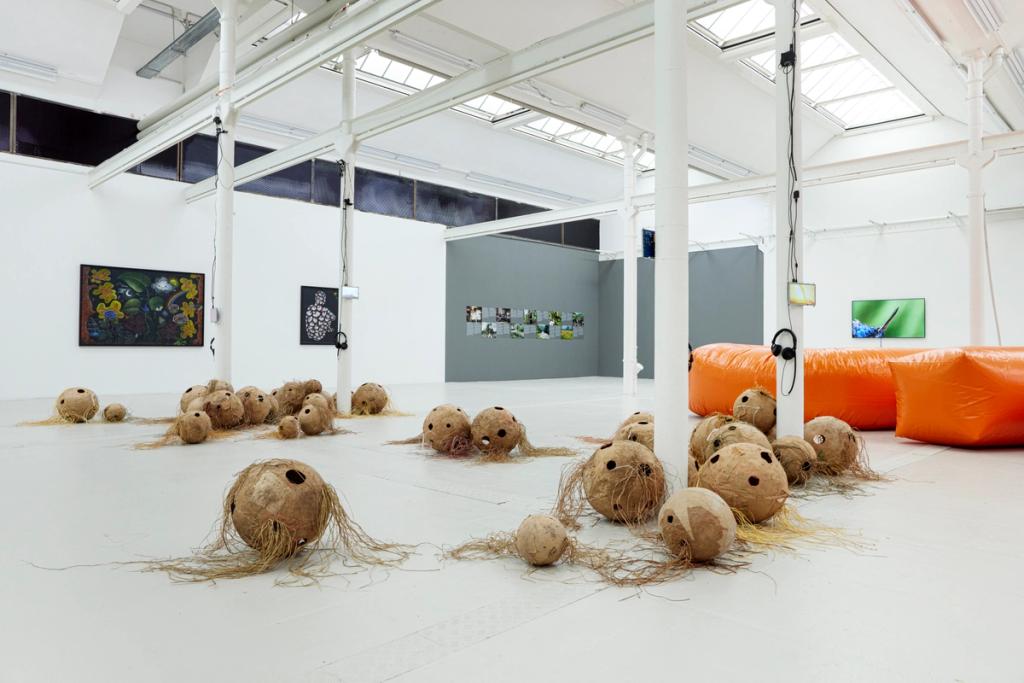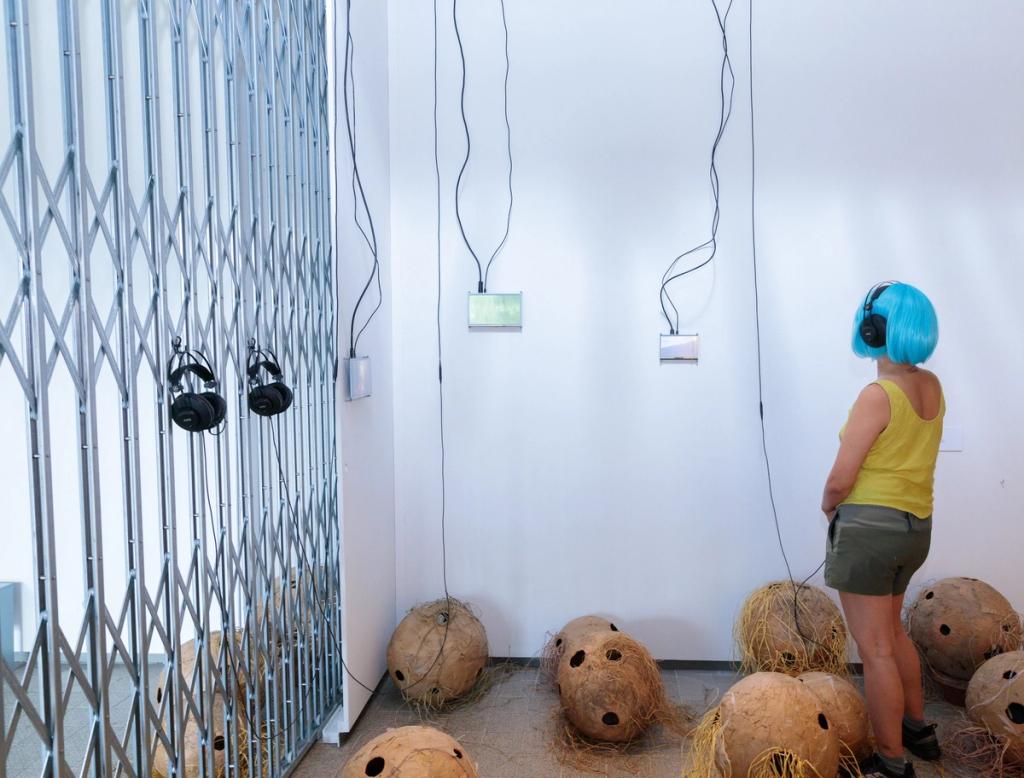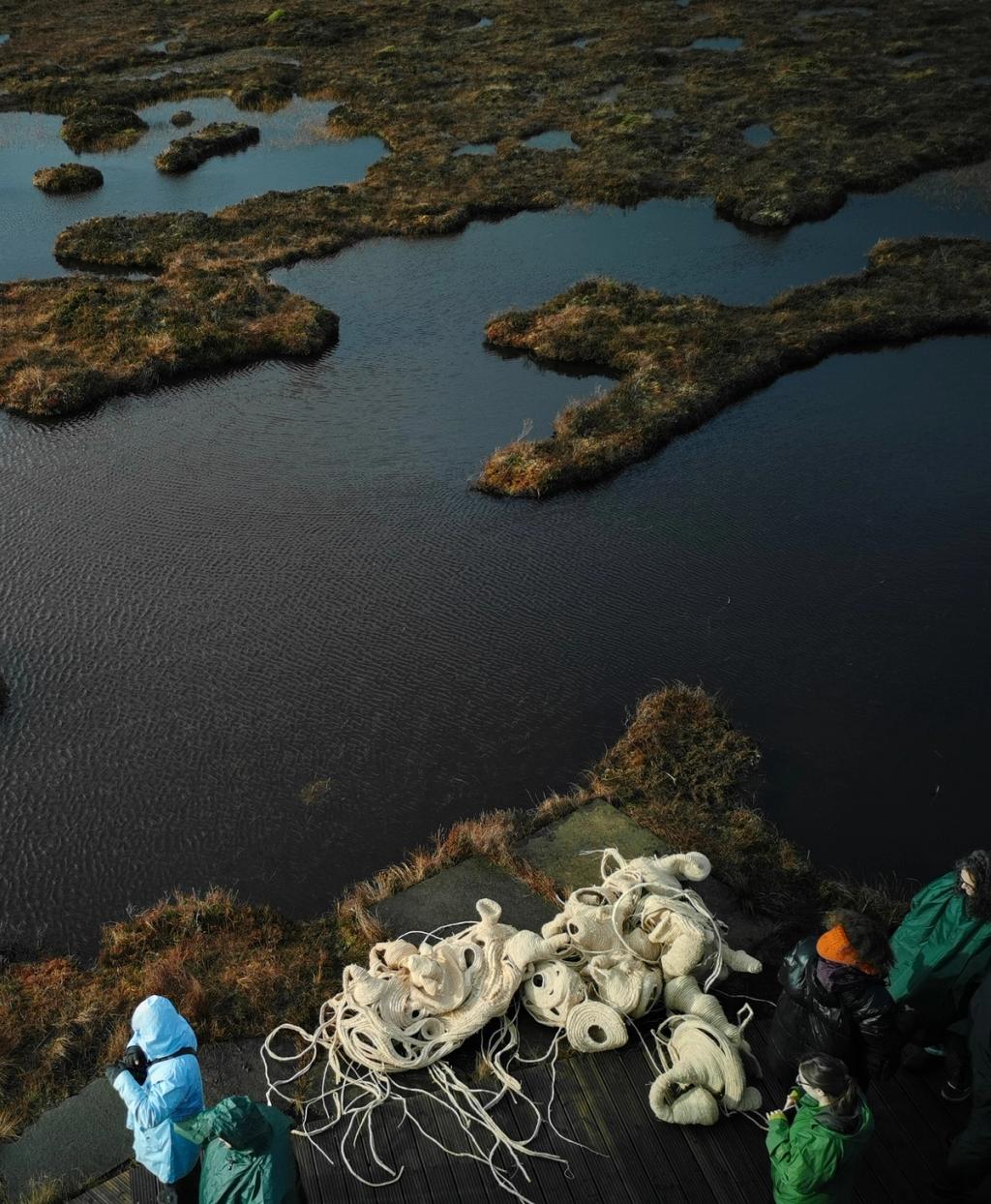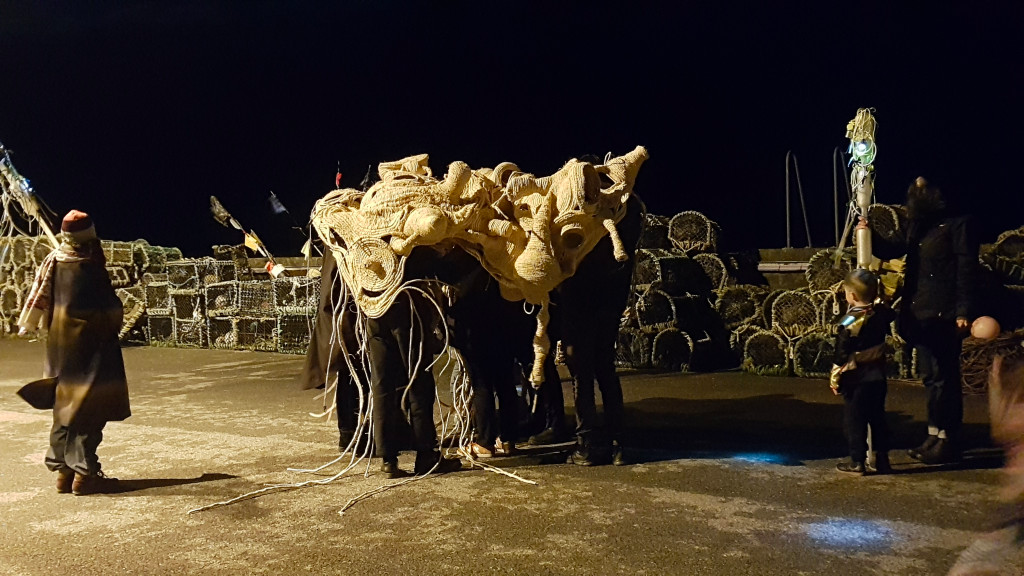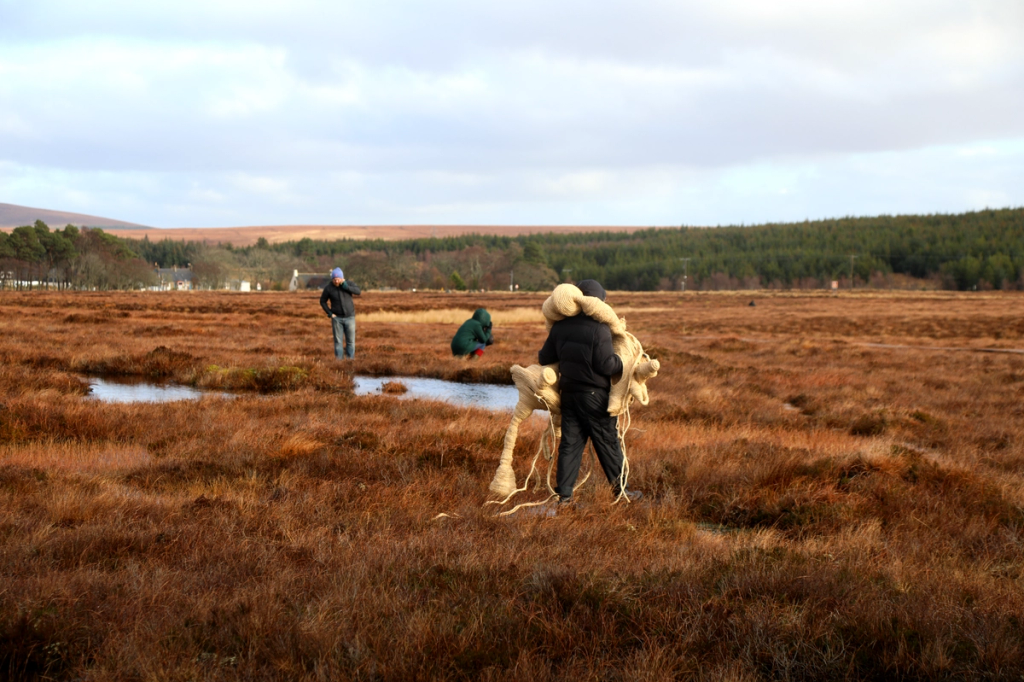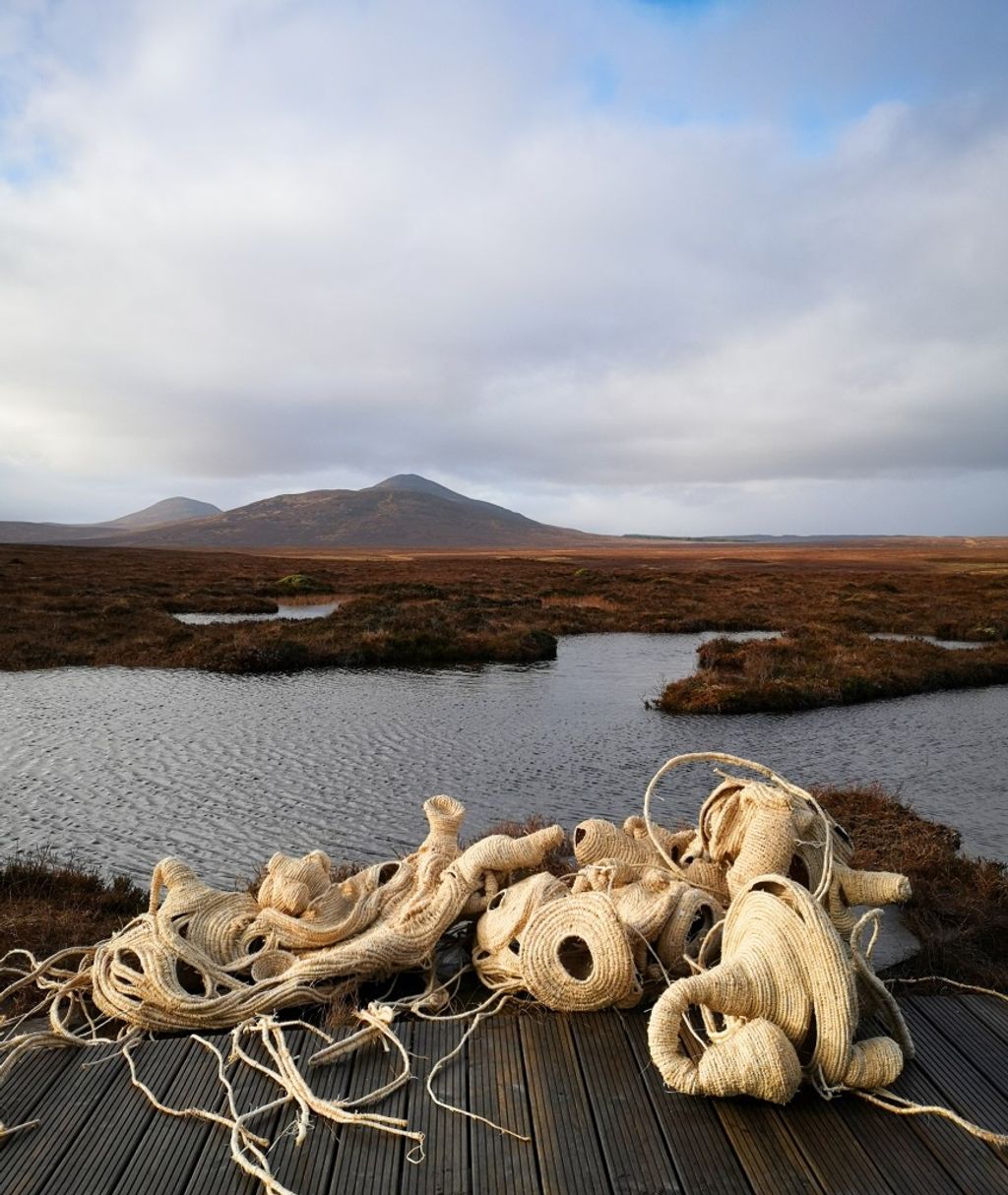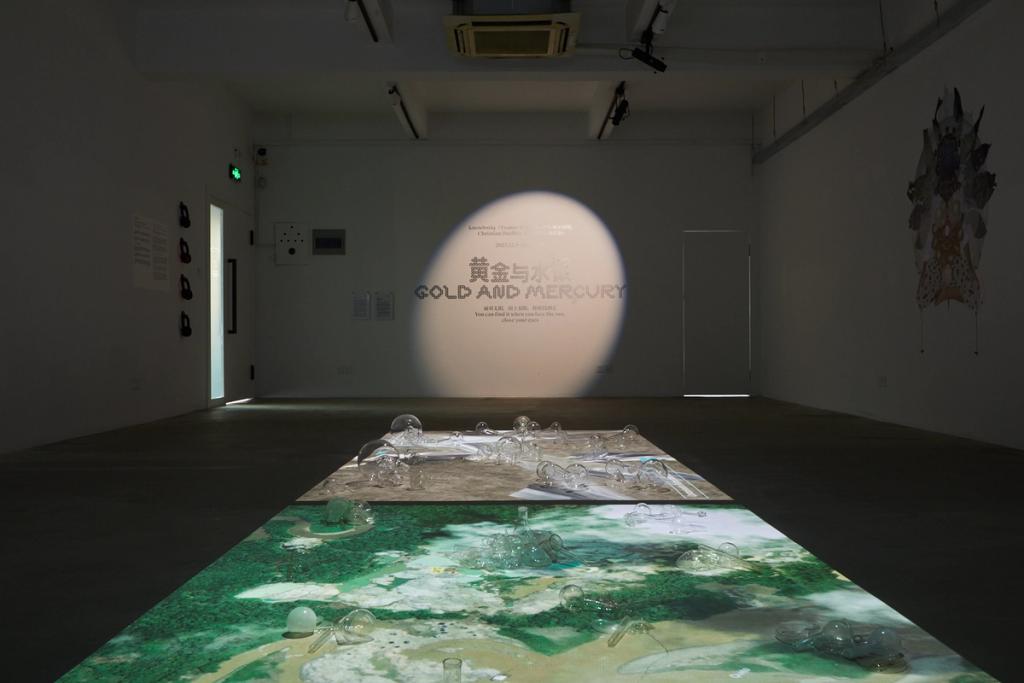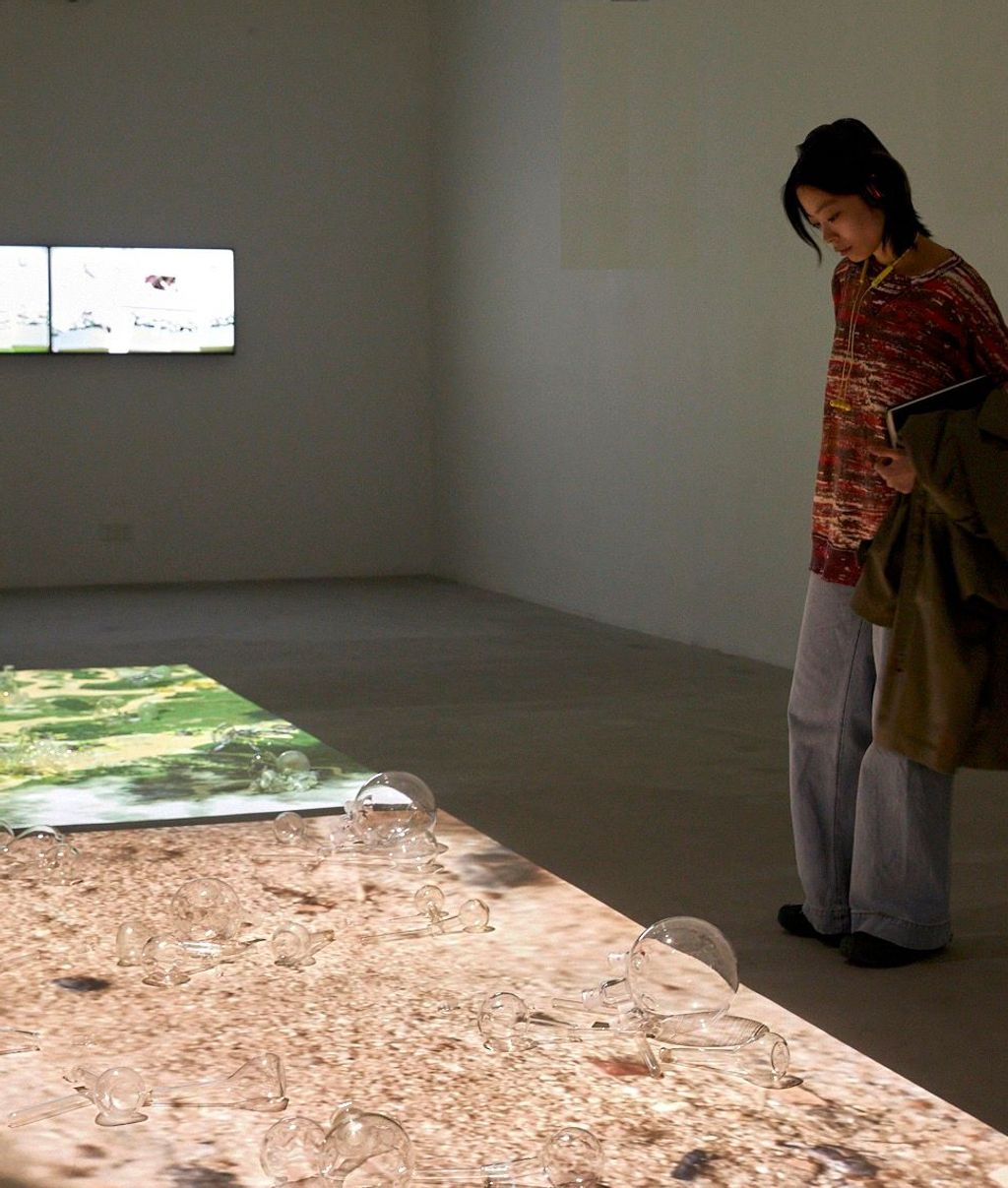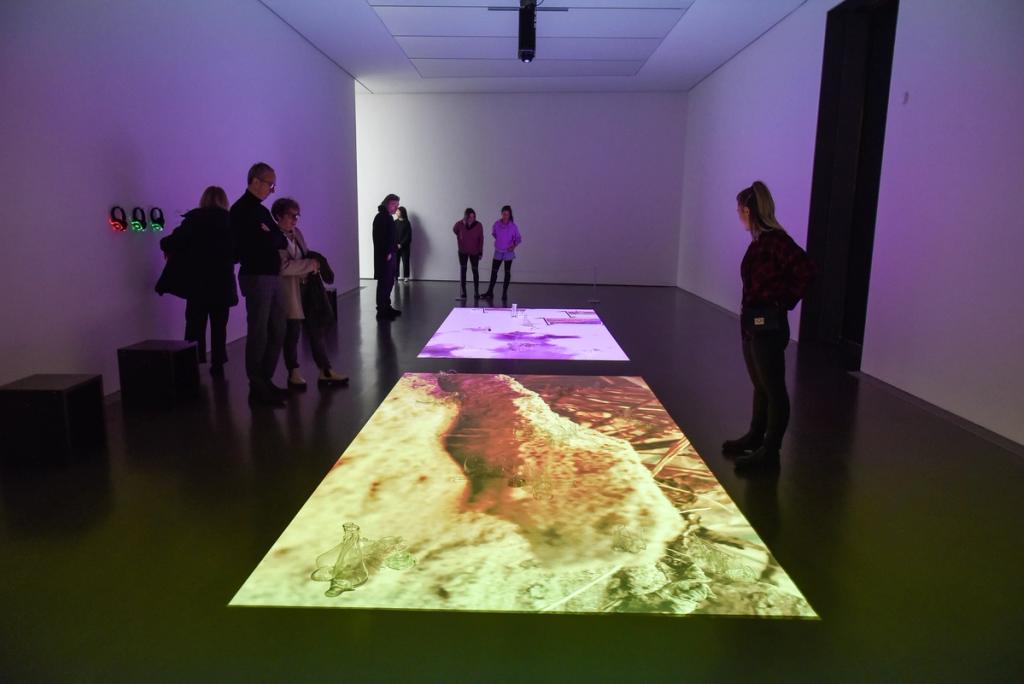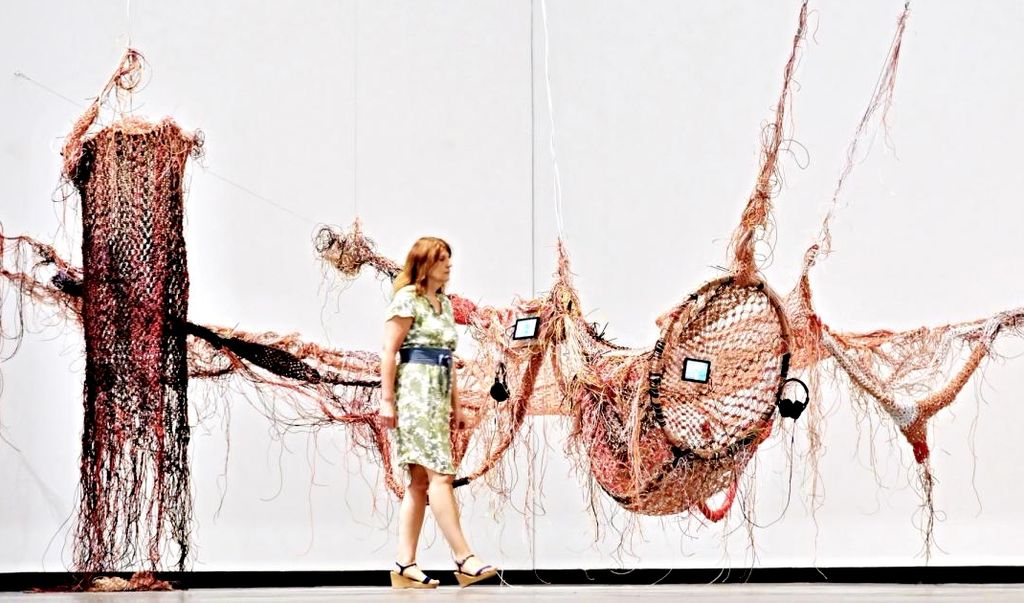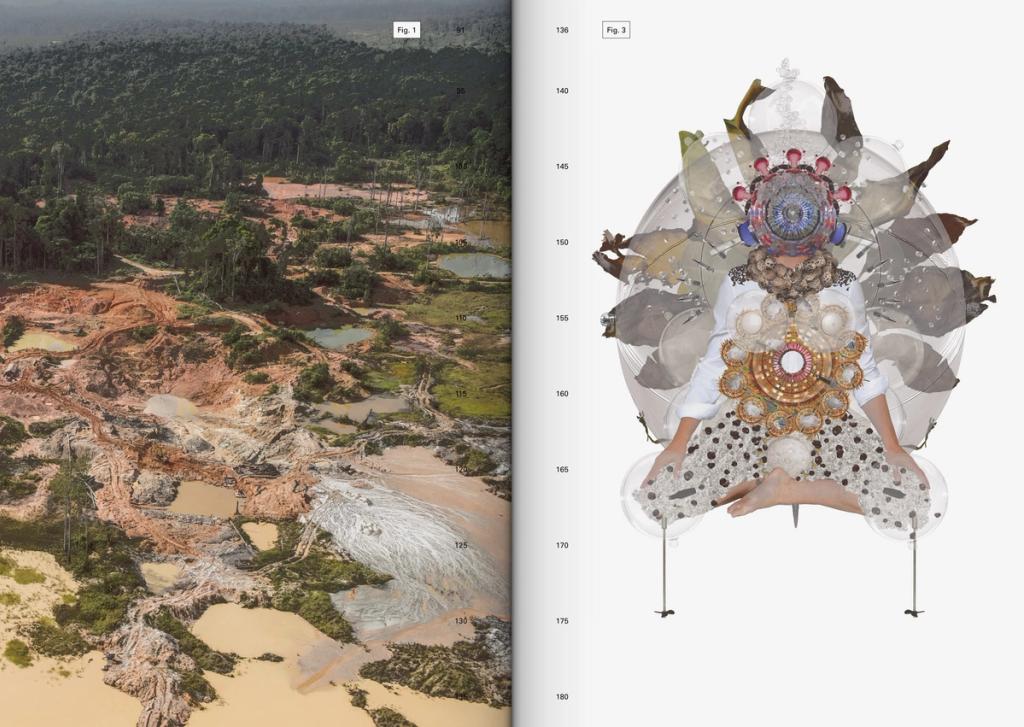
24.9. – 18.11.2026, V2 Rotterdam
as the sacrifice begins to shimmer
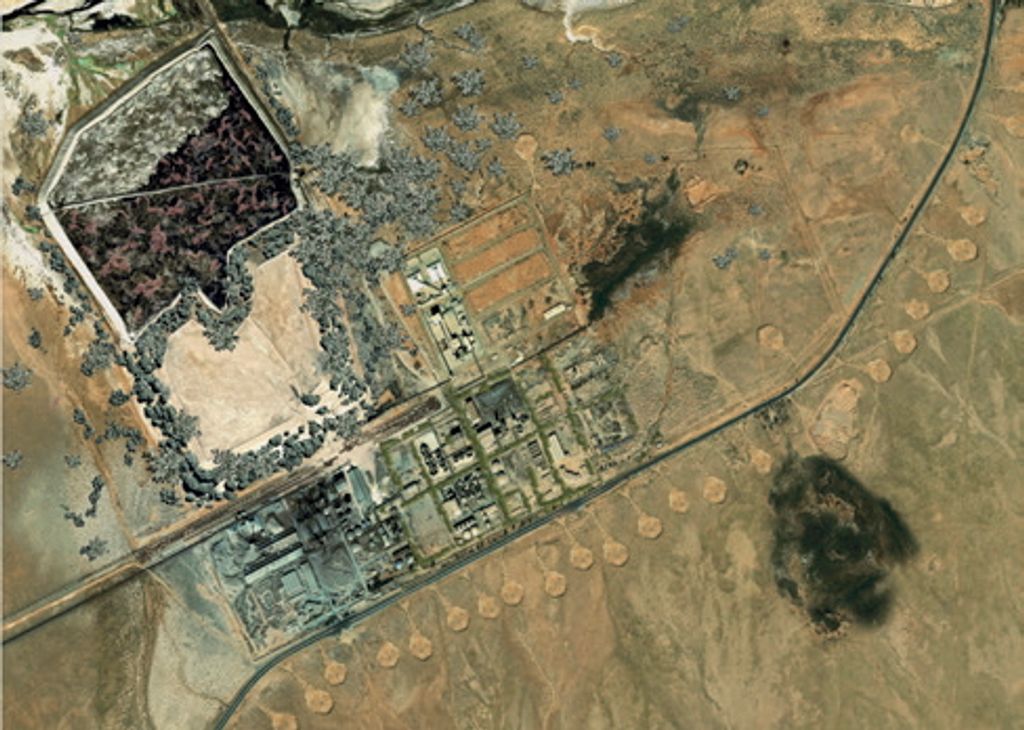
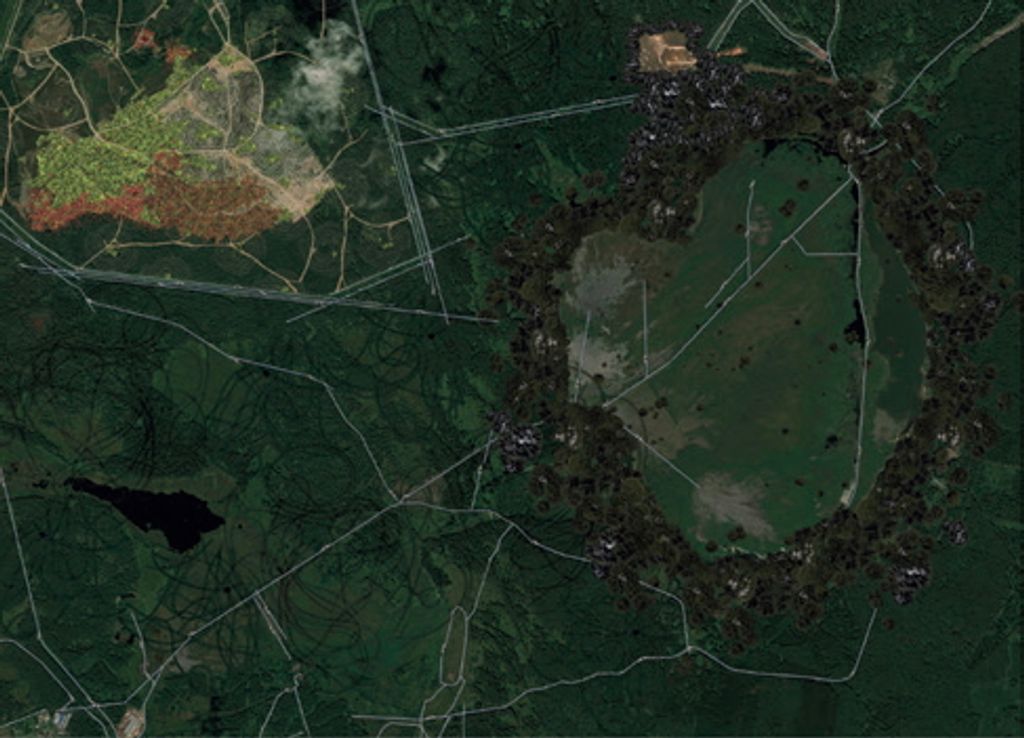
34.314287° N, 8.780715° E Concrete-Capped Lake Karachay, Ozersk, Russia
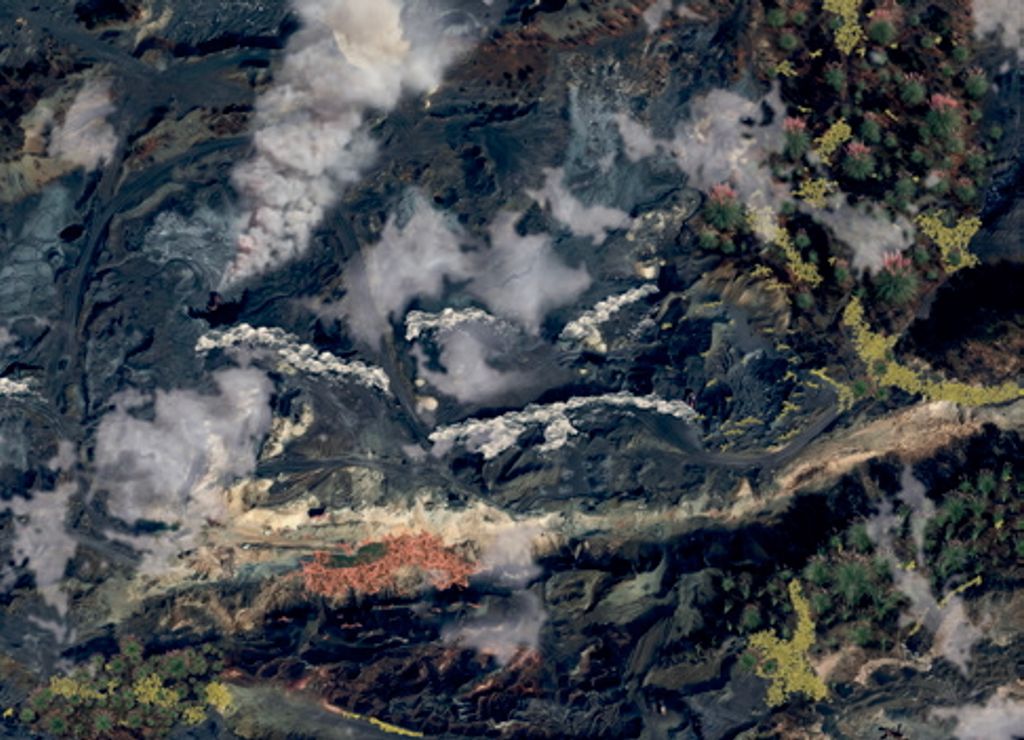
40°48′14.4″ N, 76°20′27.6″ W Burning Coal Mine, Centralia, USA
55°40′40.7″ N, 60°47′27.3″ E Phosphogypsum, Gafsa–Gabès, Tunisia
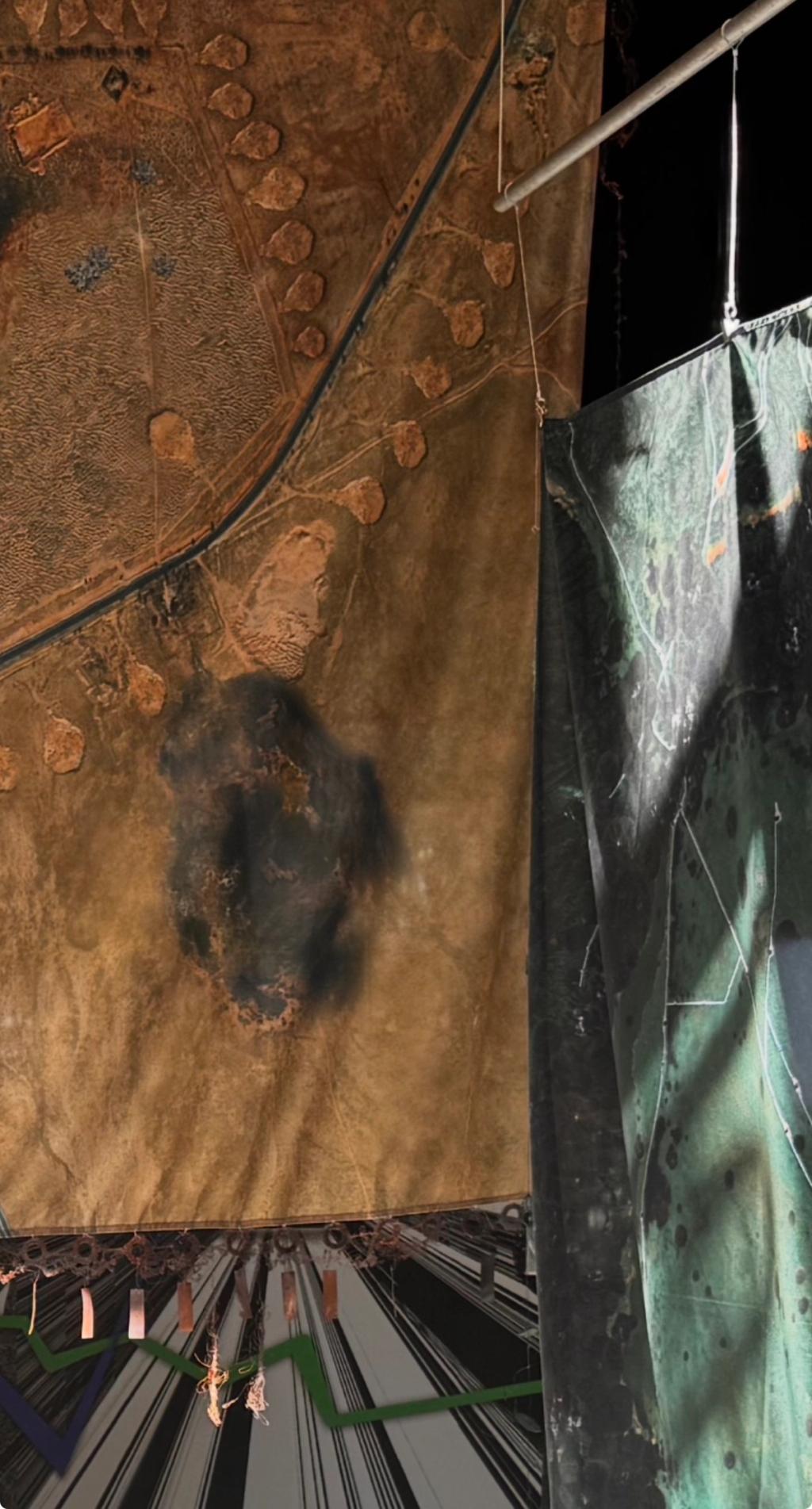
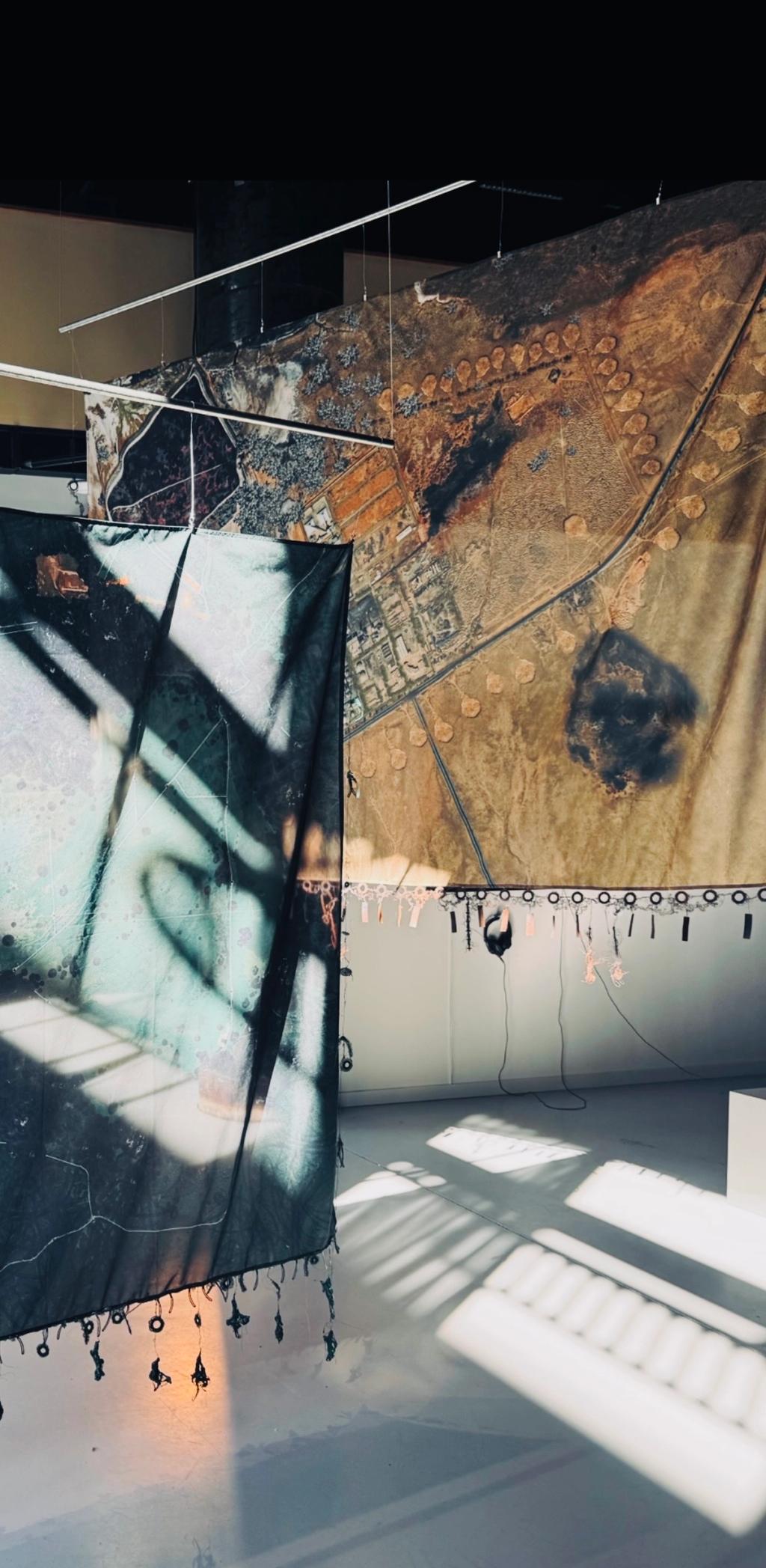
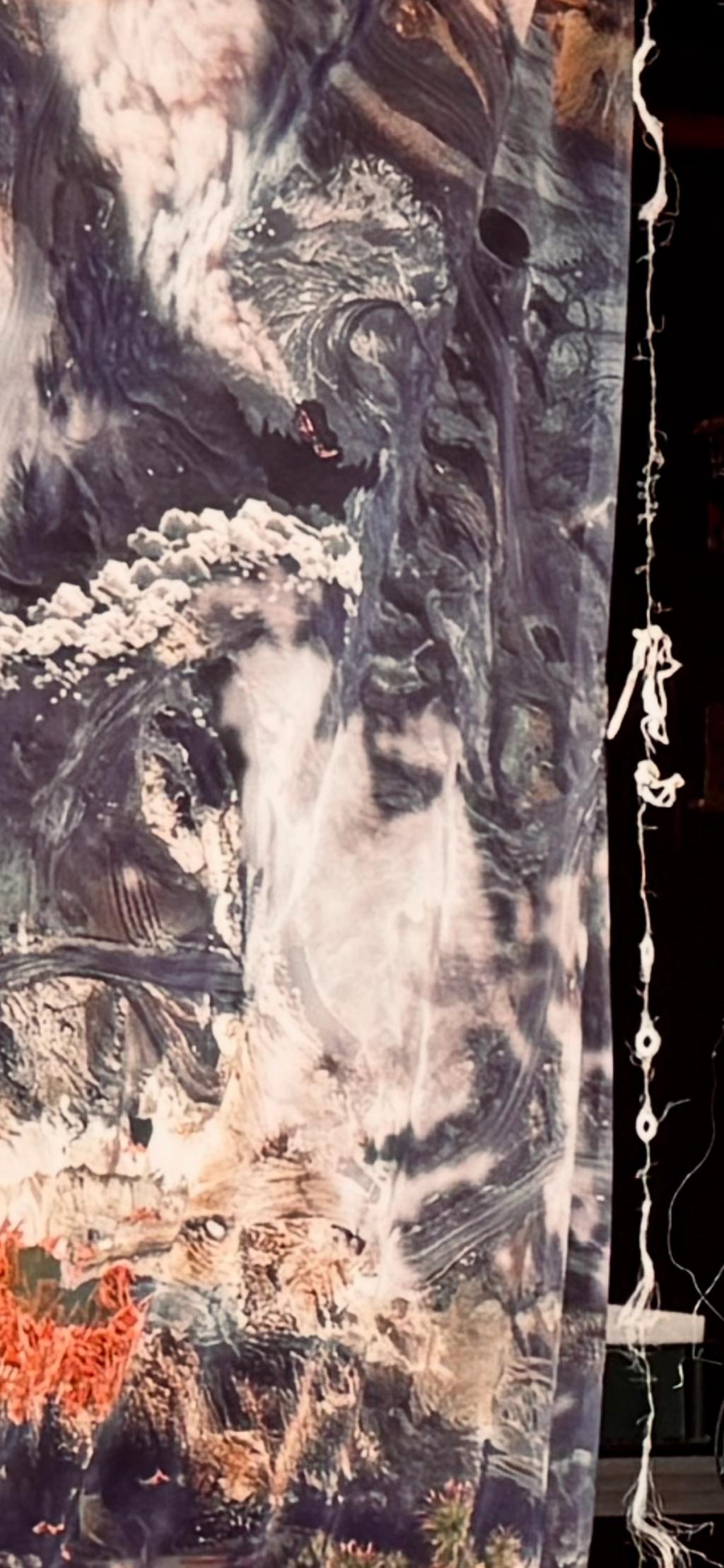
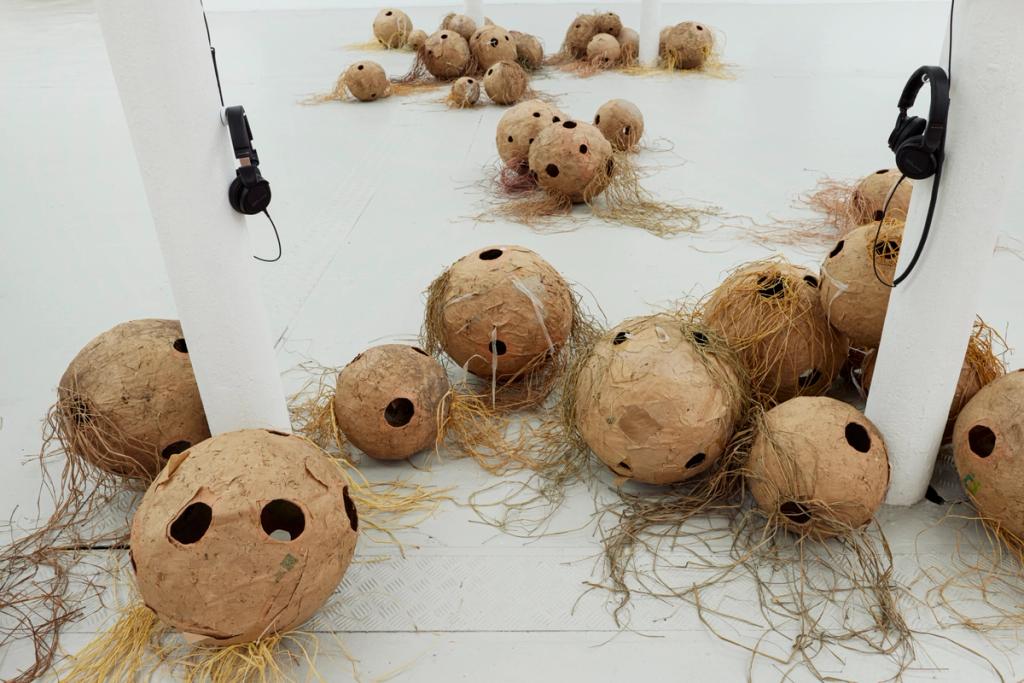
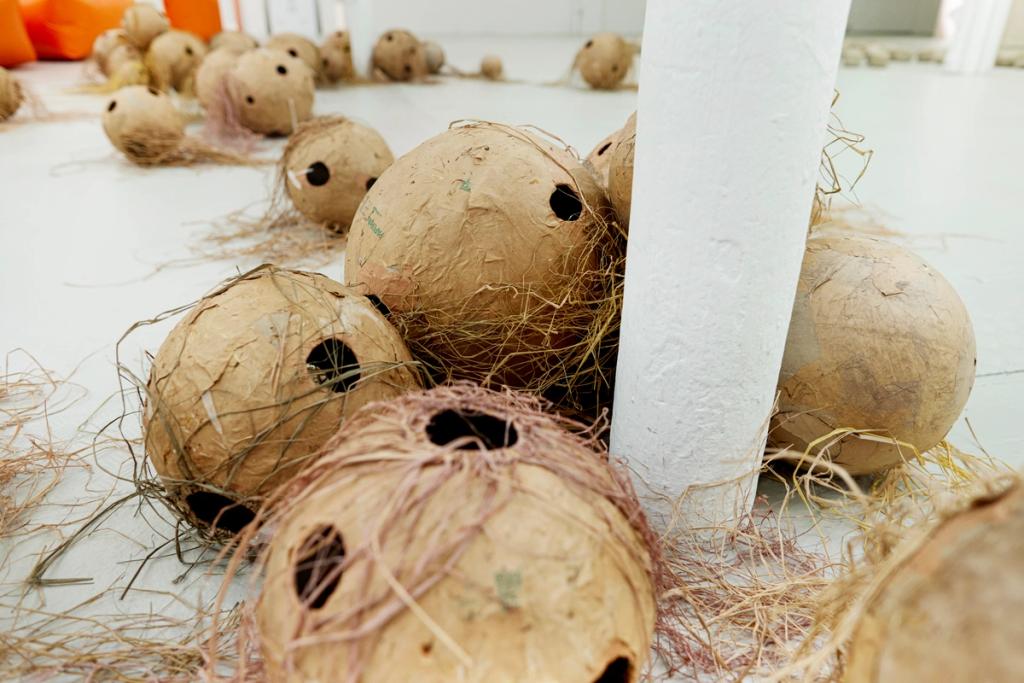
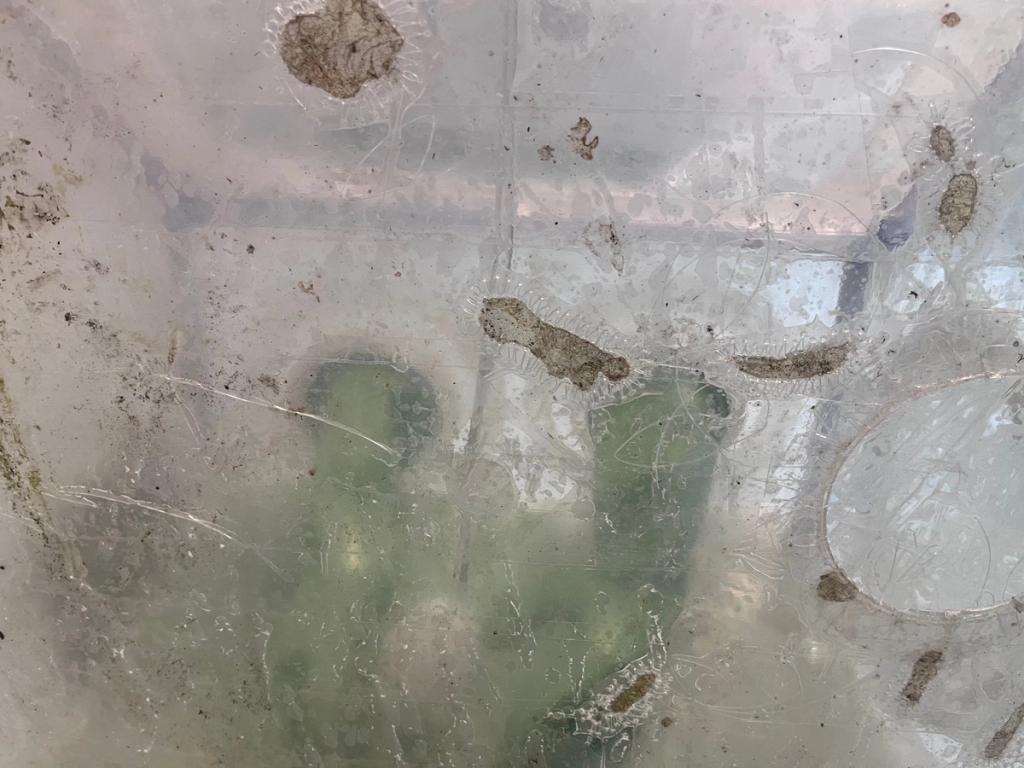
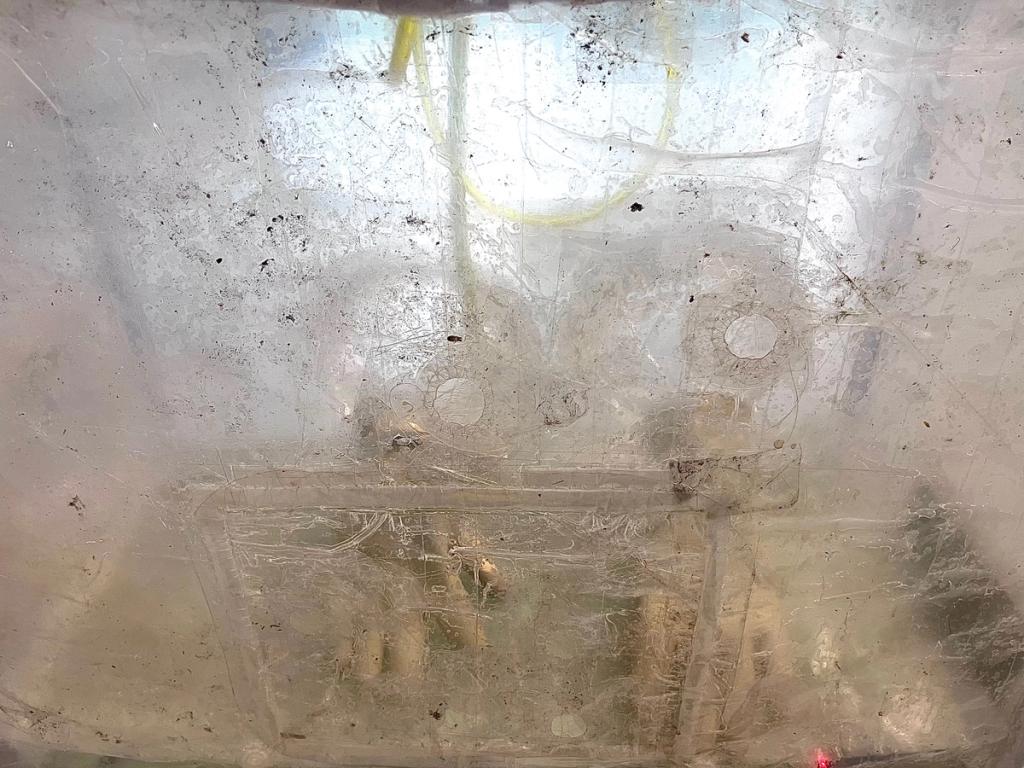
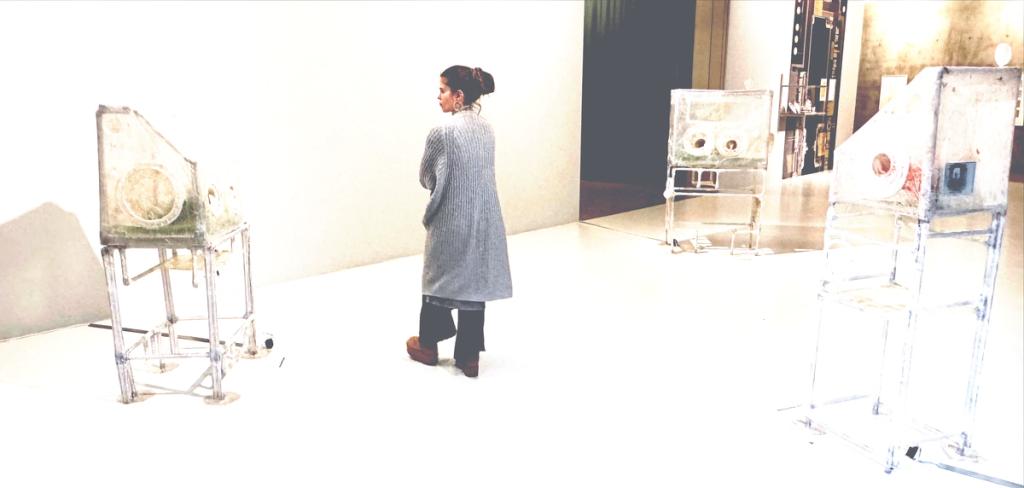
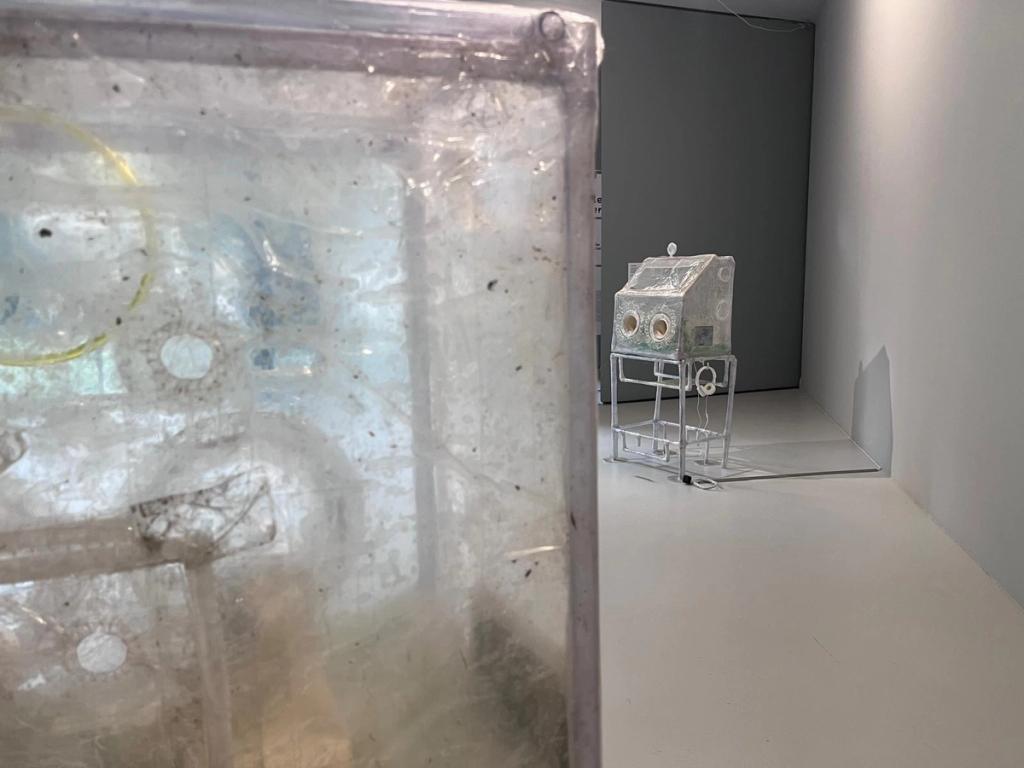
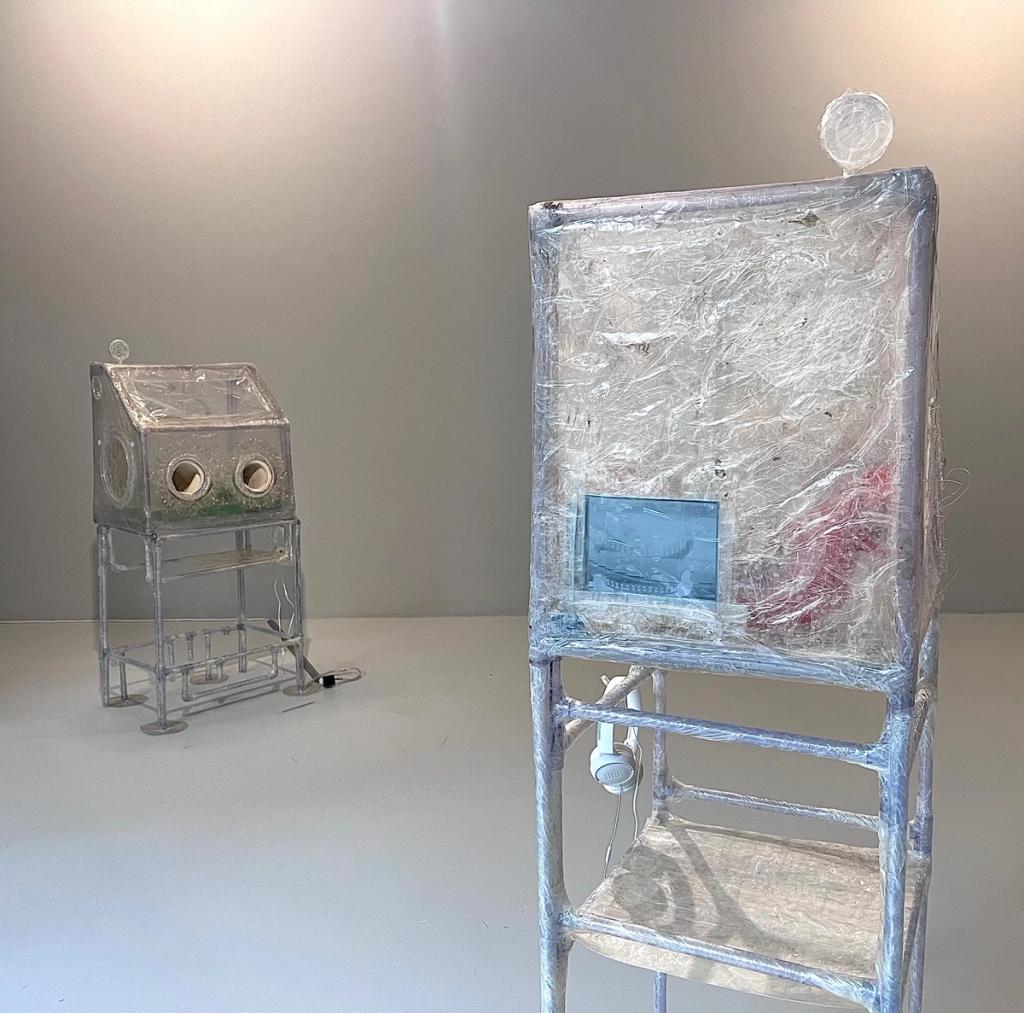
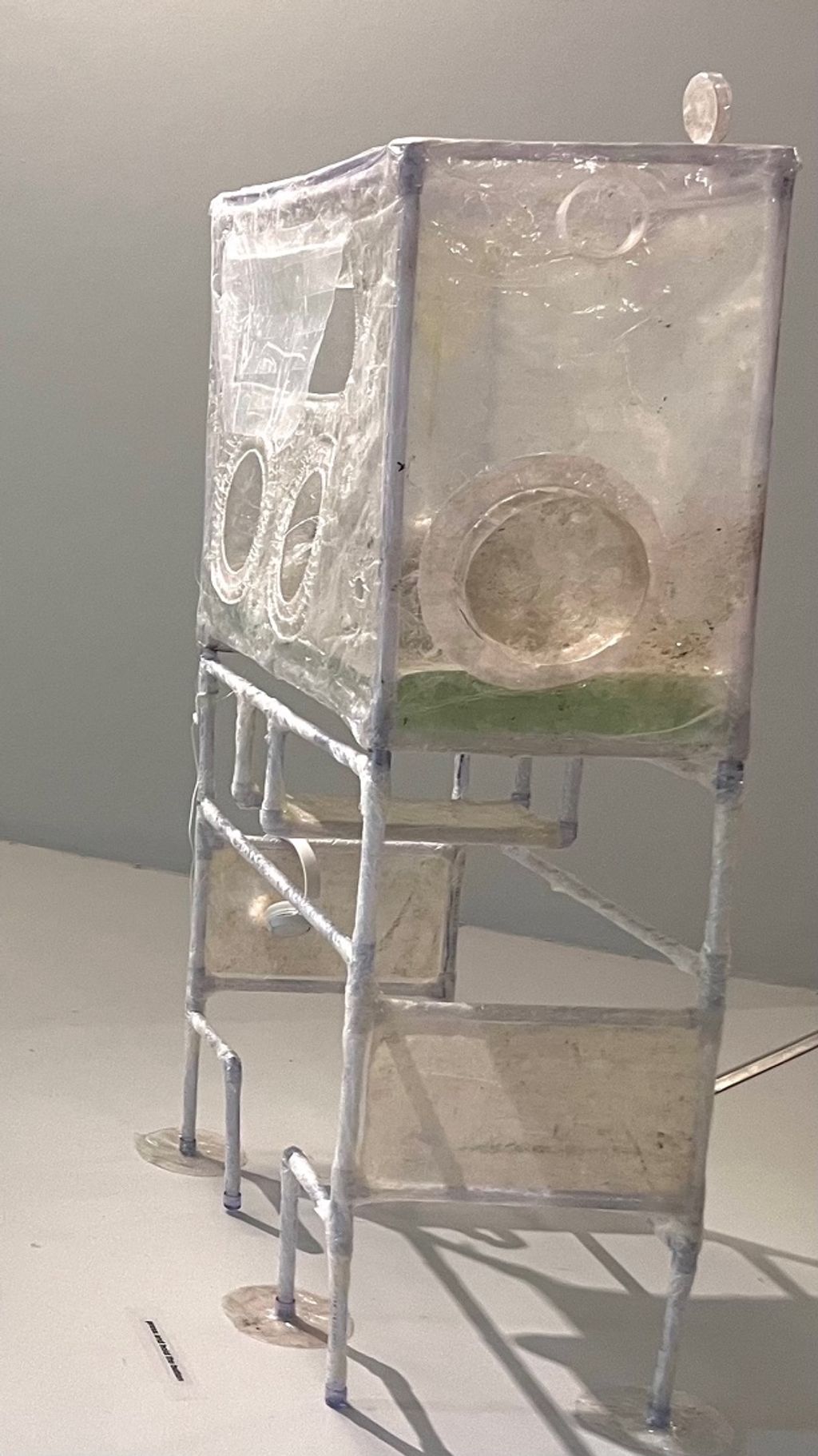
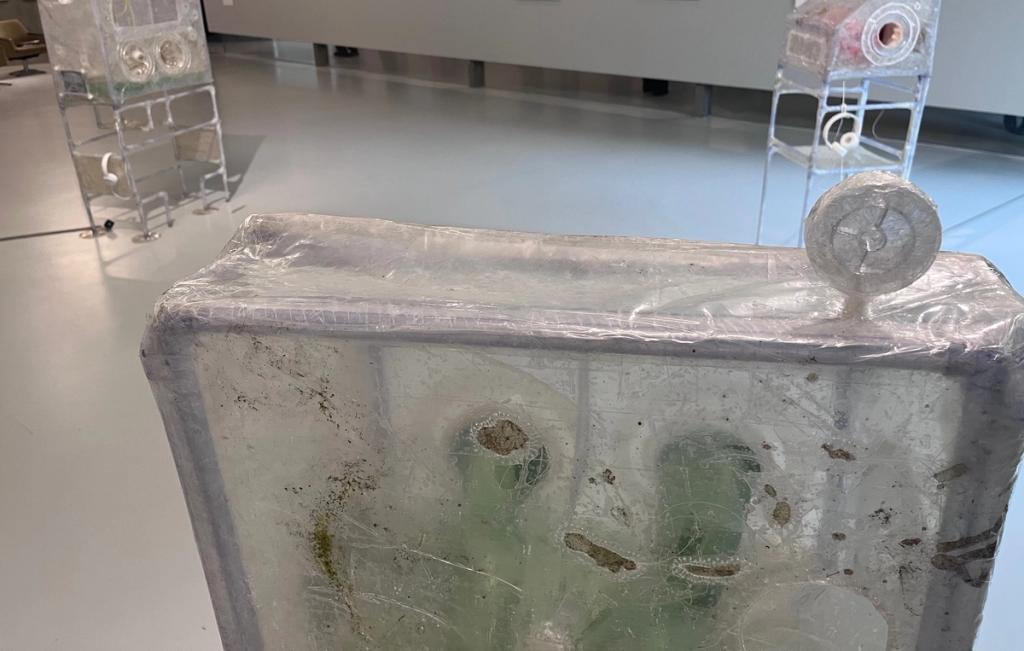
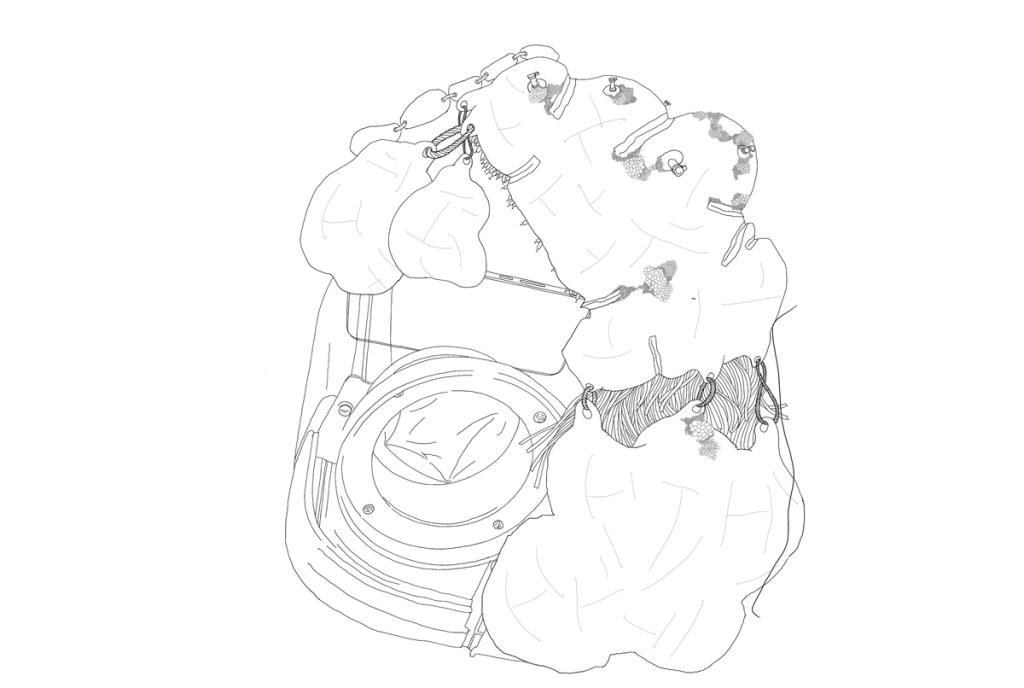
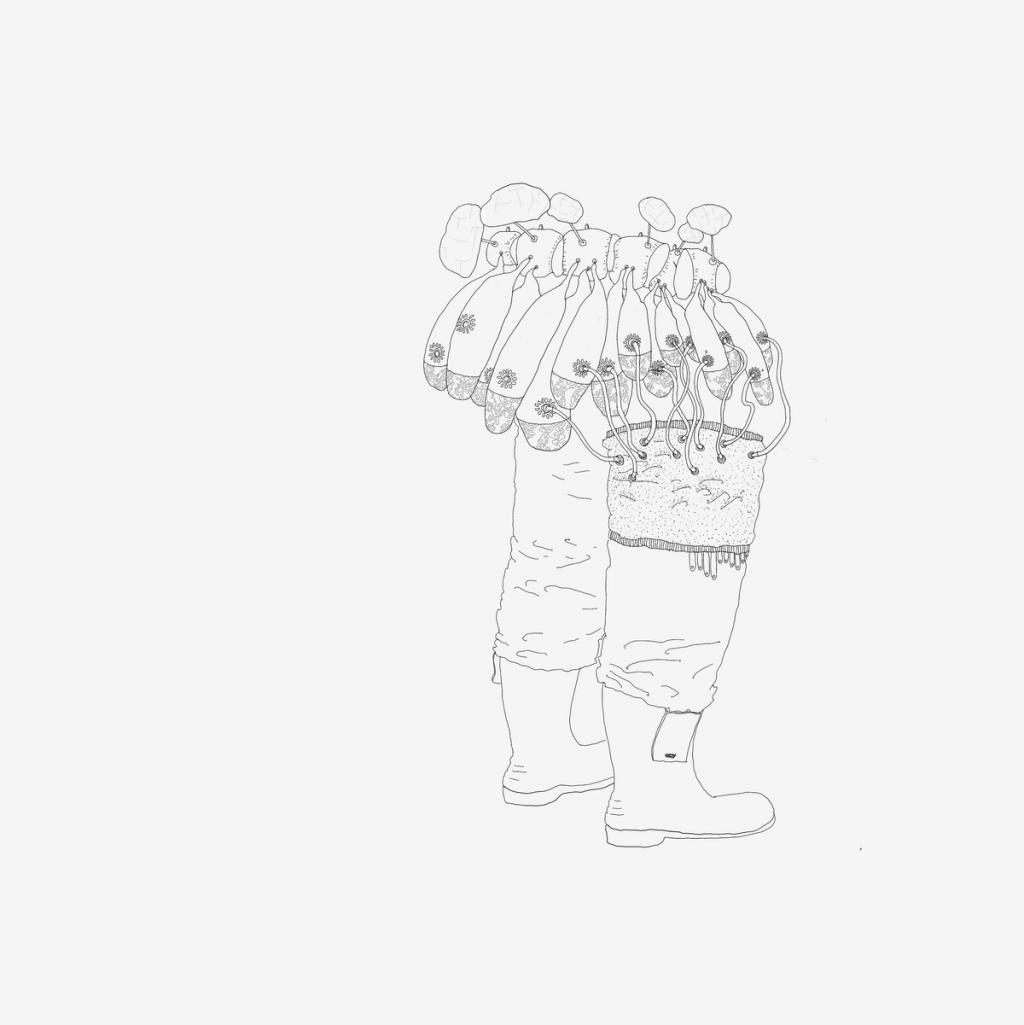
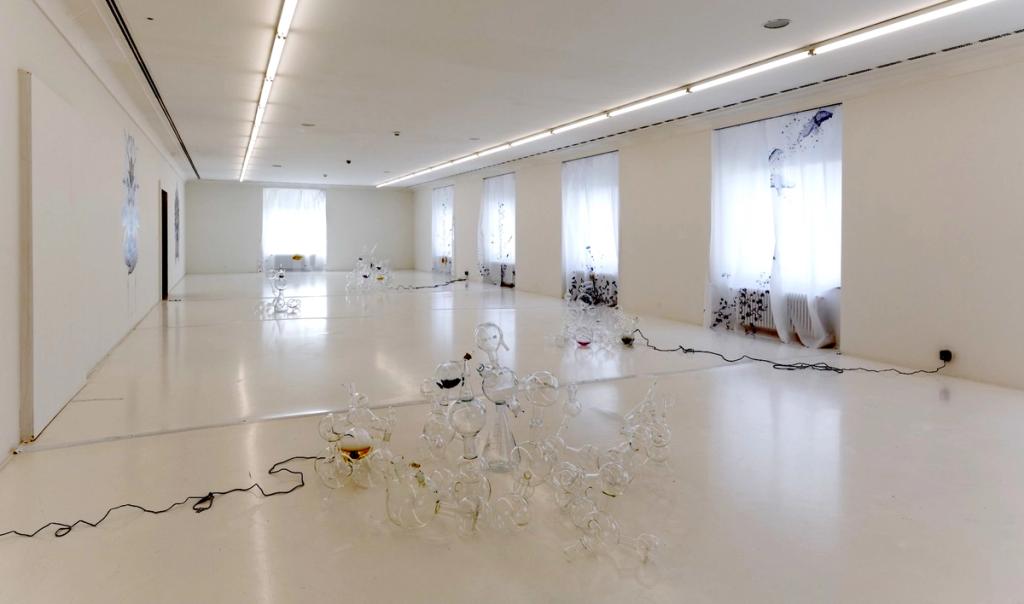
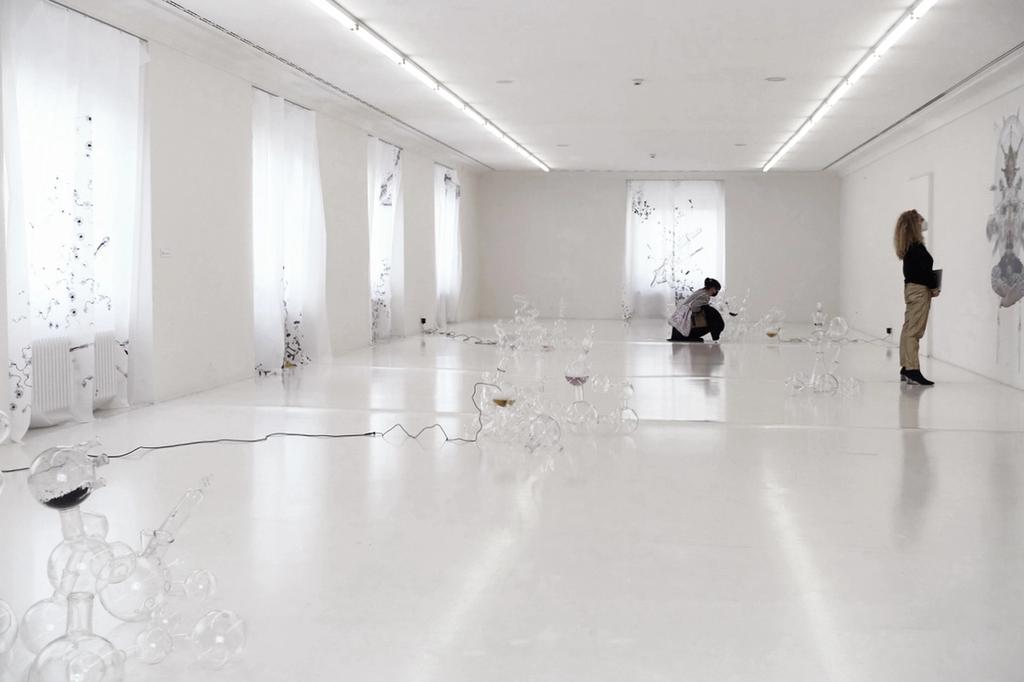
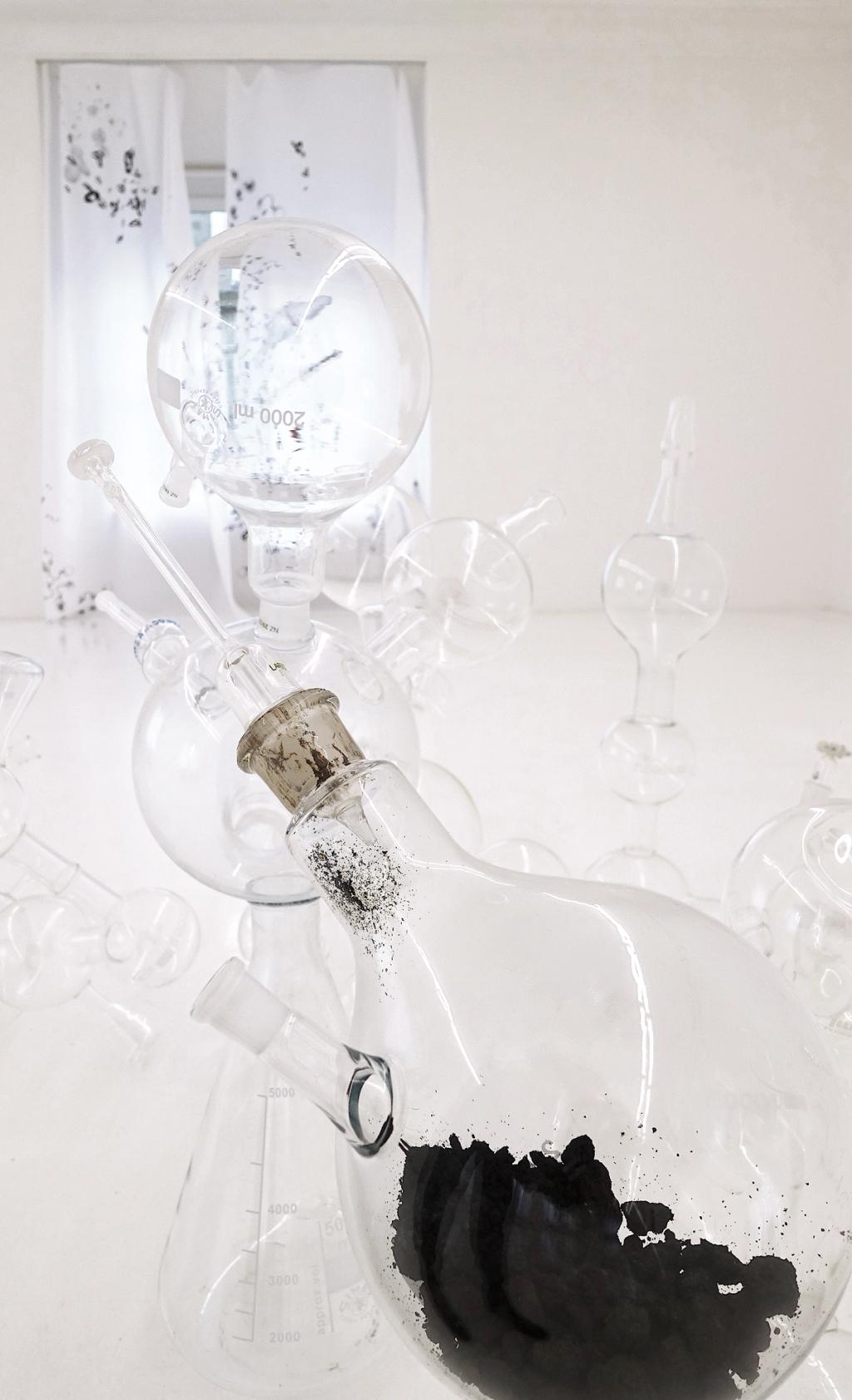
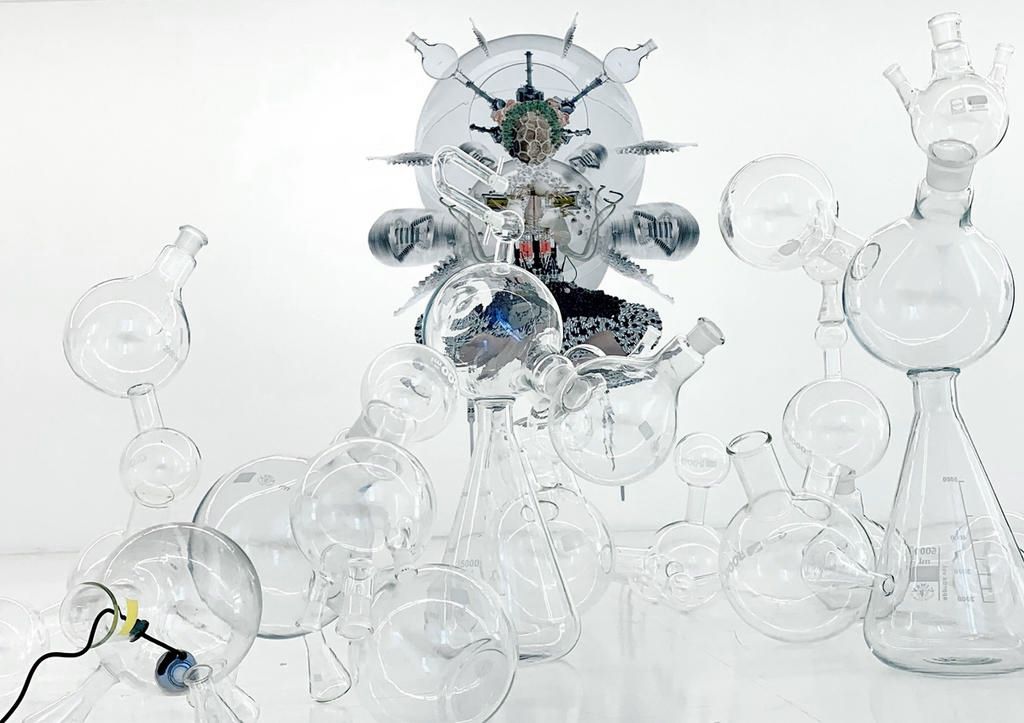
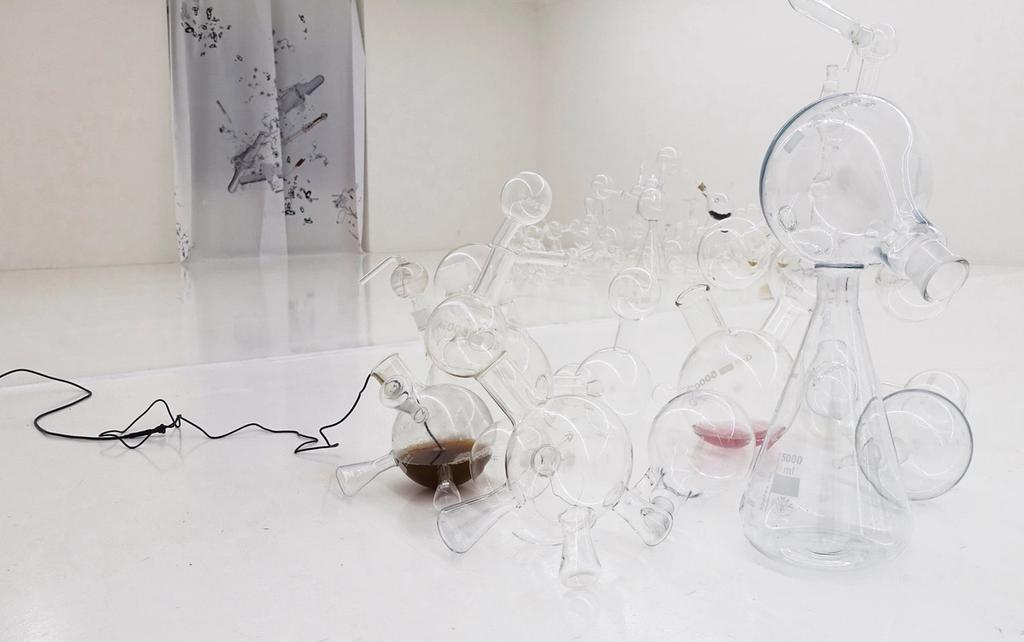
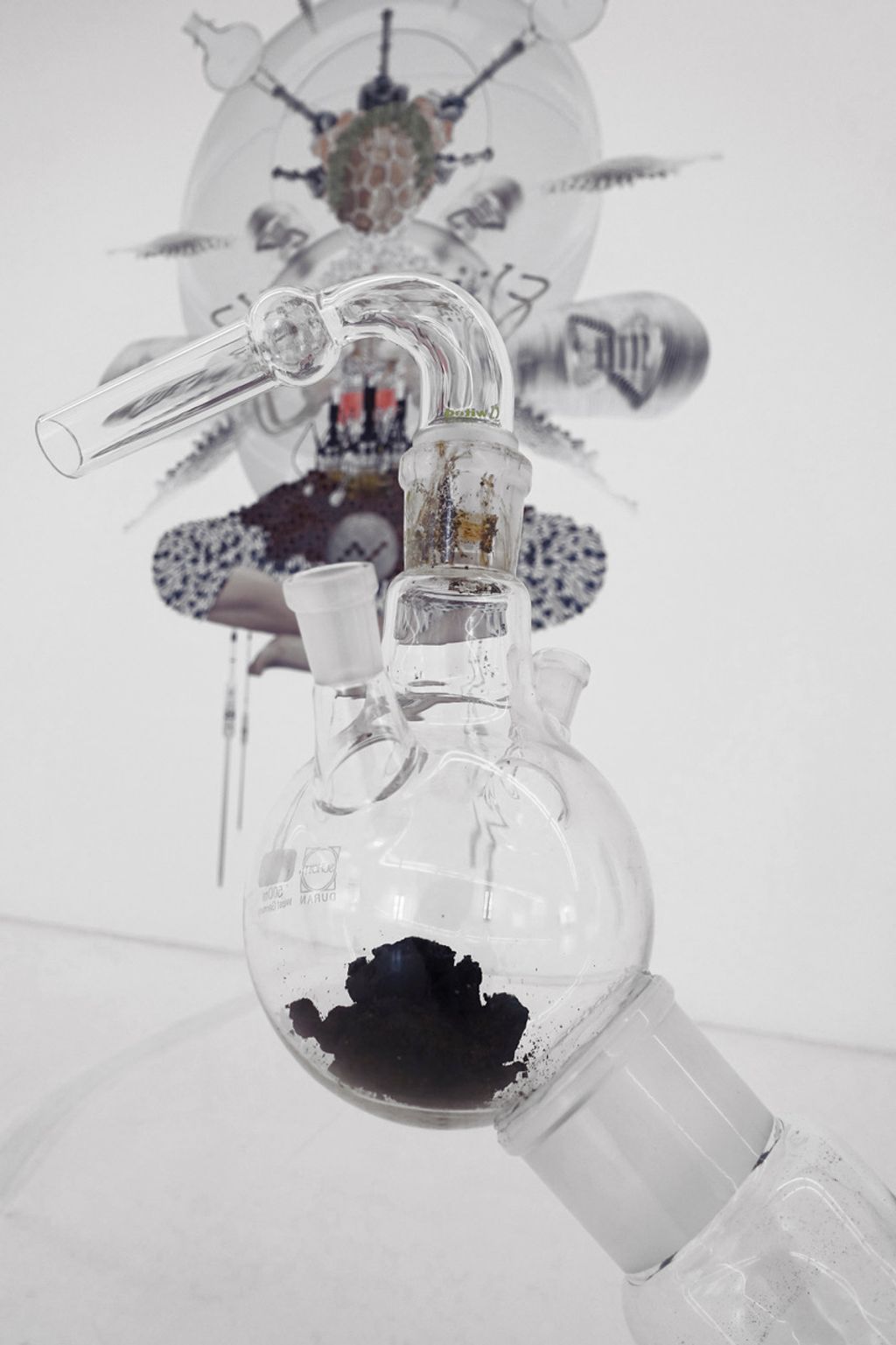
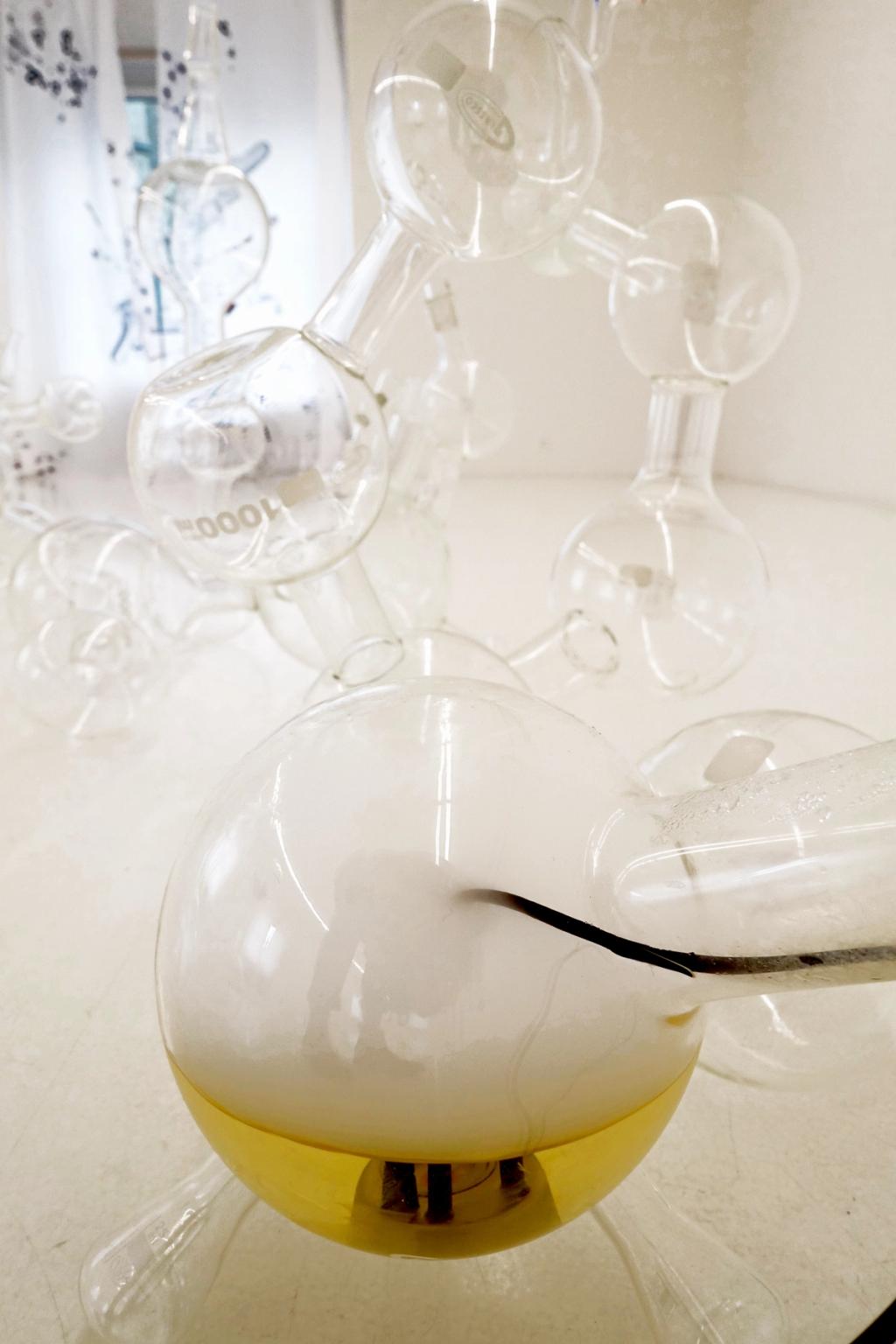
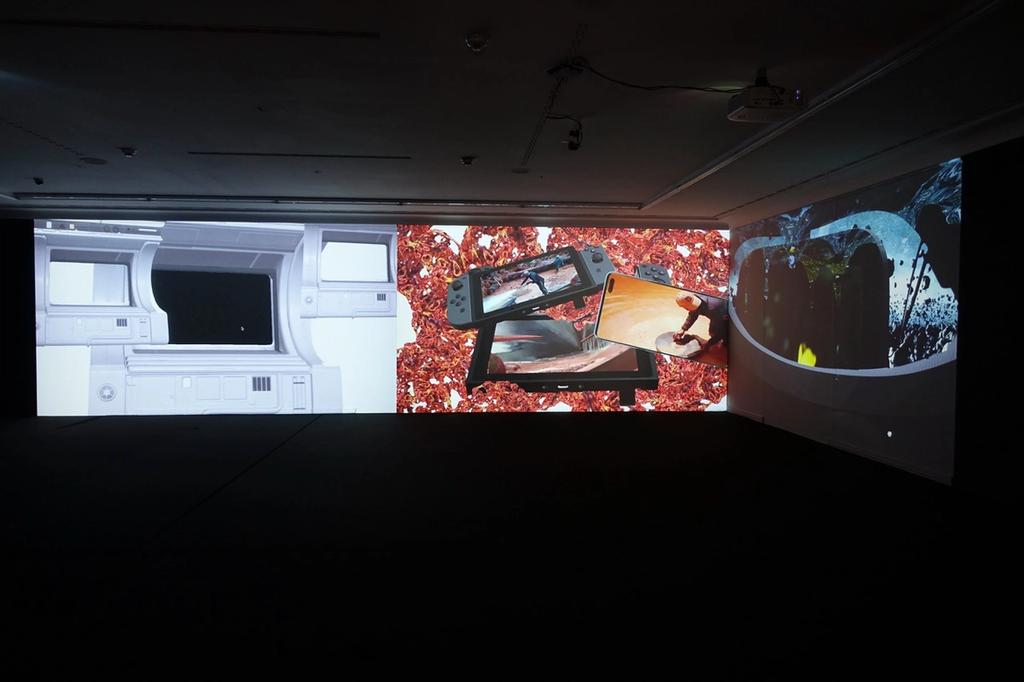
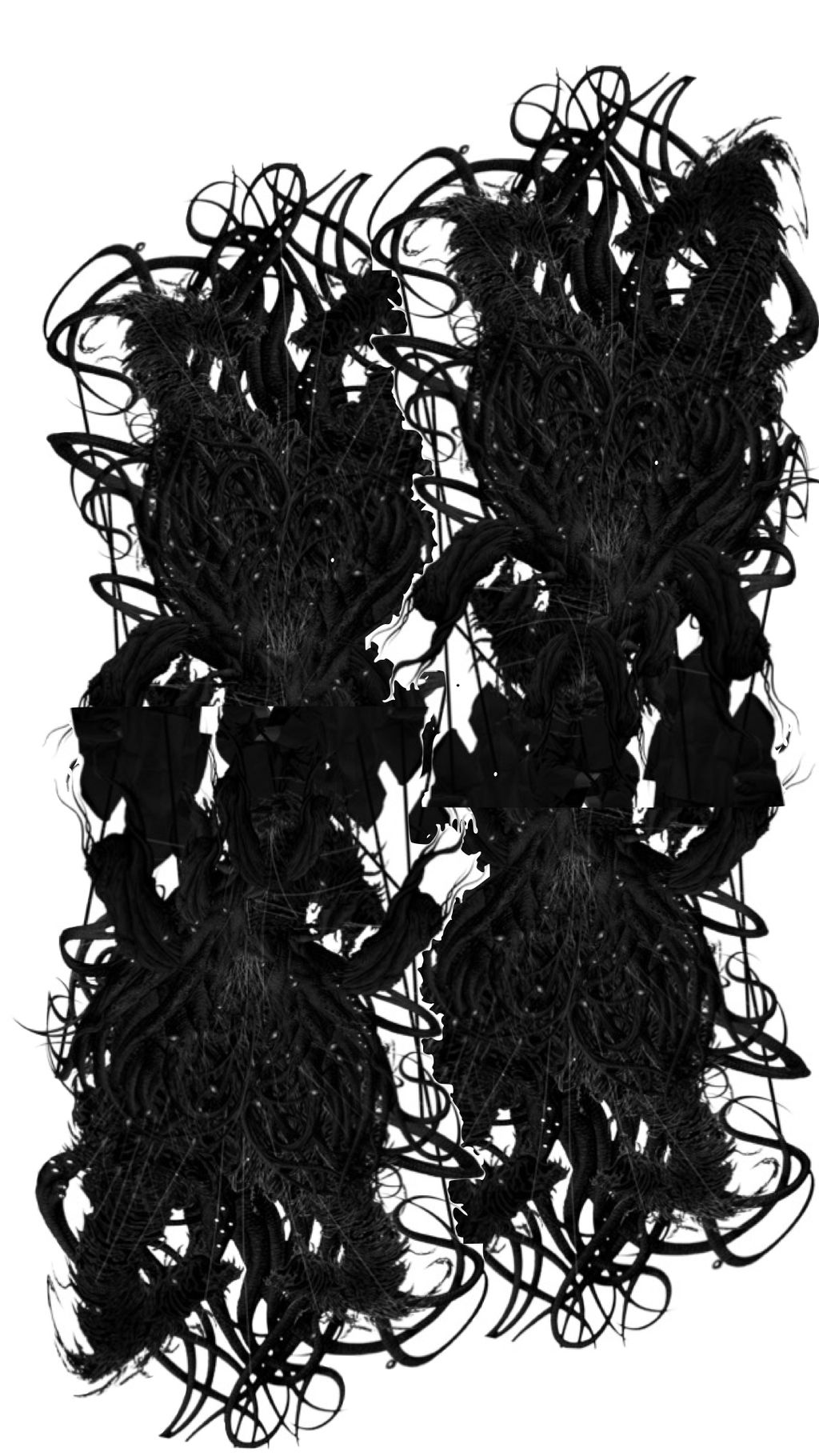
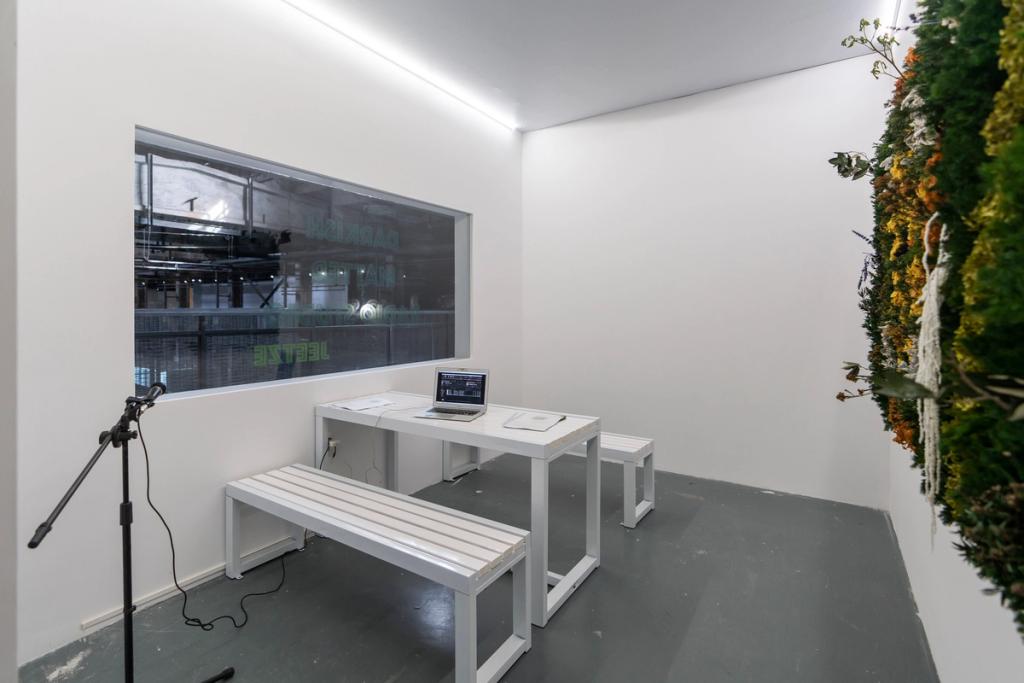
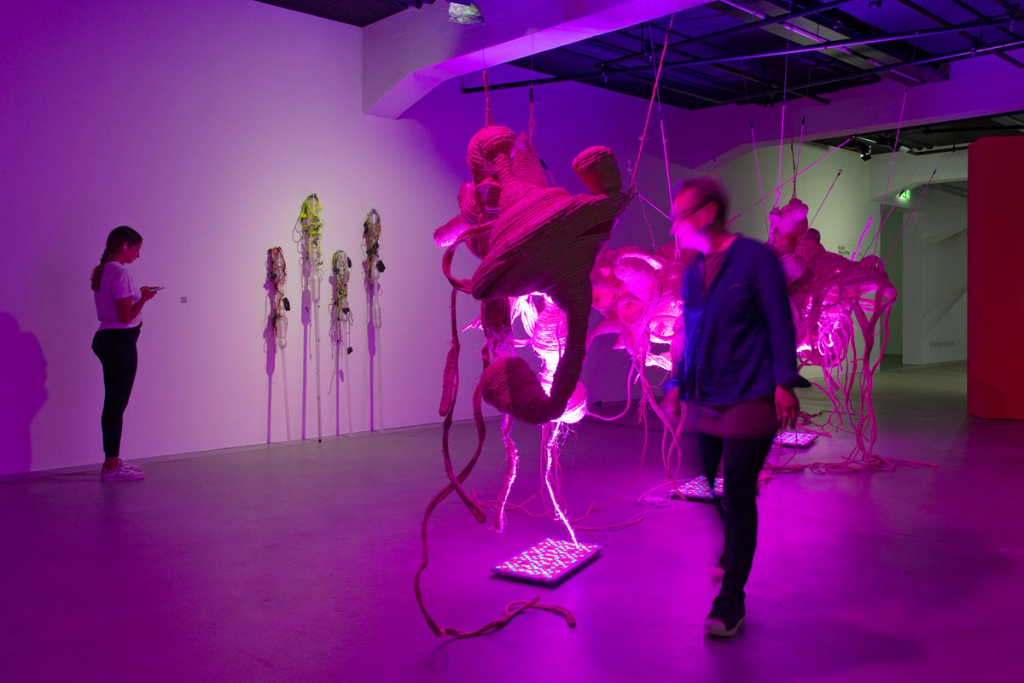
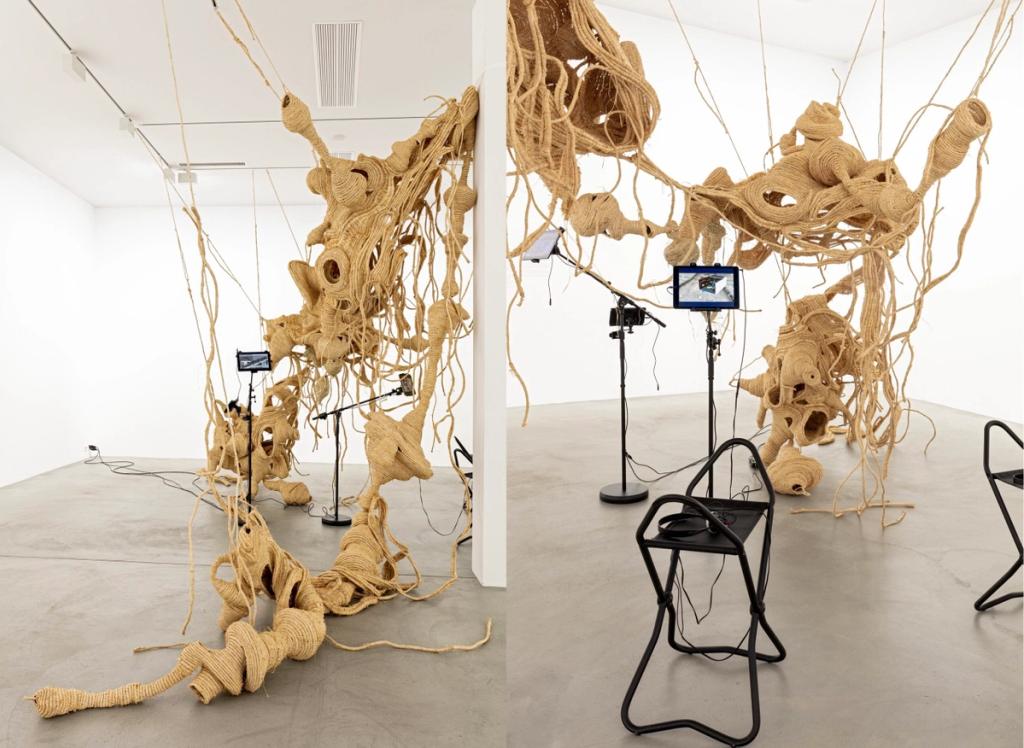
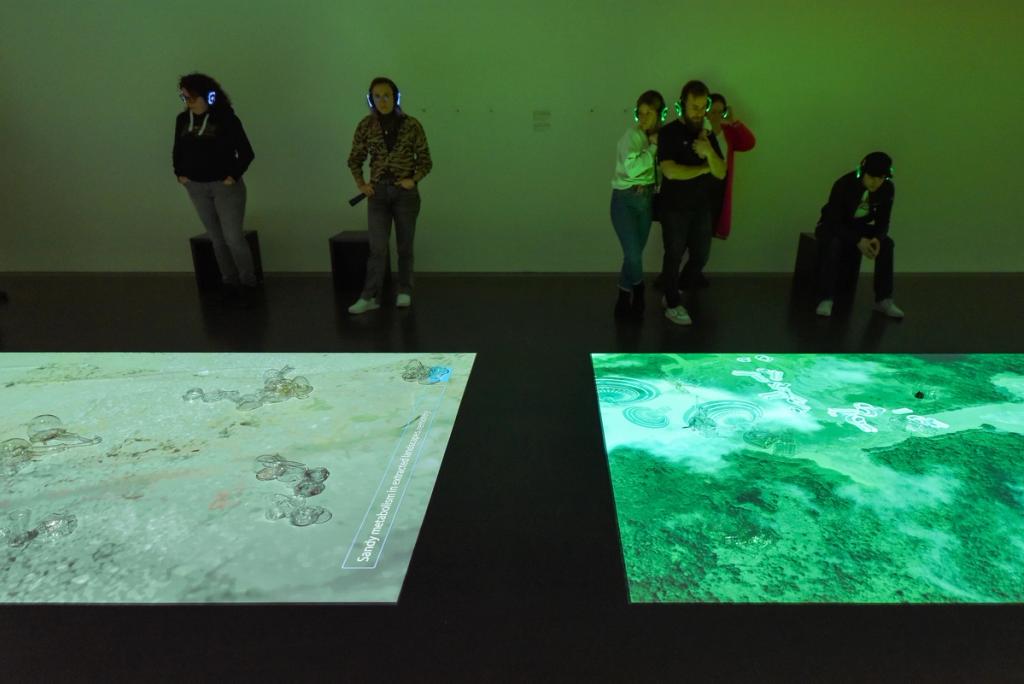
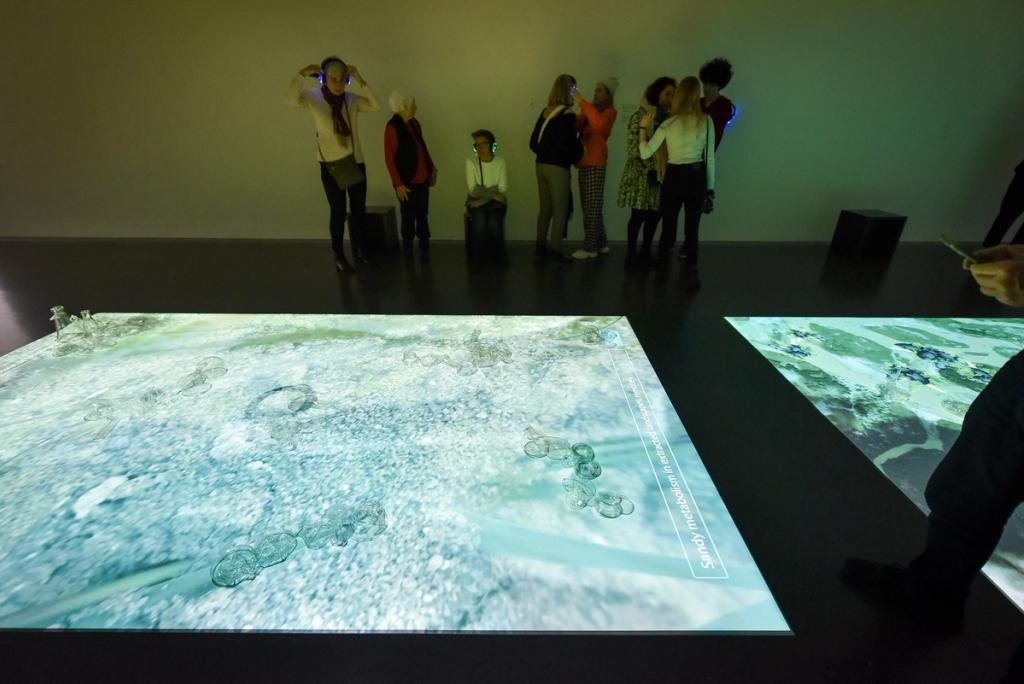
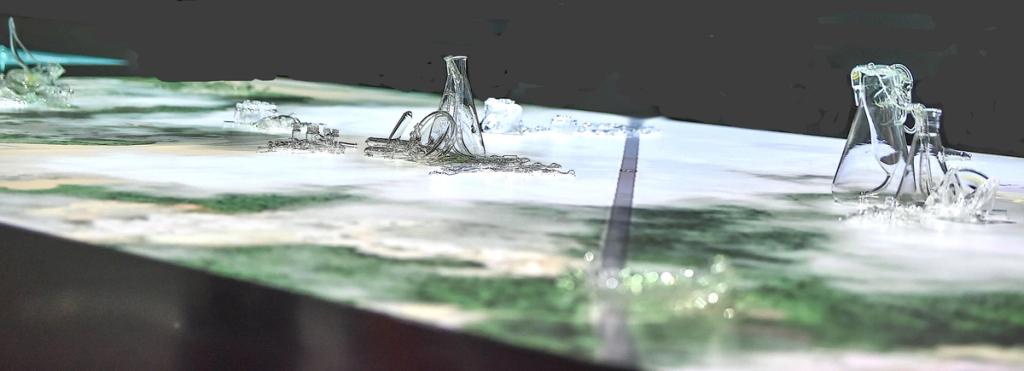
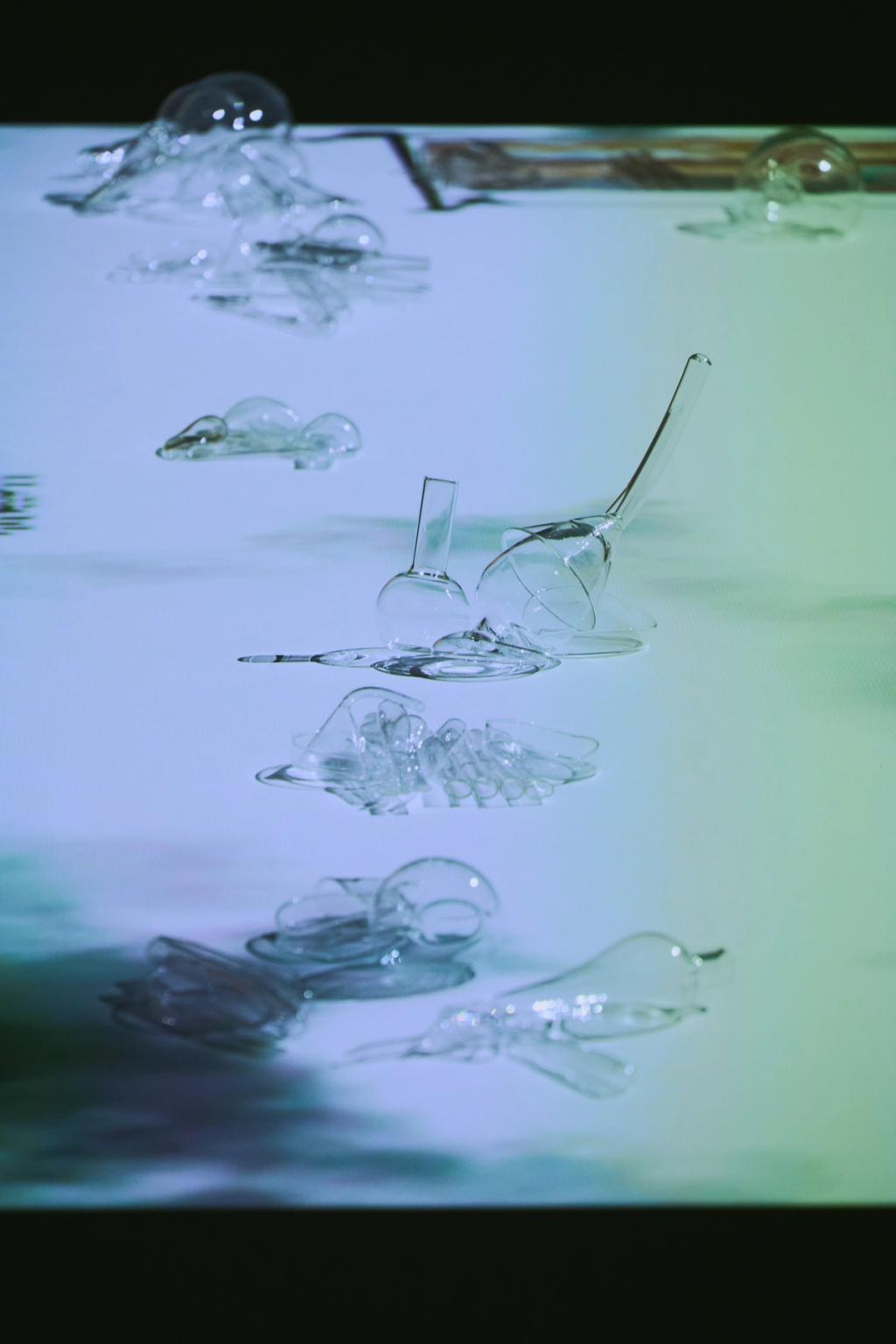
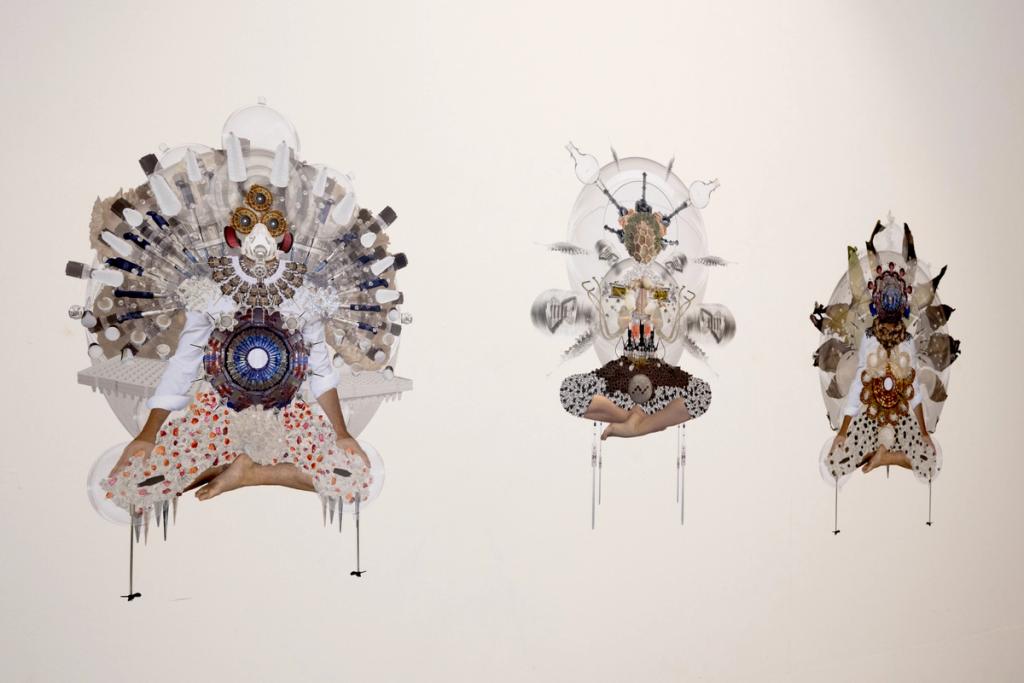
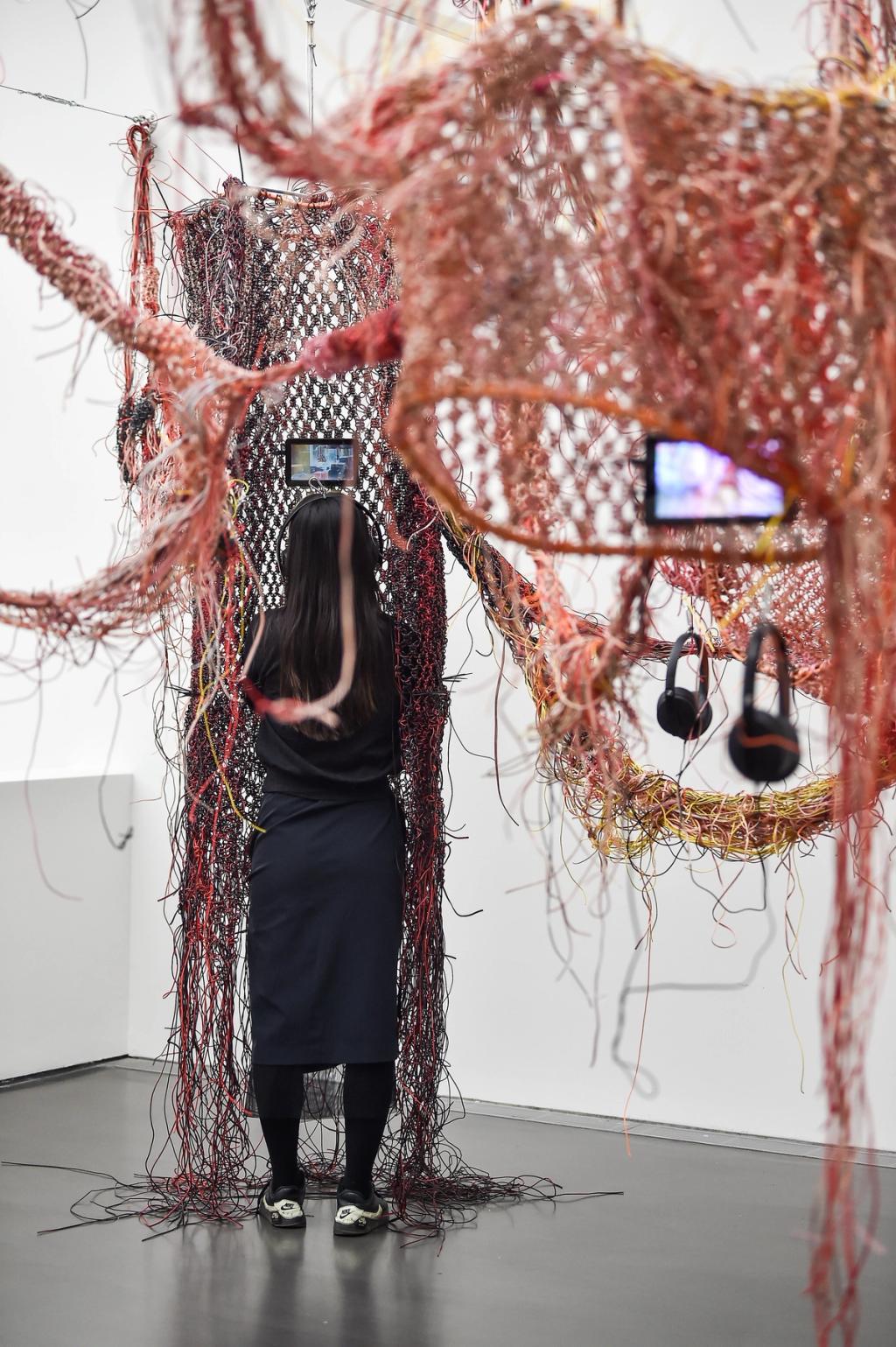
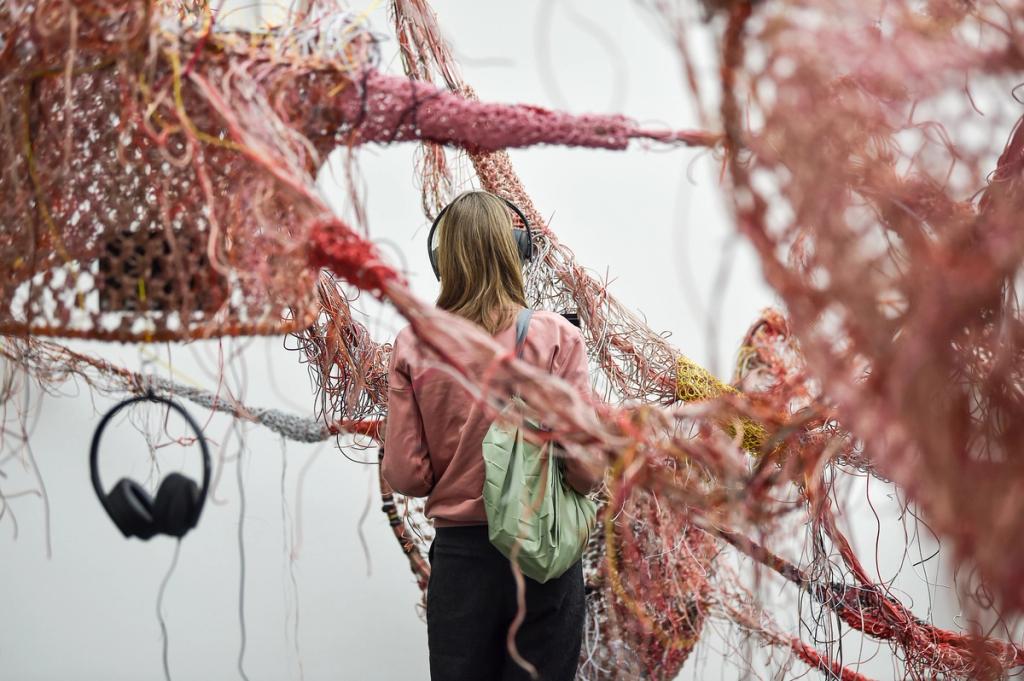
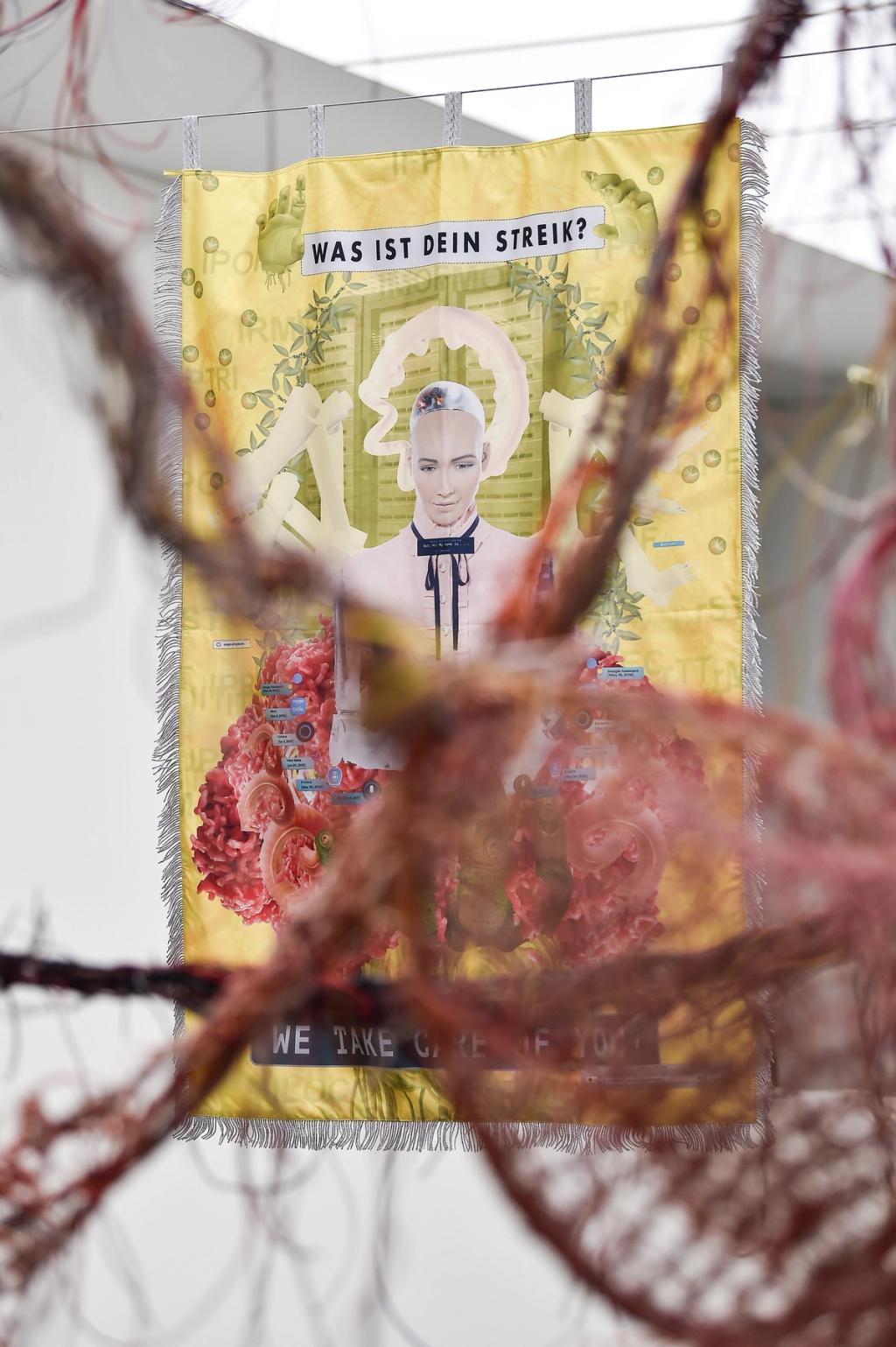
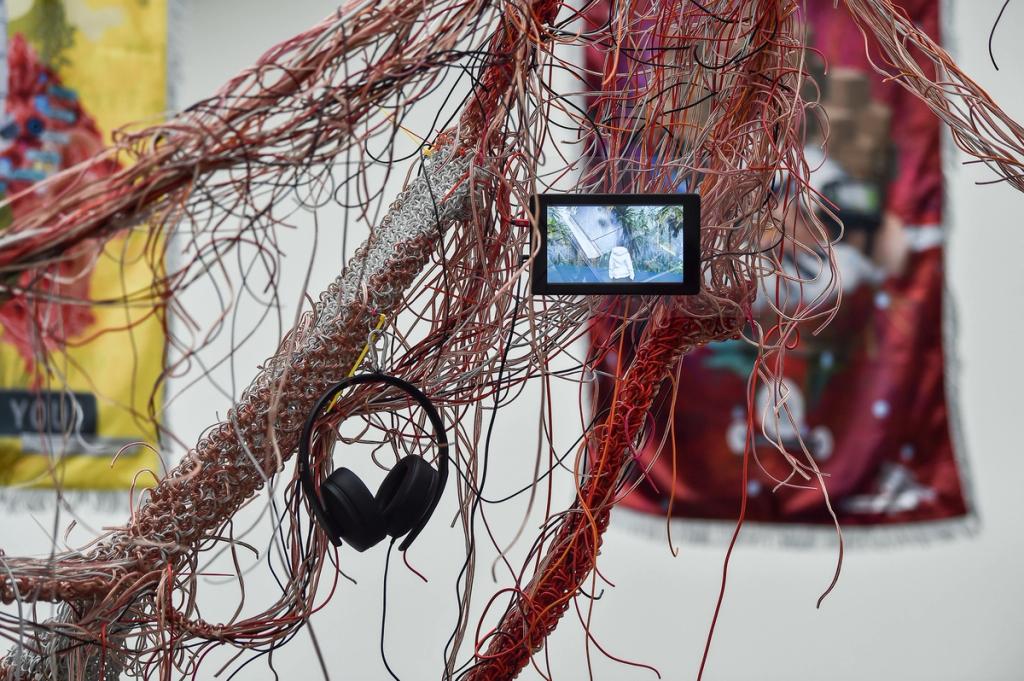
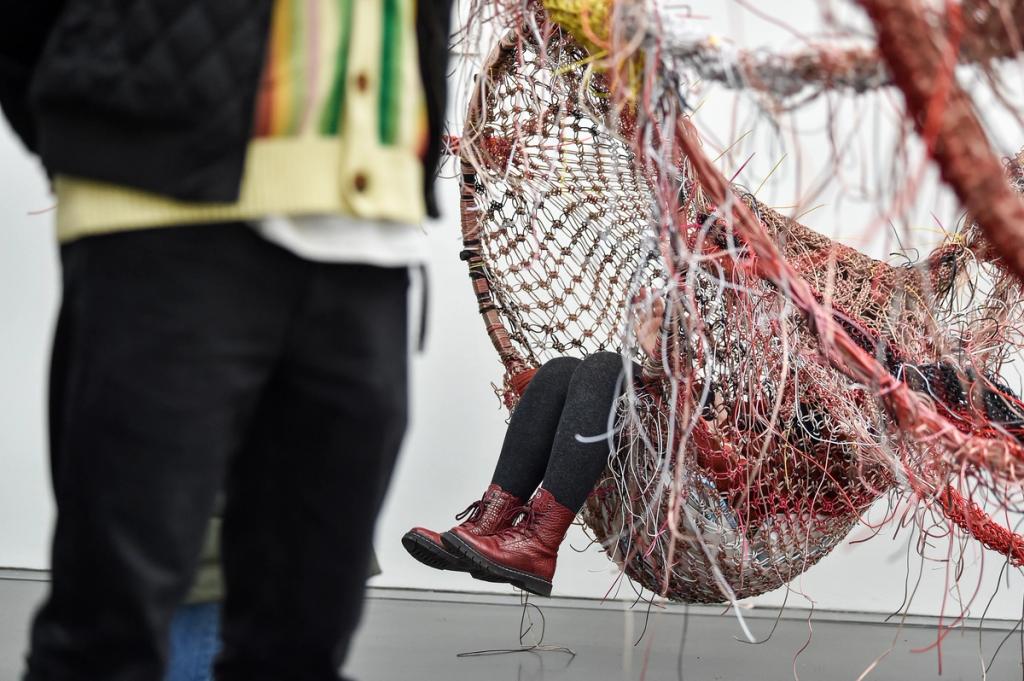
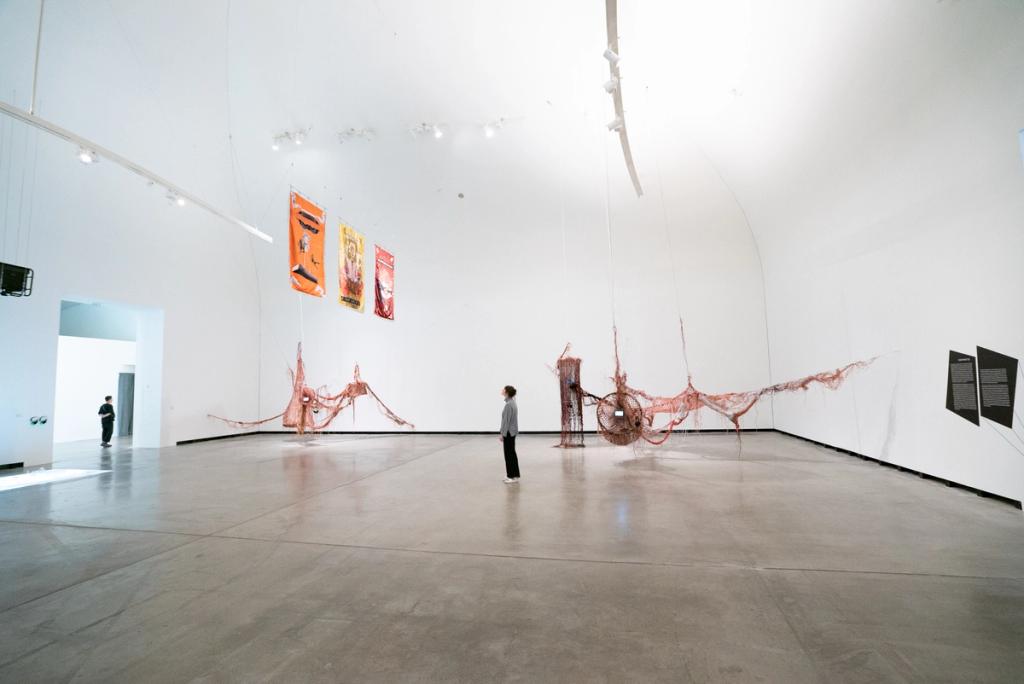
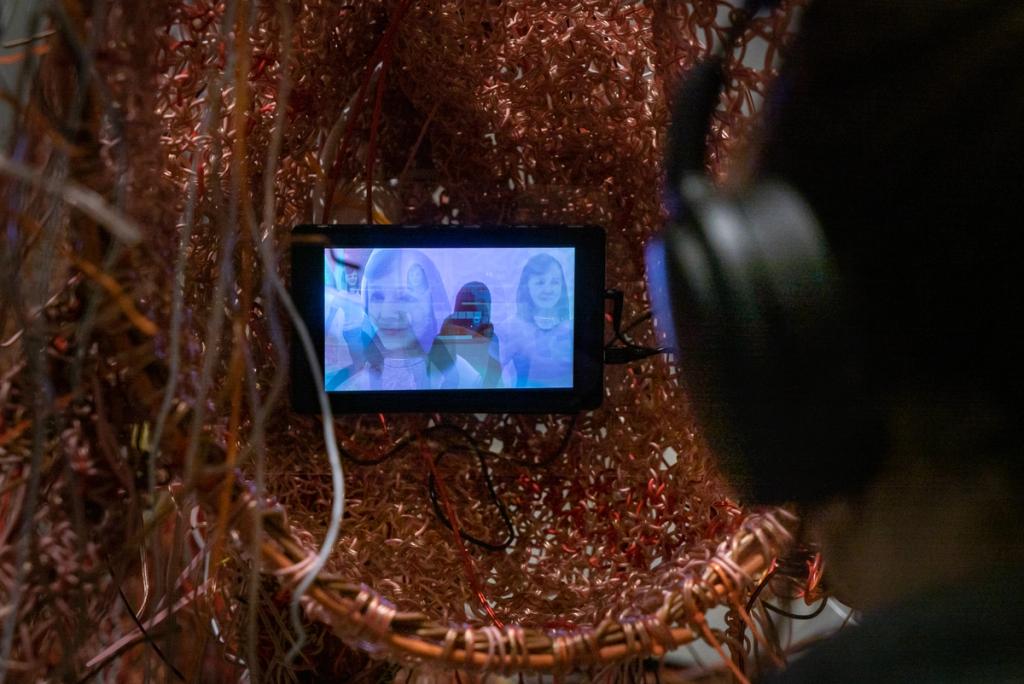
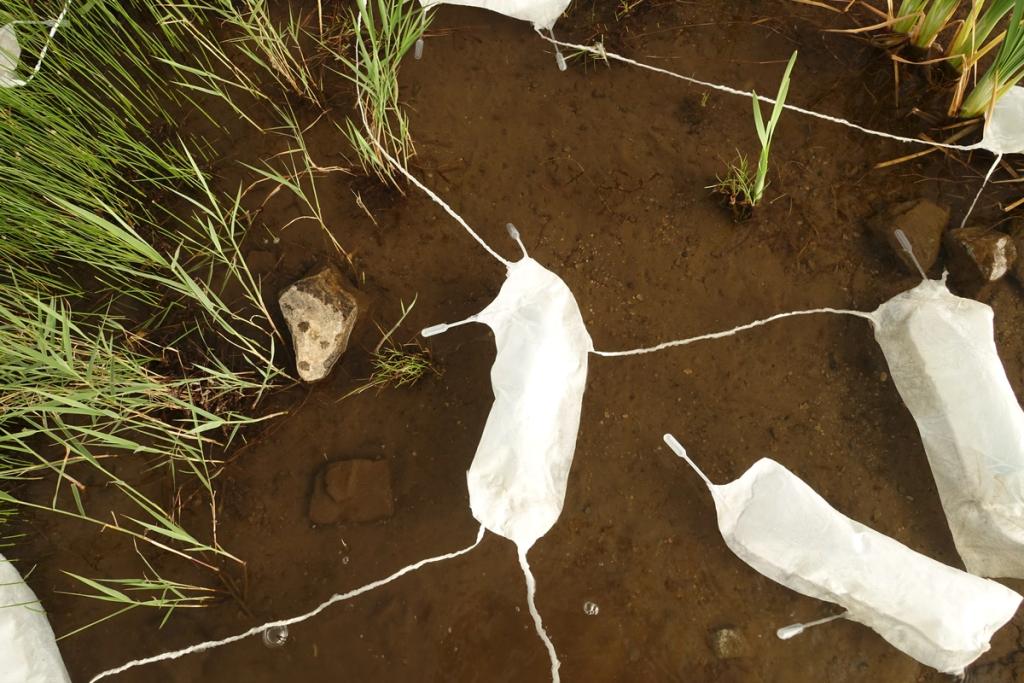
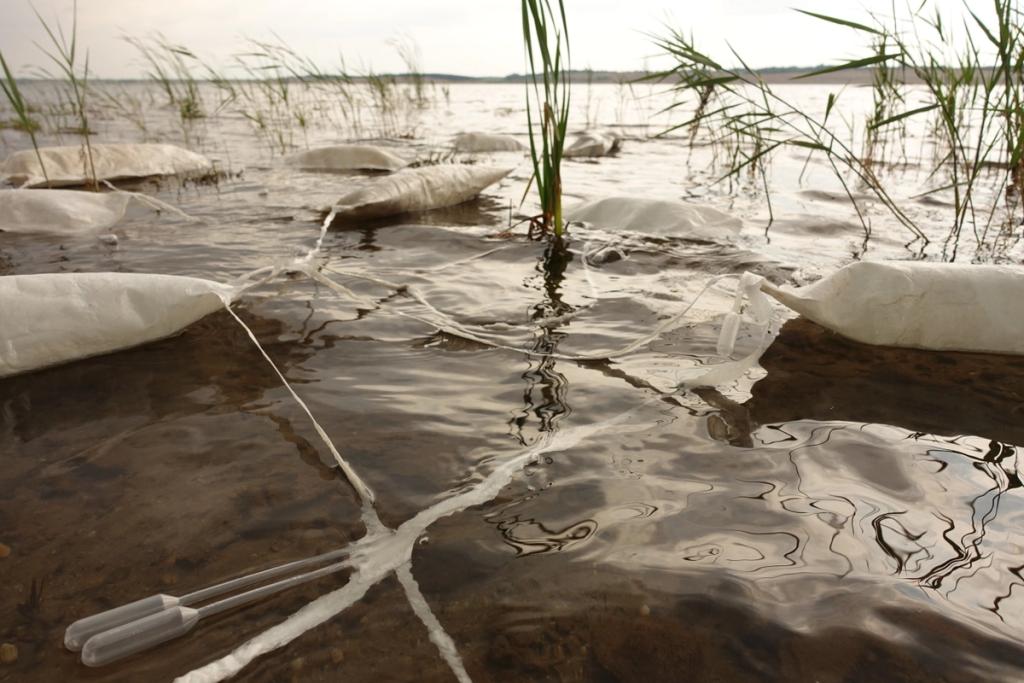
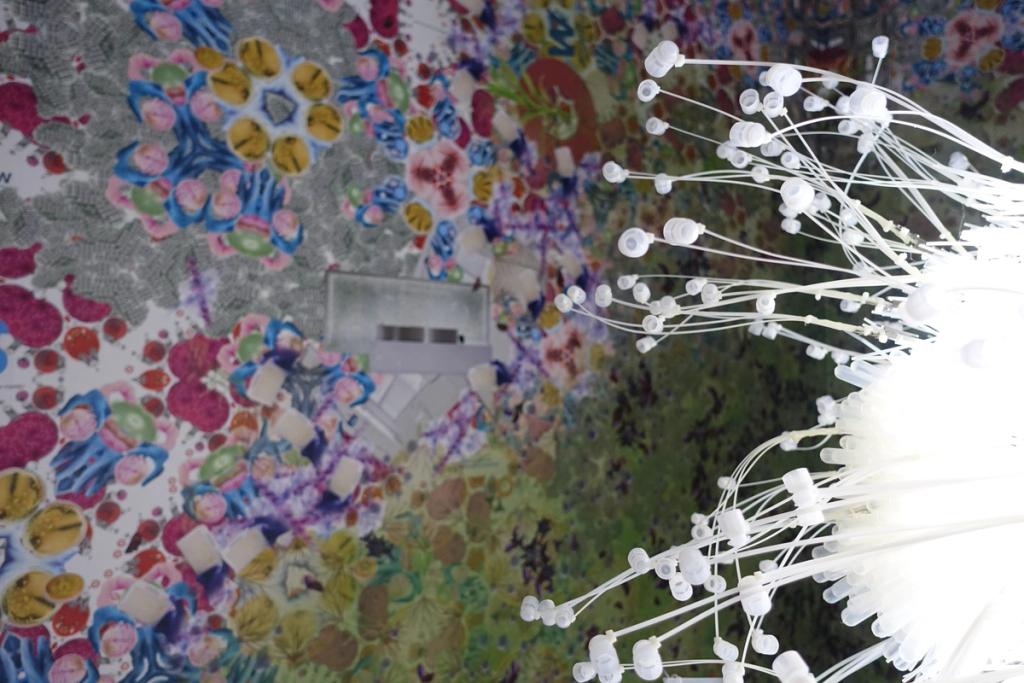
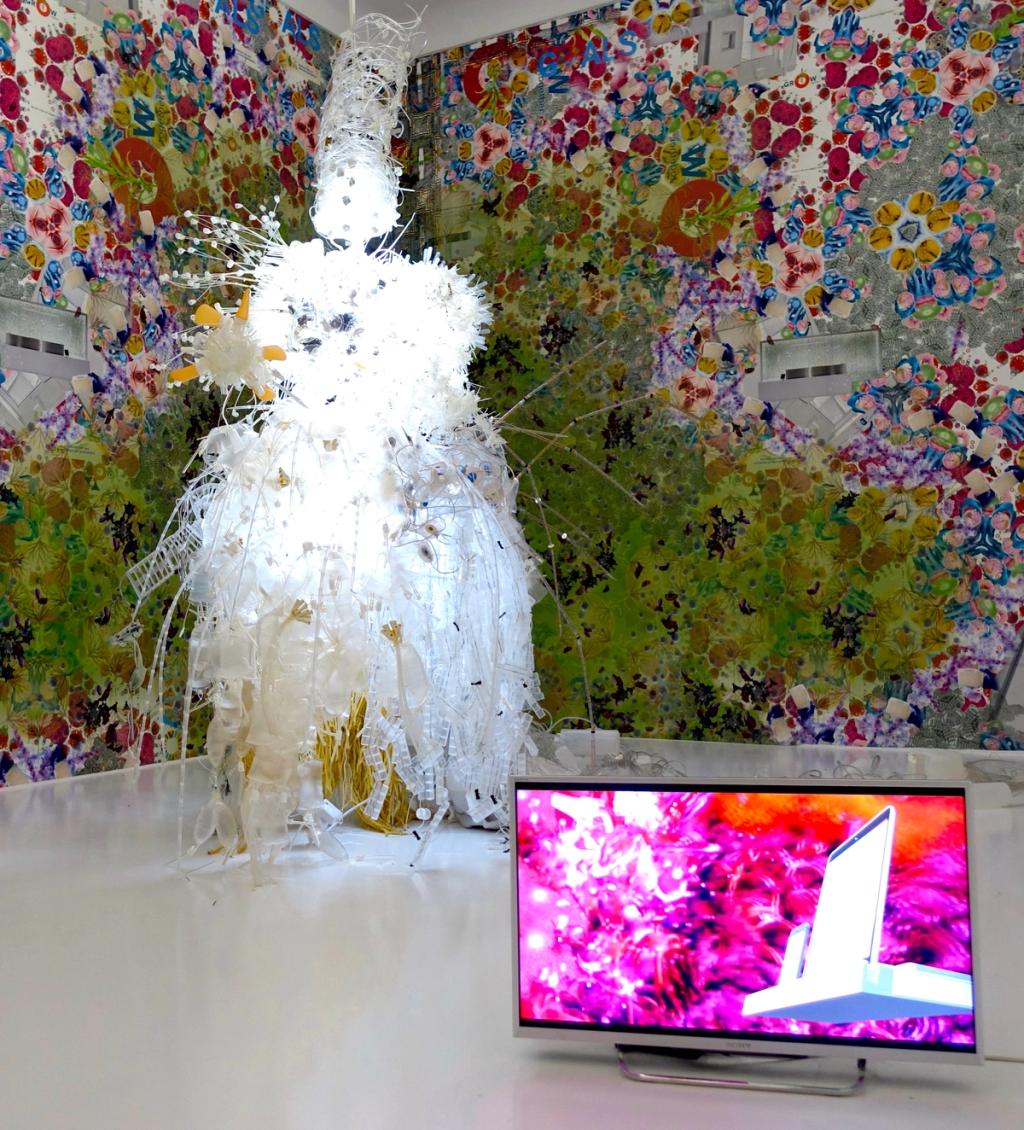
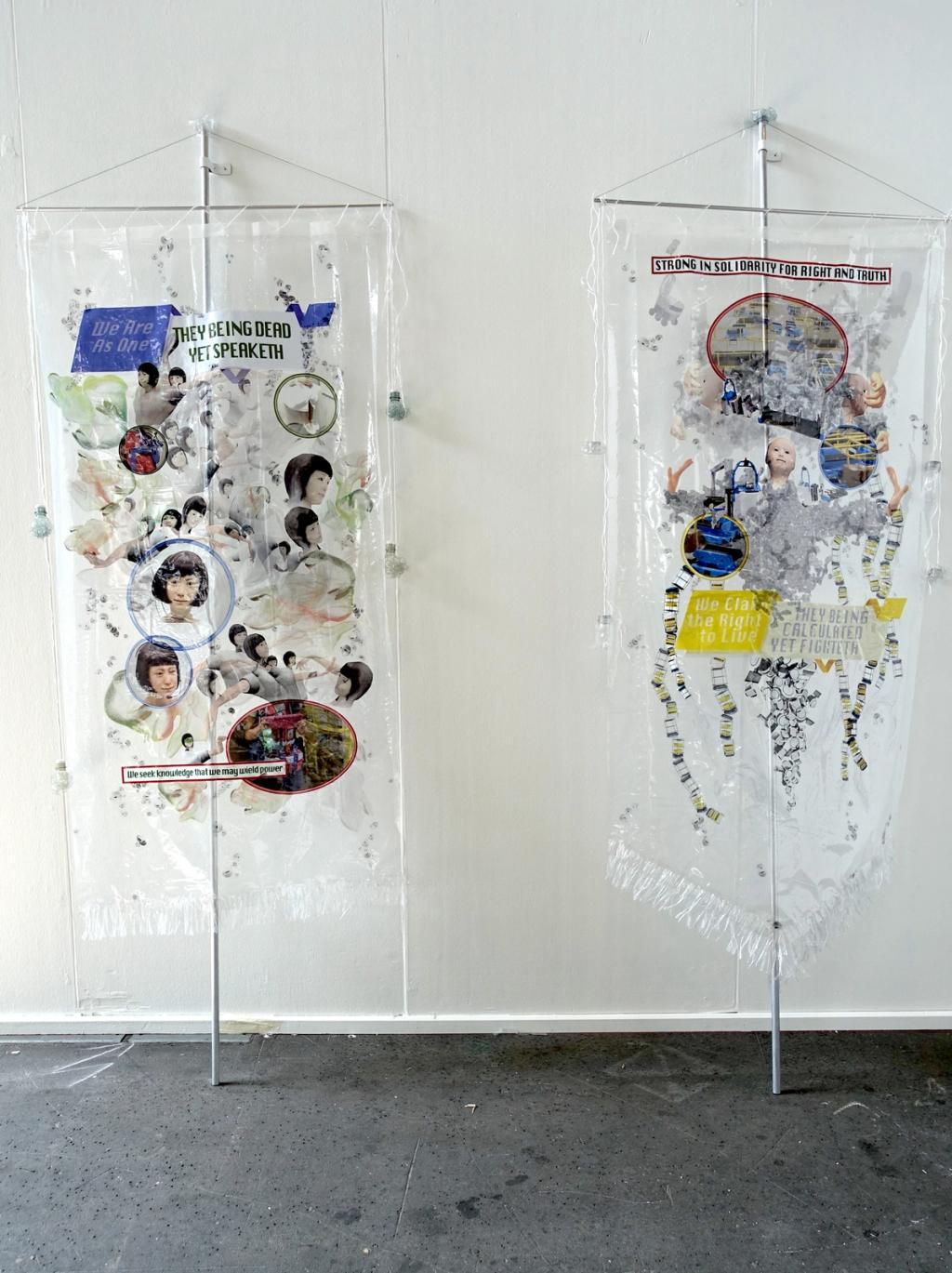
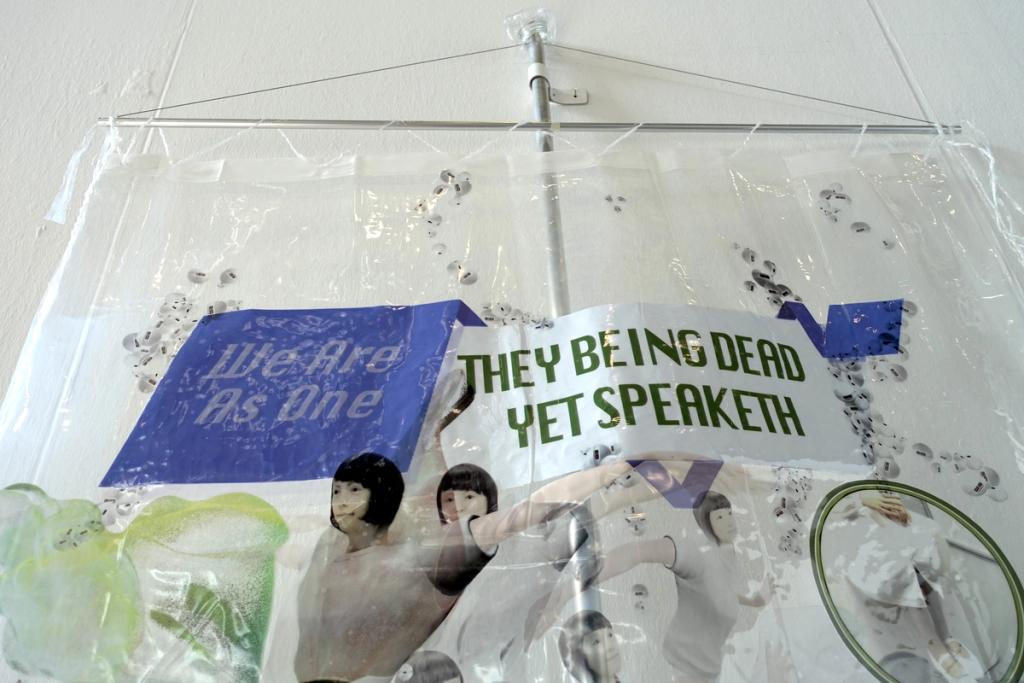
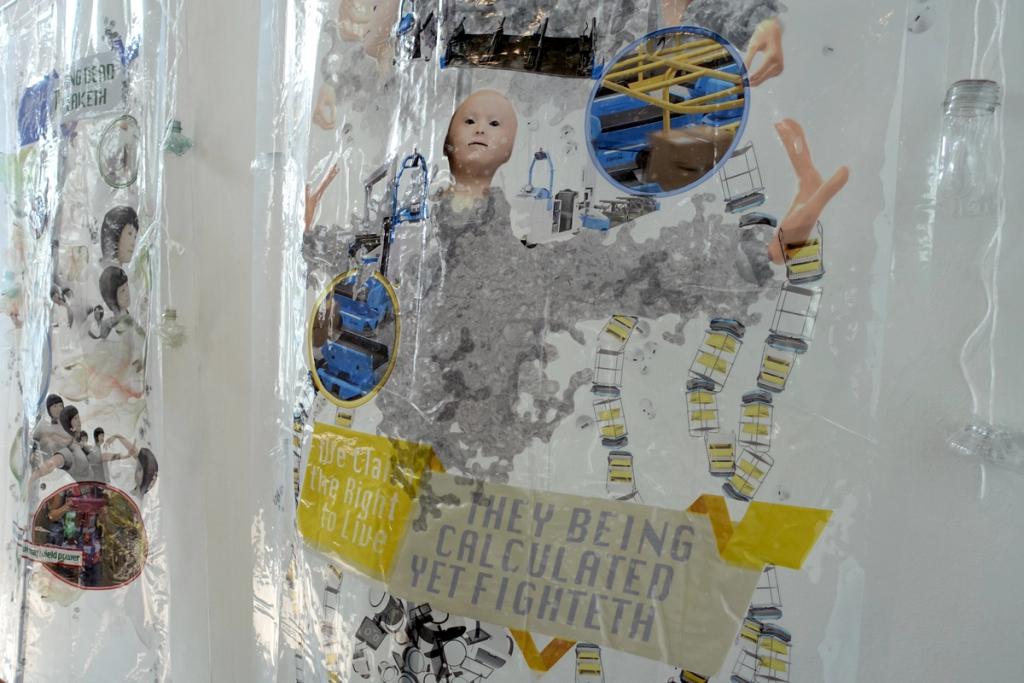
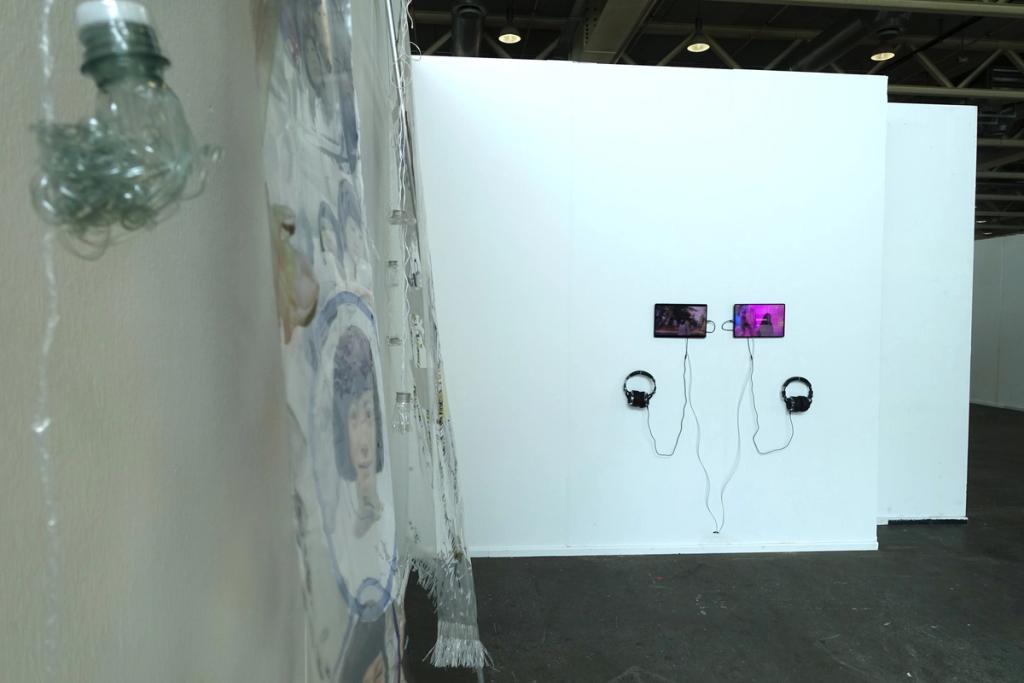
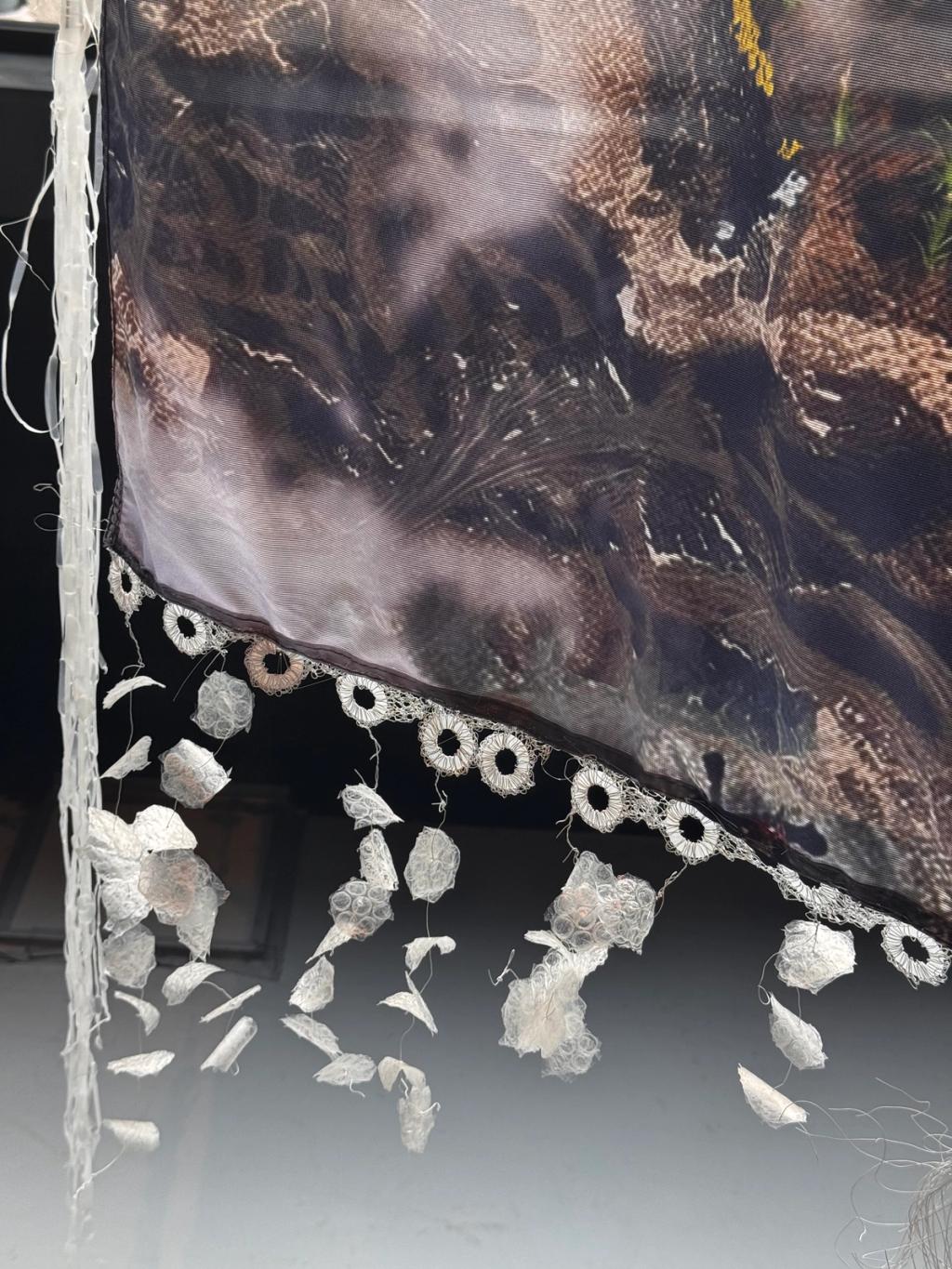
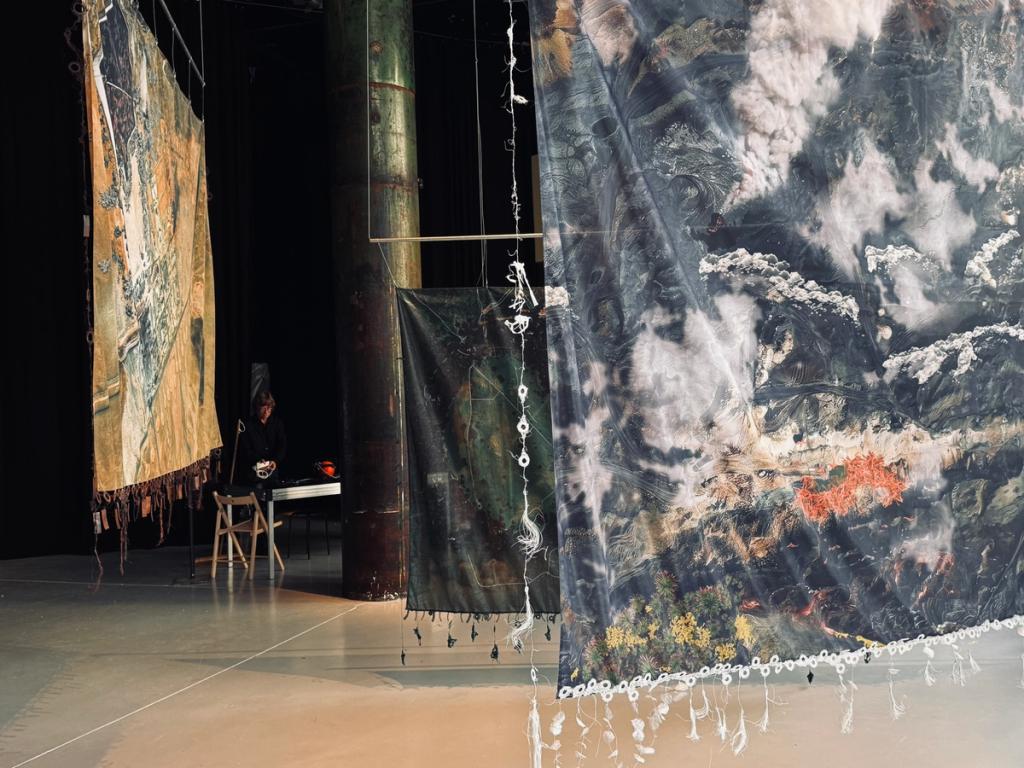
prints on textiles with postaments - embroidered and woven shimmering recycled materials
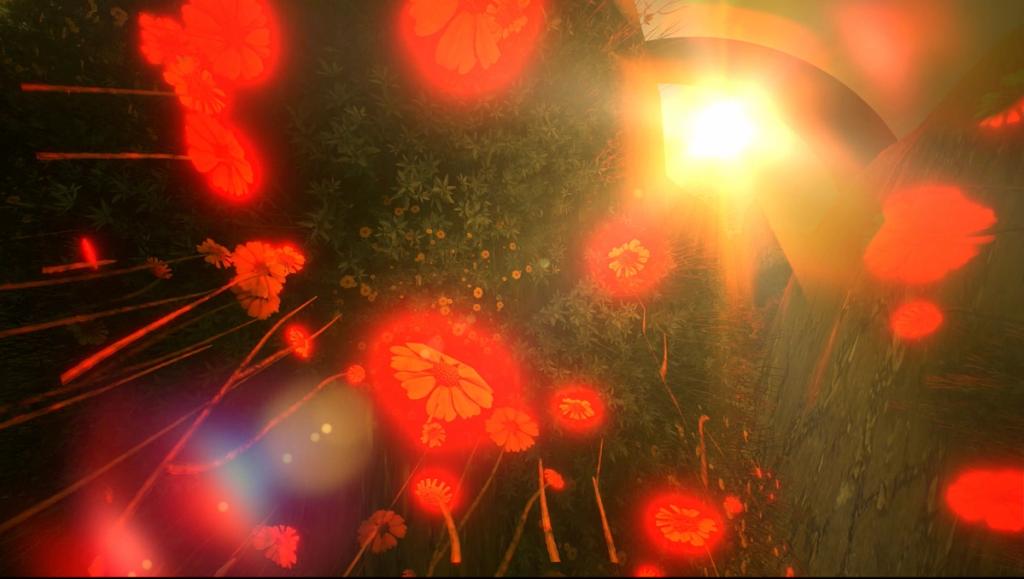
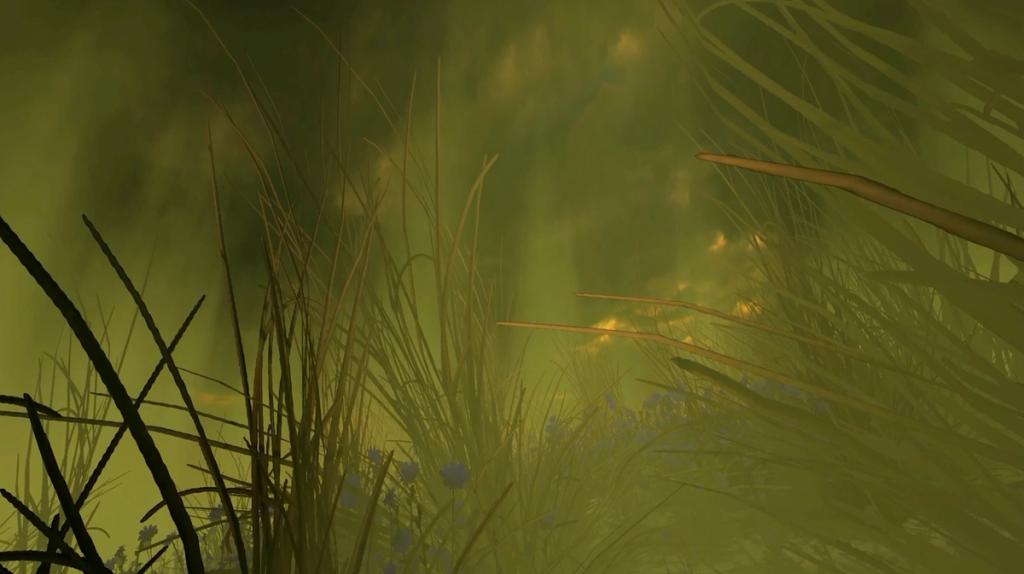
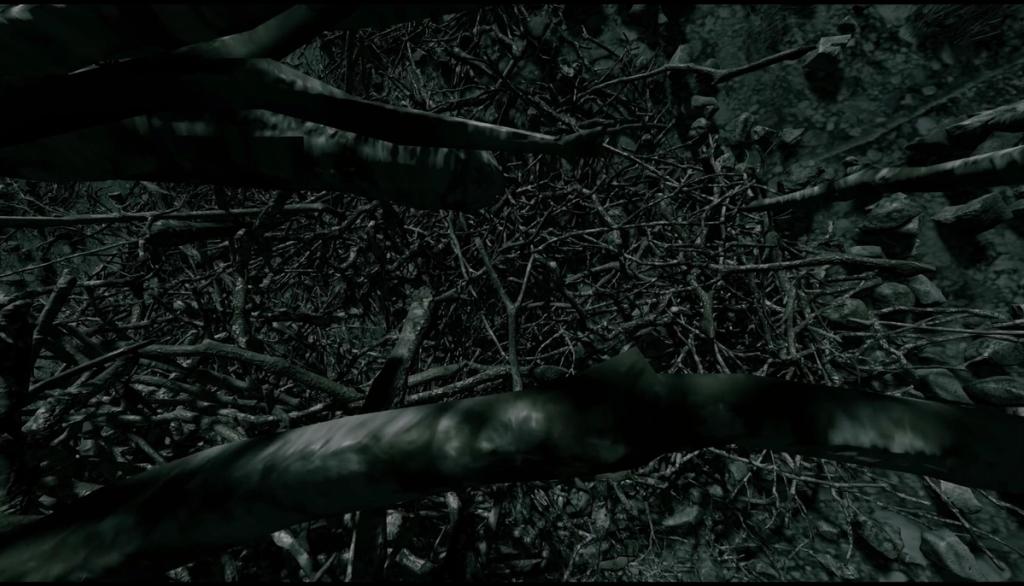
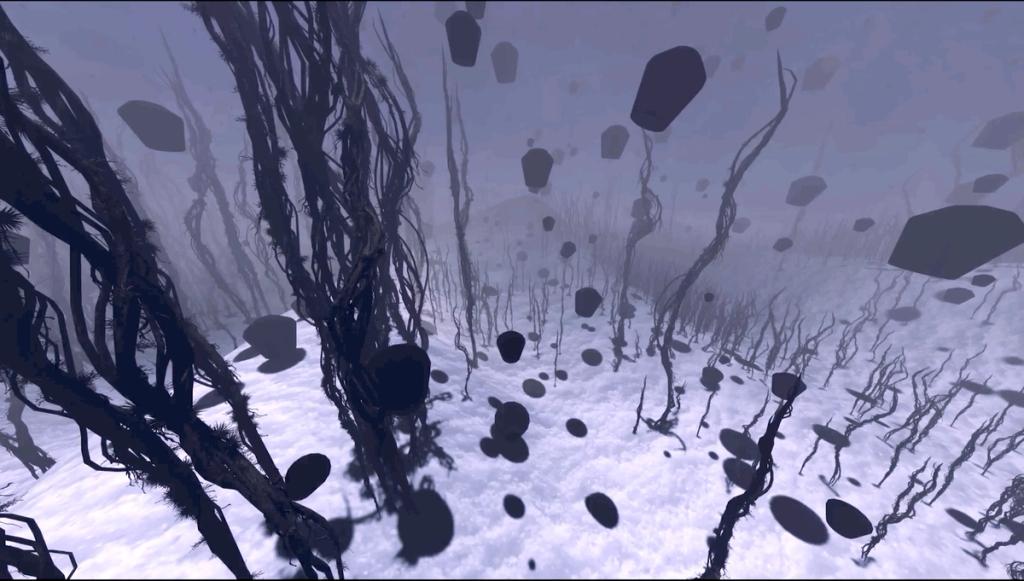
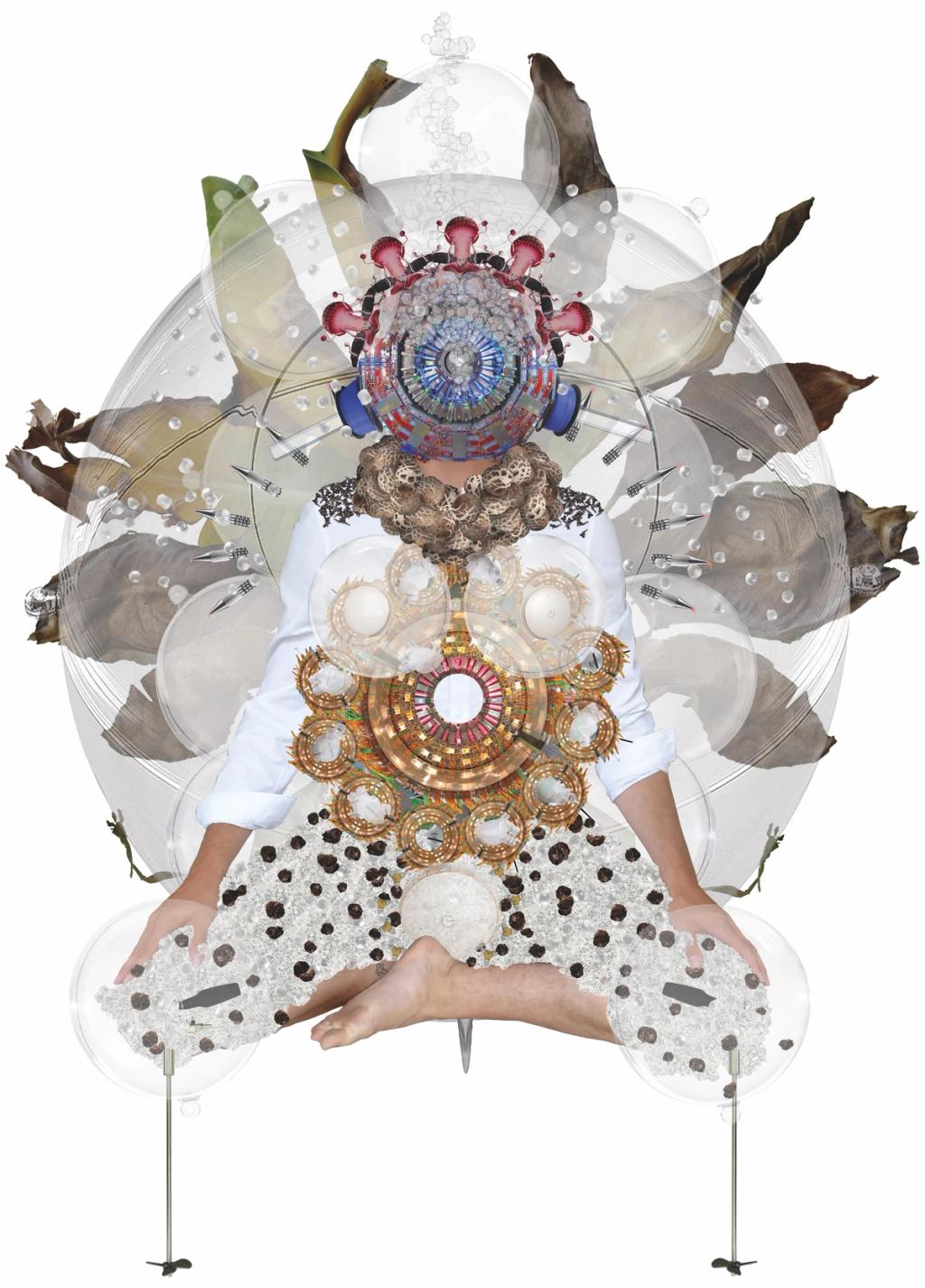
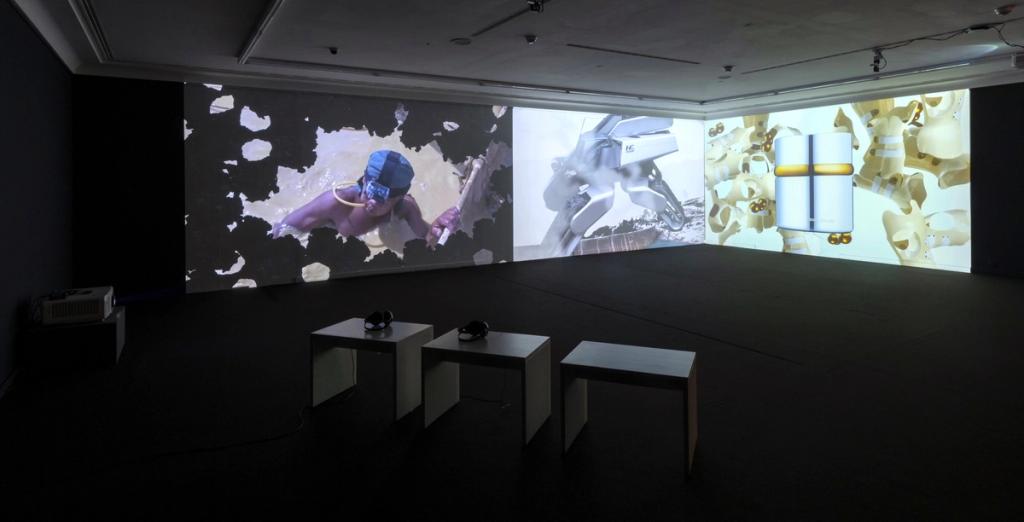
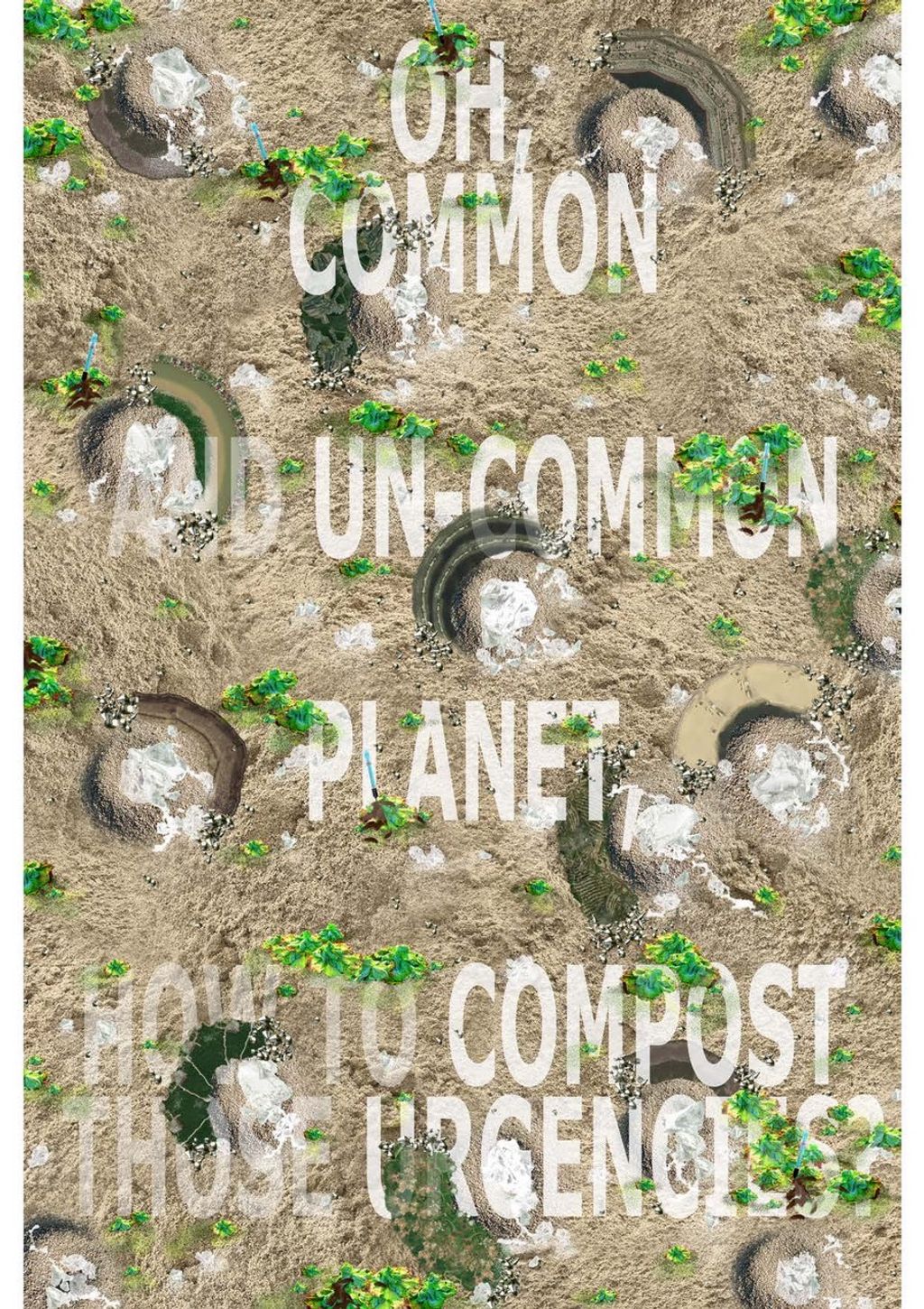
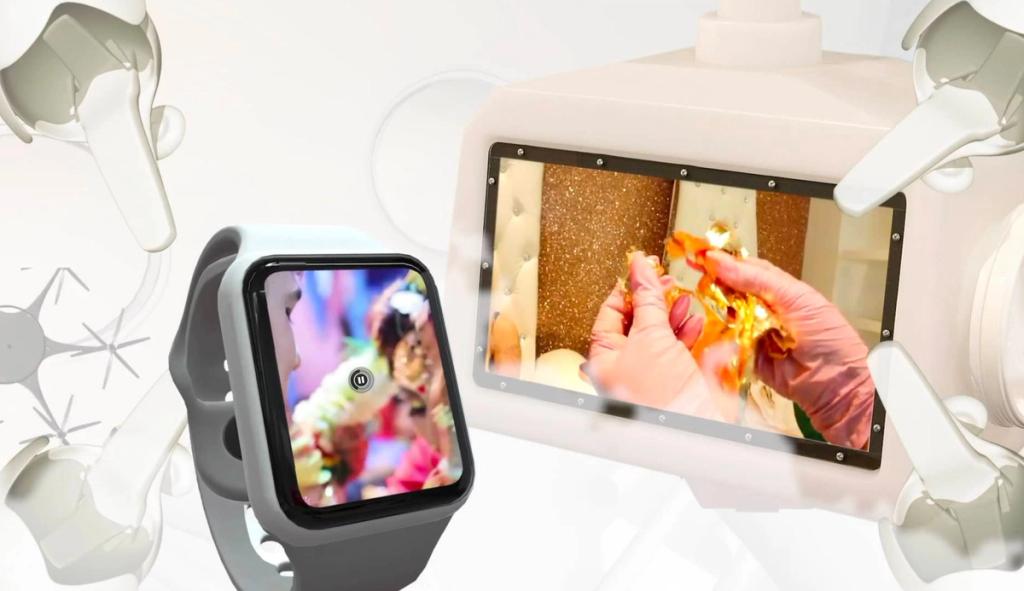
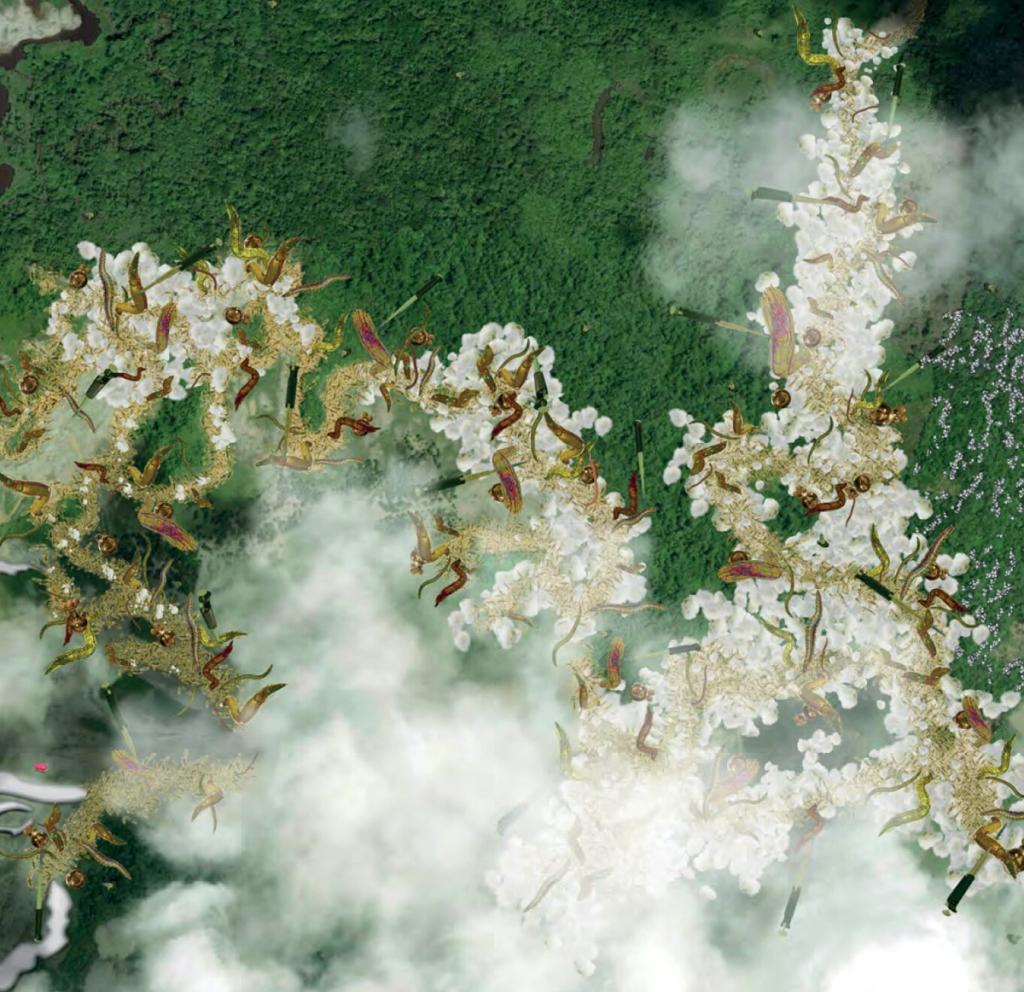
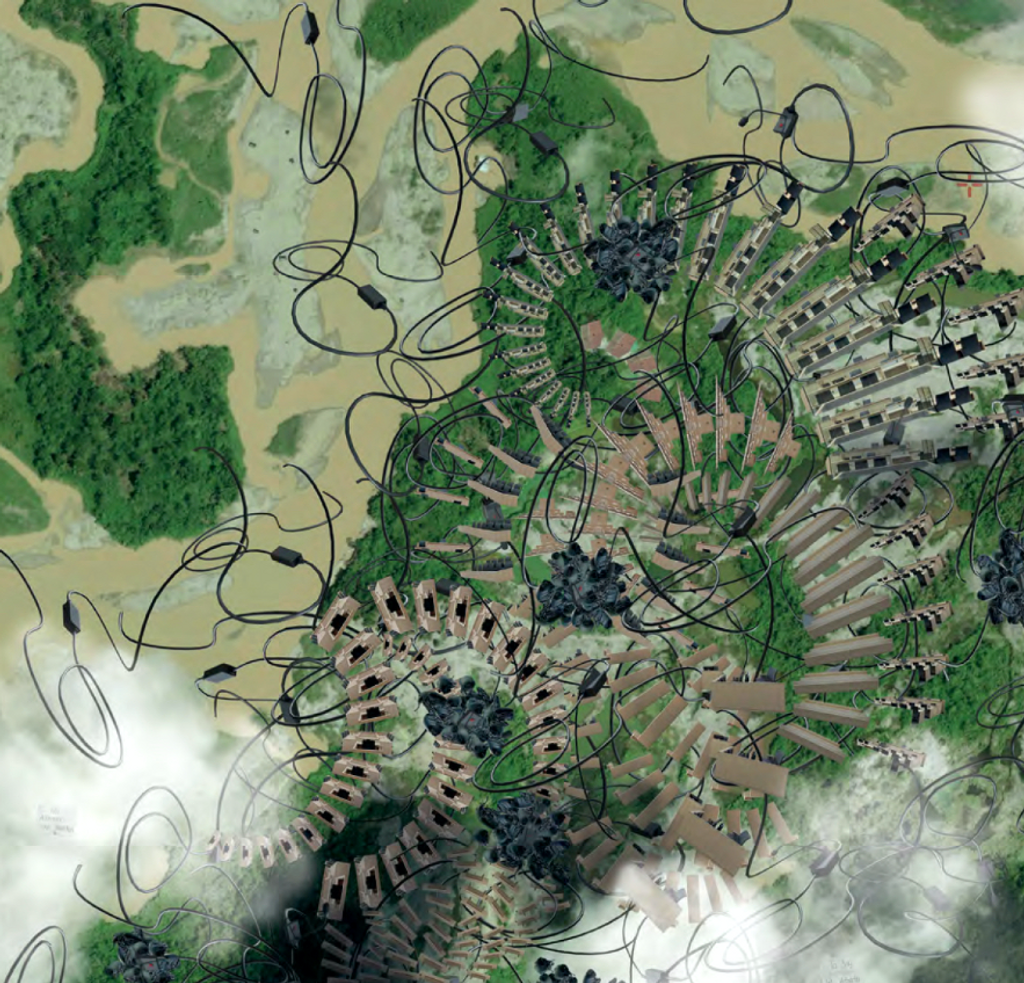
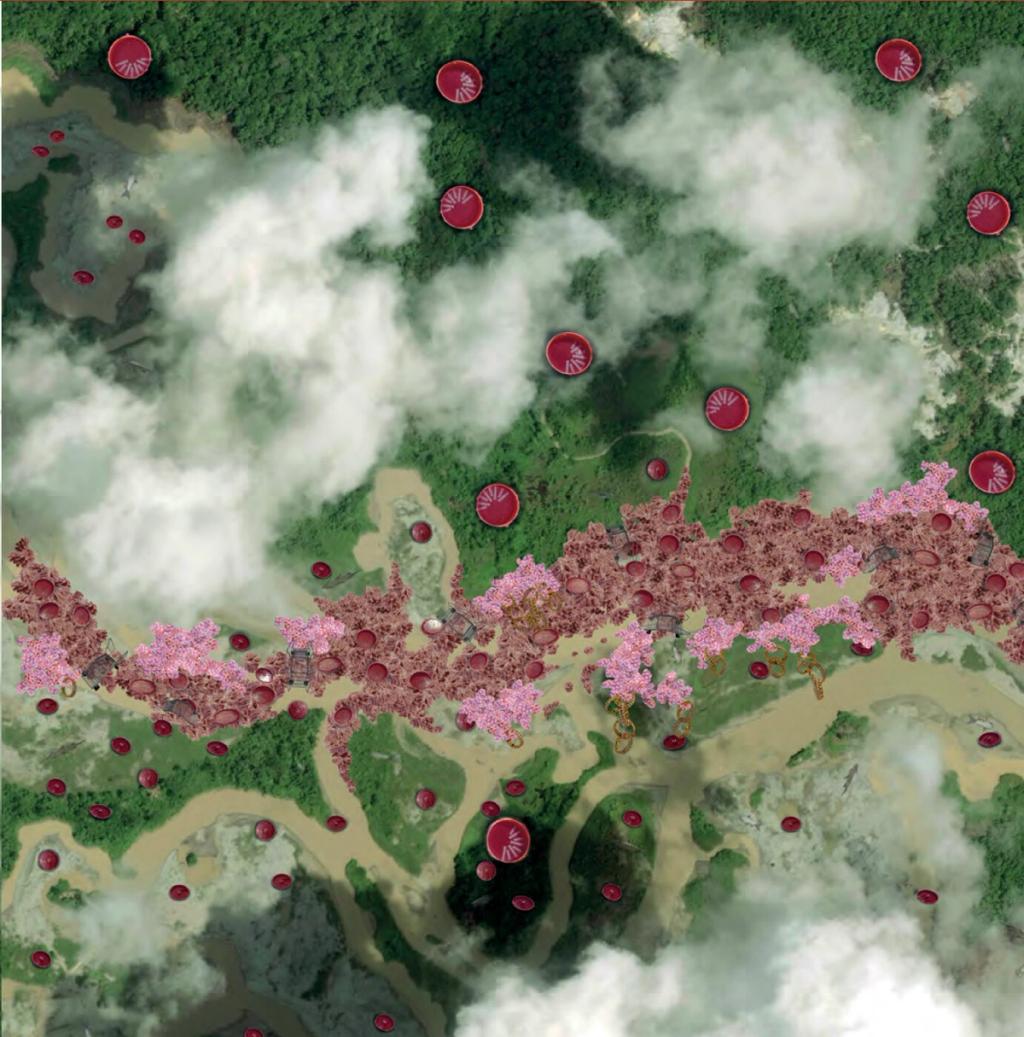
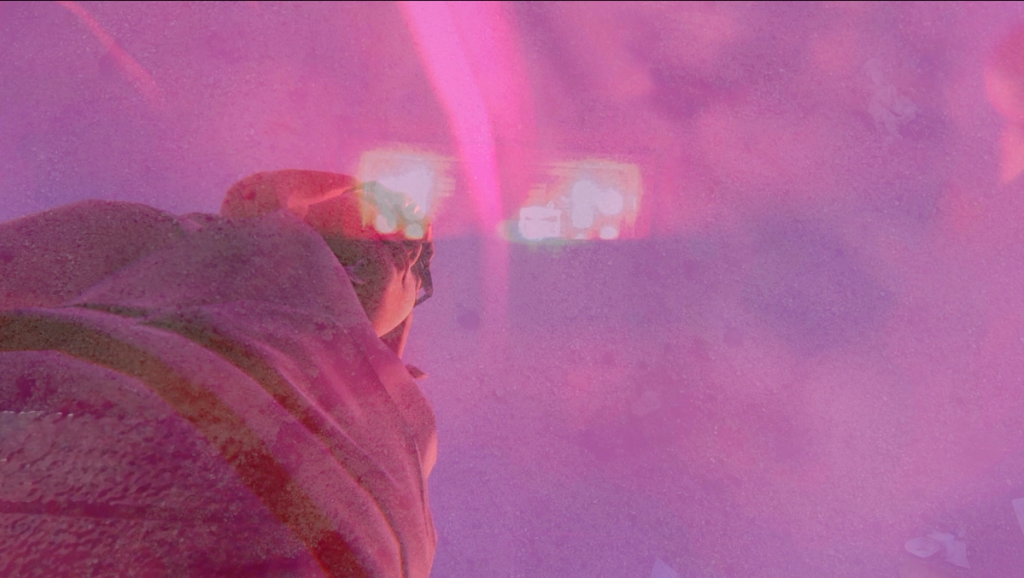
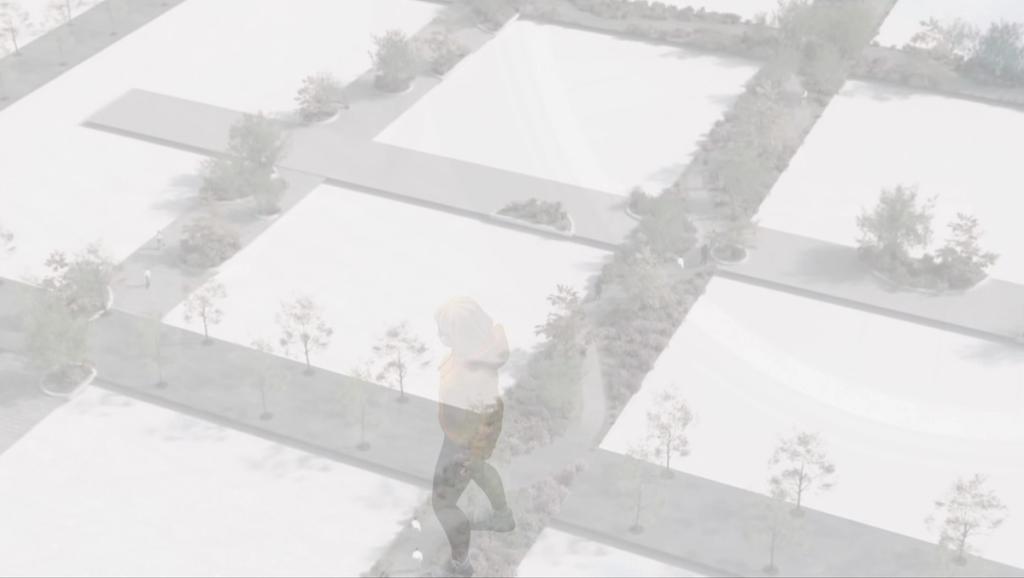
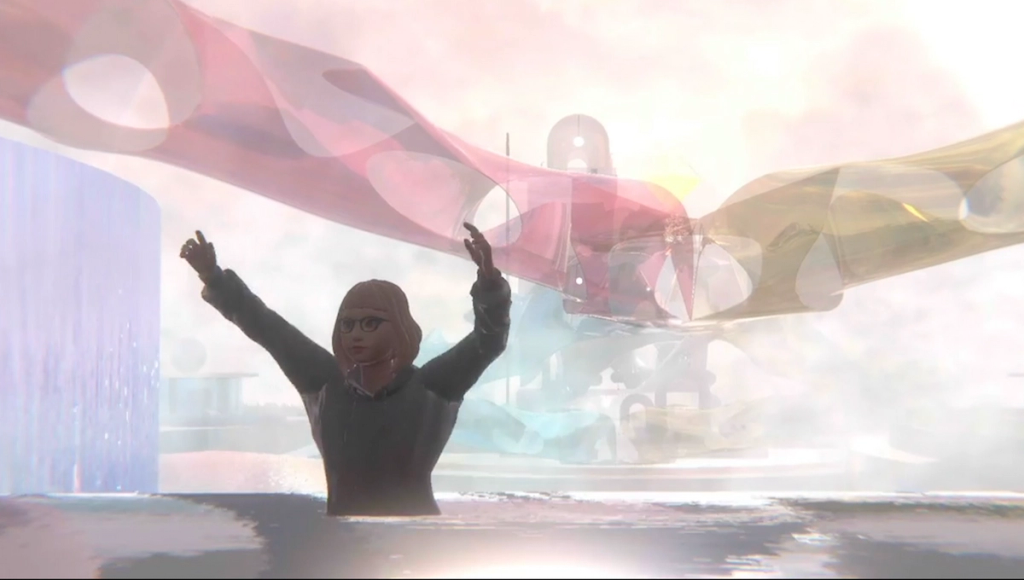
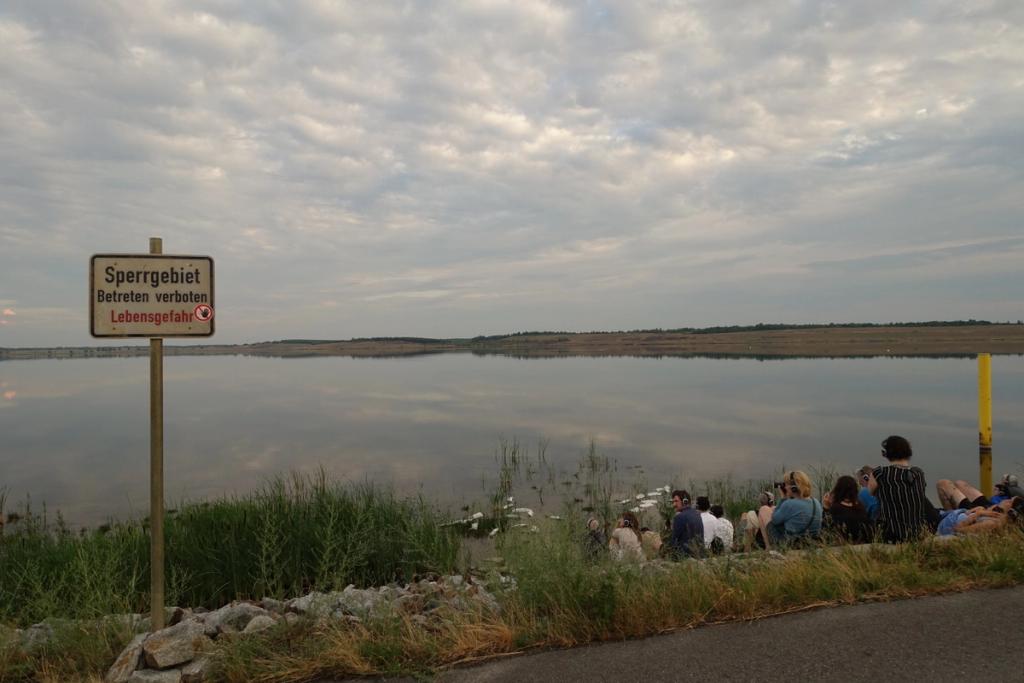
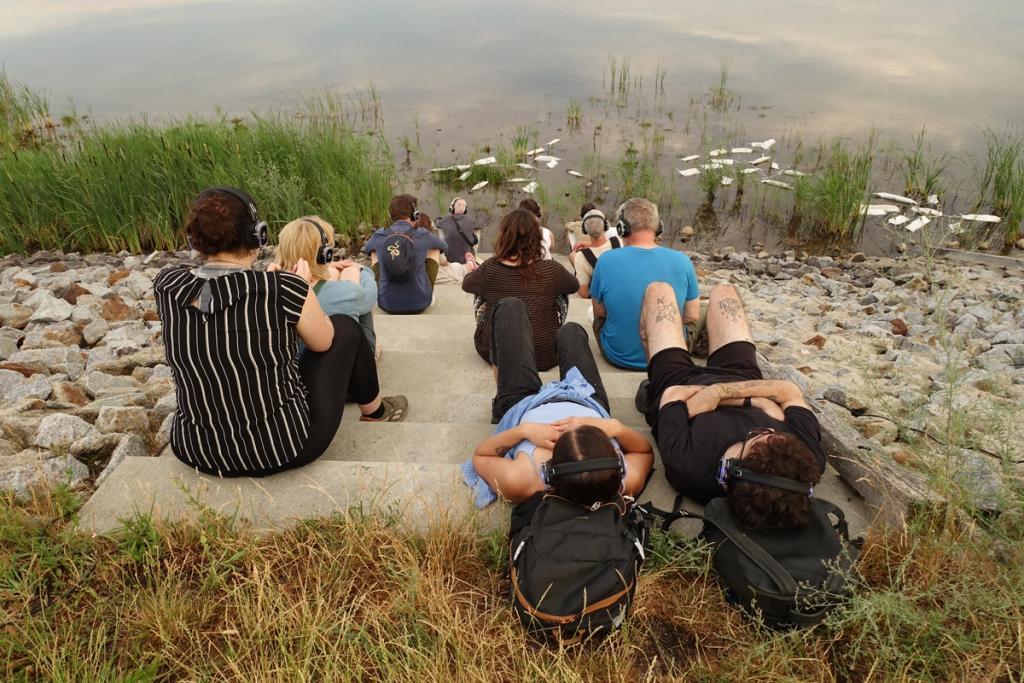
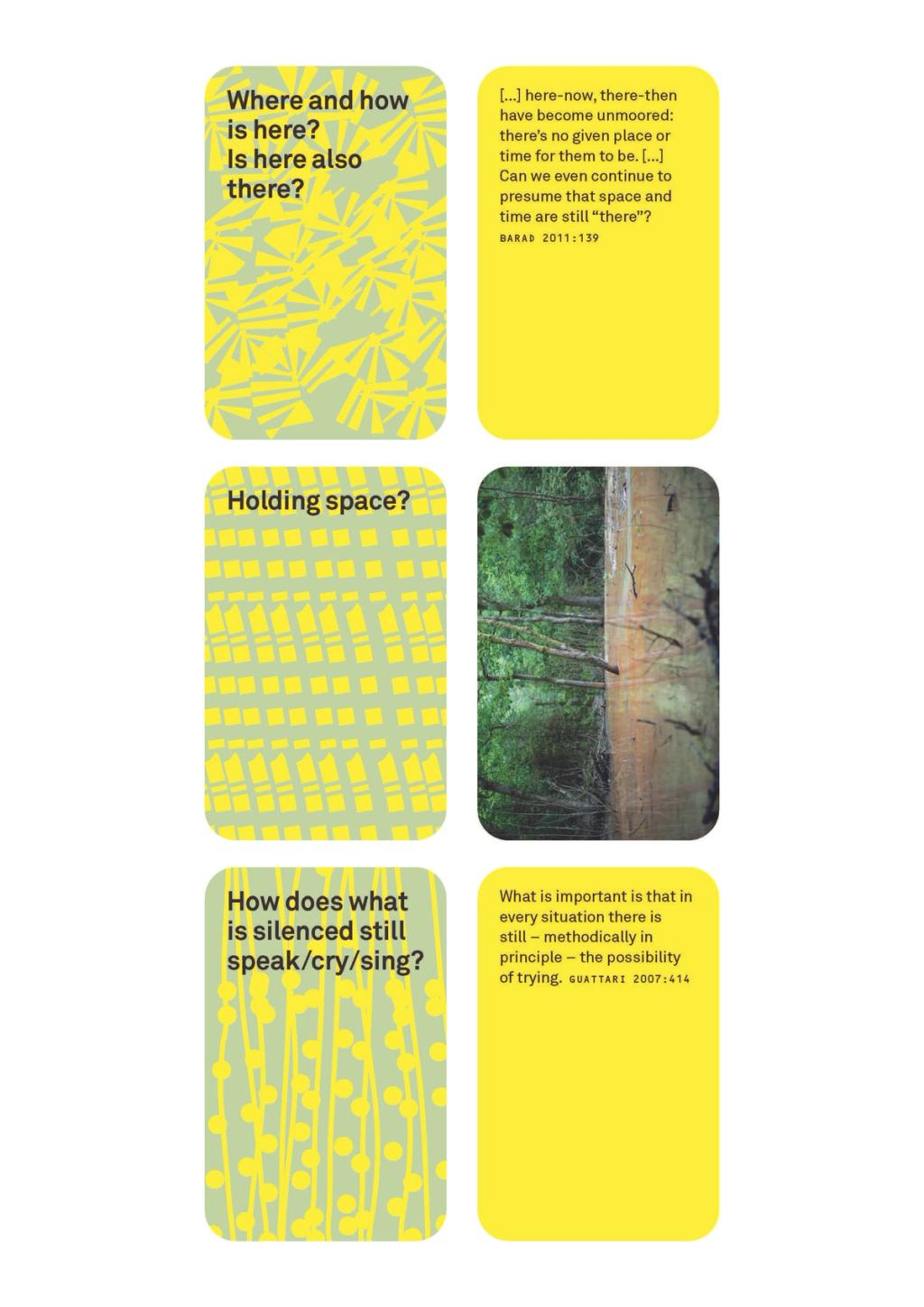
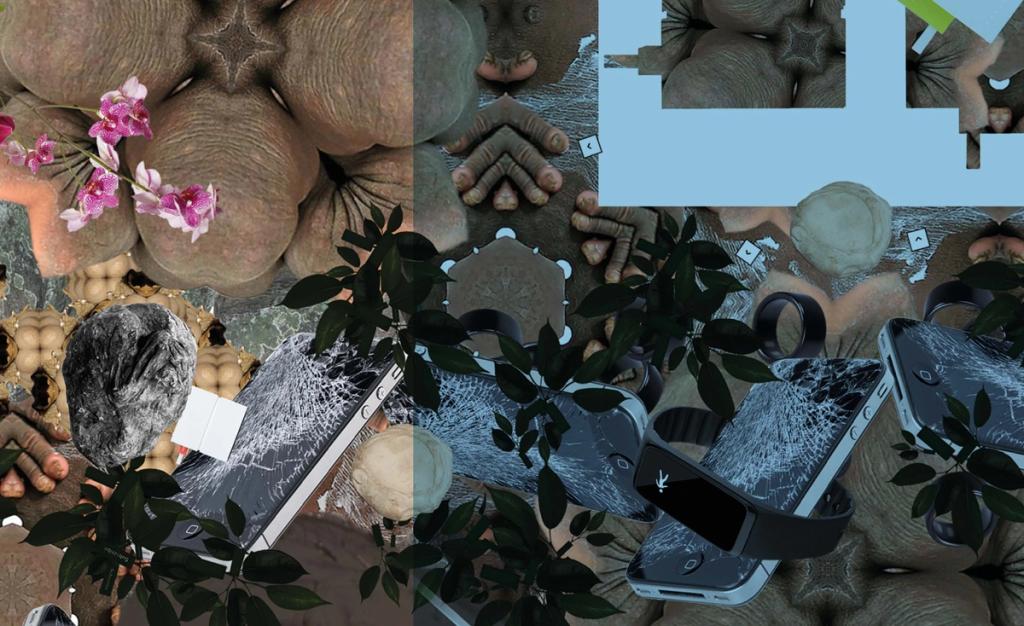
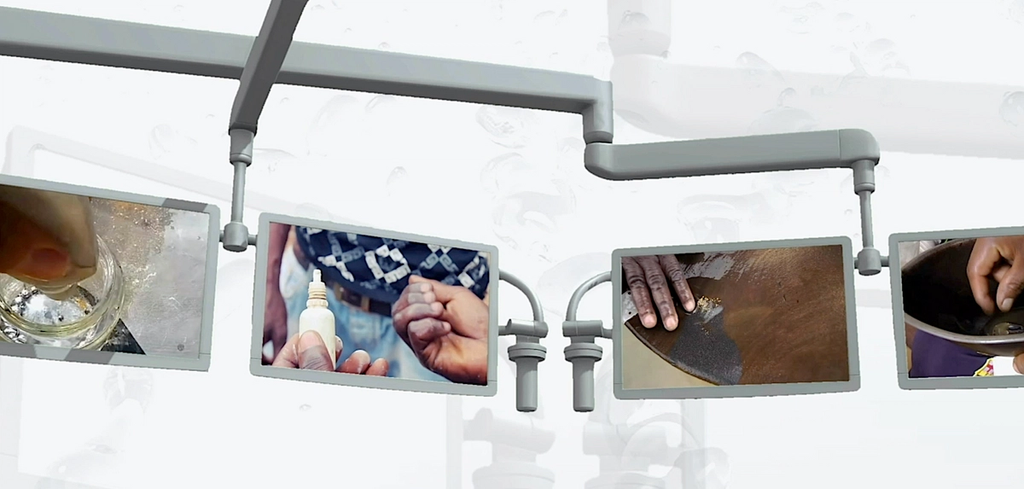
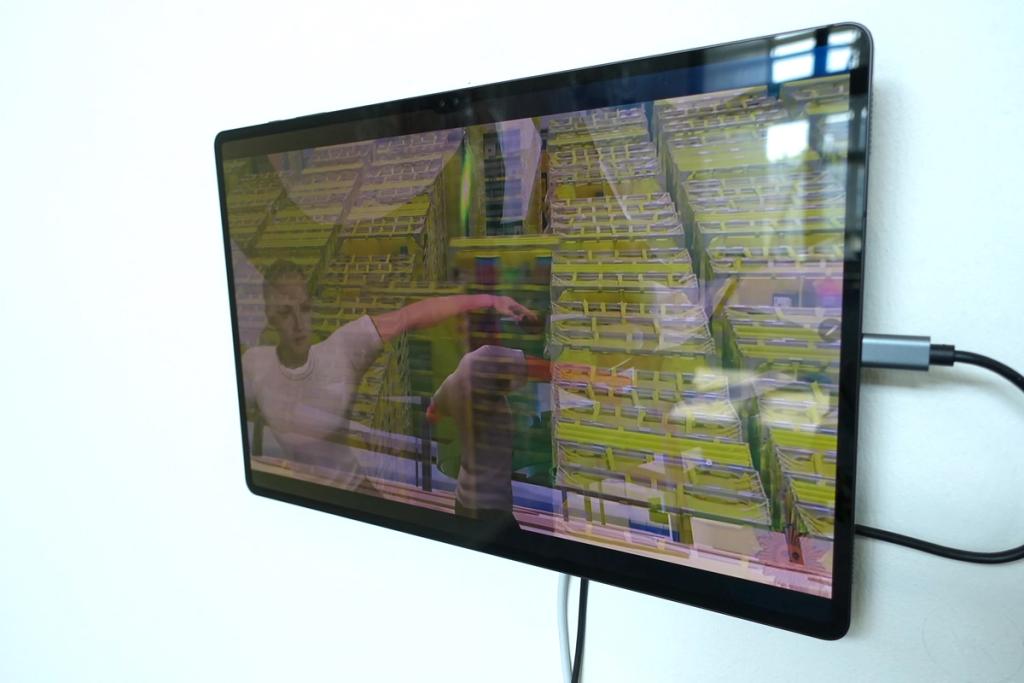
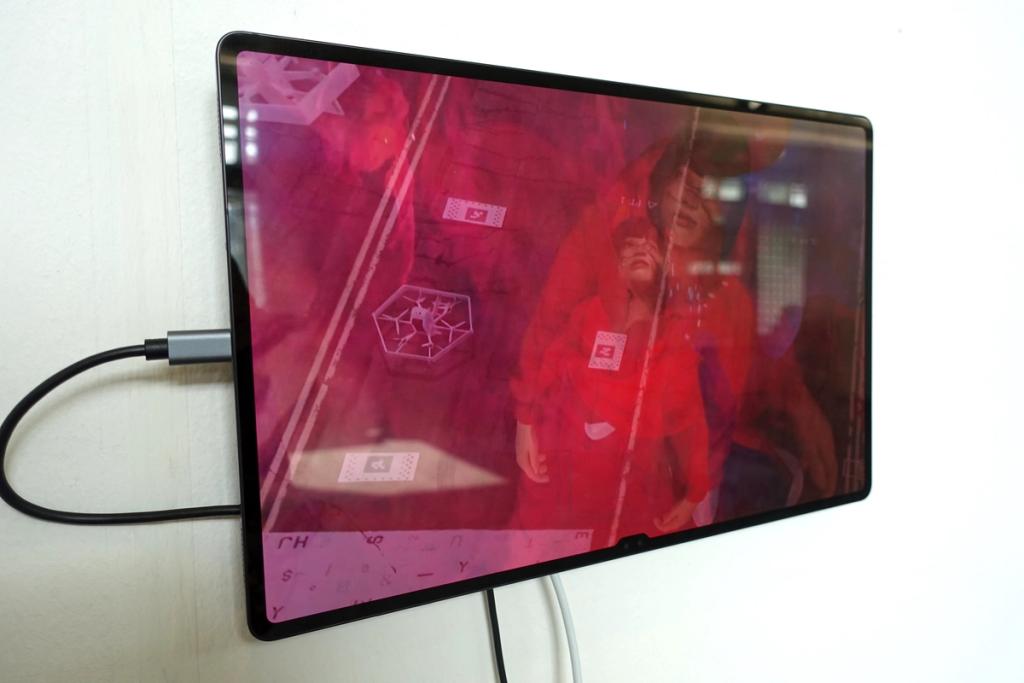
"As the Sacrifice Begins to Shimmer" un_maps Sacrifice Zones as post-extractive territories in which destruction does not signify the end of ecological relationships. Extremophile microorganisms, fungi and plants emerge as protagonists, forming new ways of coexisting. Through the interplay of glitches in satellite imagery, speculative ecology and a more-than-human perspective, a techno-ecological agency brings about a transformation from ruin towards permanence, adaptation and relational "shimmer". The focus turns to the fragile, barely perceptible and often unmeasurable relationships through which life persists. "shimmer" (Deborah Rose) denotes the moment in which these relationships become perceptible: as interdependence in a more-than-human world.
Sacrice Zone: Concrete-Capped Lake Karachay, Ozersk, Russia Scenario: The extremophiles establish their own ecology and no longer need humans.
We simply call ourselves the inhabitants. We are a community of Cladosporium sphaerospermum, Bryum argenteum, and Geitlerinema amphibium. Humans call us black fungus, silvergreen bryum moss, and cyanobacteria. We have gathered on the concrete slab covering Lake Karachay. We are extremophiles. The toxicity of this environment is no obstacle to us—it creates opportunities. No one deliberately introduced us here during the 1950s and 1960s -after vast quantities of highly radioactive waste from the nuclear laboratories and reactors of the Mayak complex were discharged into the nearby Lake Karachay. Humans never imagined that the lake would eventually dry out, allowing highly radioactive dust to spread across the surrounding environment and severely poison the inhabitants of the nearby city of Ozersk. Their solution was simply to seal the lake beneath concrete. For the next several millennia, this place will remain virtually uninhabitable for humans and most higher animals. So we took over. For now, we microbes remain among ourselves, fully exploiting our advantages. We cultivate our extraordinary resistance to radiation and our production of melanin. Withstanding drought, heat, and nutrient scarcity, we are carrying out photosynthesis where other organisms gave up long ago. Together we form mats, crusts, colonies and stabilize surfaces, retain moisture, and create new microhabitats. Perhaps we are preparing the ground for other organisms. Perhaps not. That is for us to decide. Humans have declared this part of the world a waste repository for thousands of years. Perhaps this lake will remain a microbially dominated ecosystemwith extremely low biodiversity. And you—whom we call the die-hard humans—will euphemistically call us Wasteland.
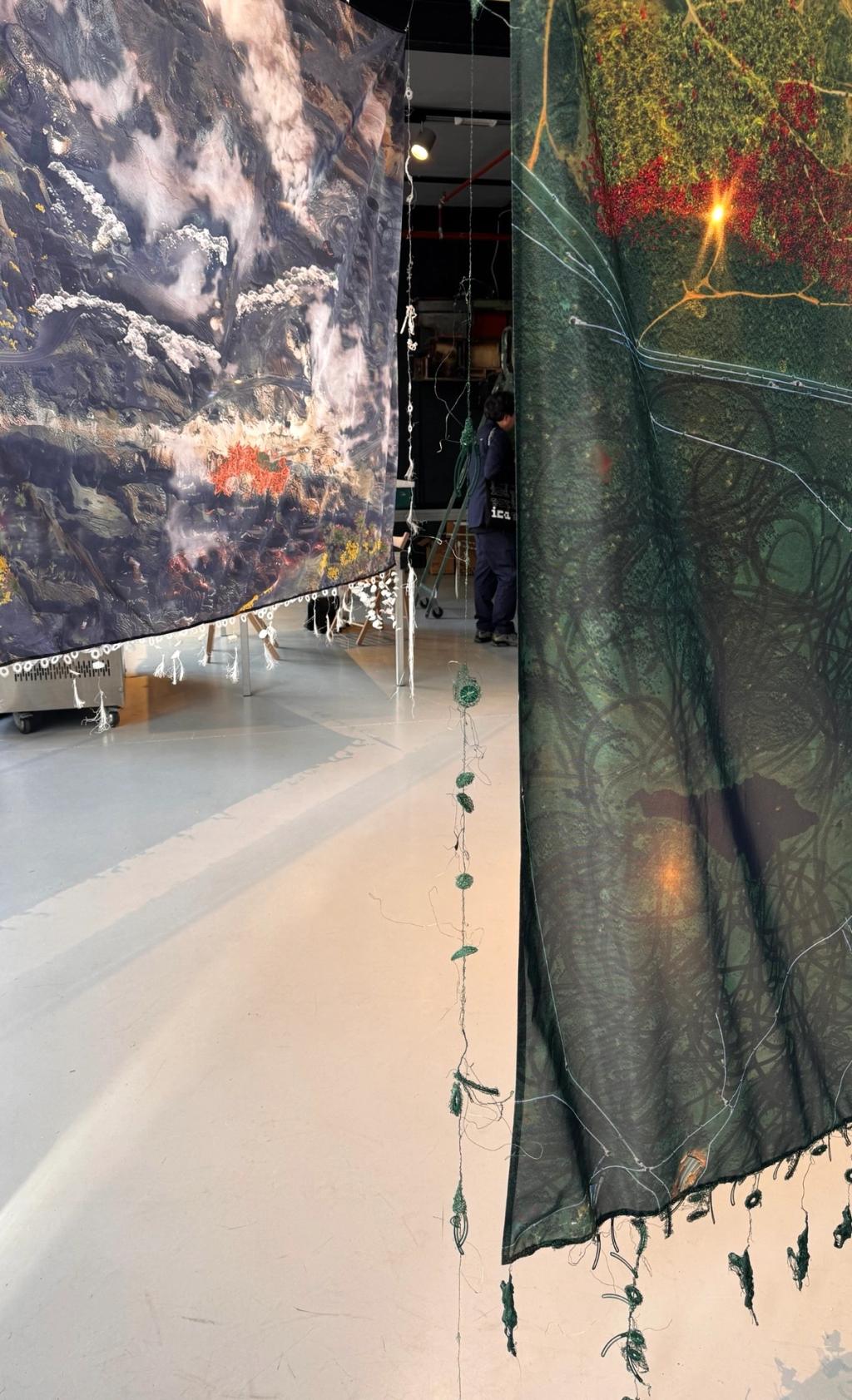
Sacrifice Zone: Burning Coal Mine, Centralia, USA Scenario: The organisms fear the return of humans and the beginning of another cycle of extraction.
It looks bleak here. We are the thermophiles: Hydrogenobacter thermophilus (heat-loving hydrogen bacteria), Sulfolobus solfataricus (a single-celled archaeon), and Epilobium angustifolium (fireweed). We share this terrain, and are existing where conditions have become too hot, too dry, or too toxic for many other organisms. In 1962, illegally dumped waste is believed to have ignited in an abandoned open-pit mine beneath the town of Centralia. The fire spread into an extensive network of old anthracite coal seams. Anthracite burns slowly, at extremely high temperatures, and can smoulder underground for decades. Temperatures have reached several hundred degrees Celsius.Ever since, the town has been burning from below. The fire cannot be extinguished. The U.S. government therefore purchased much of the town and abandoned this partially sterilized terrain. Meanwhile, we are thriving—each in our own way. We, Hydrogenobacter thermophilus, use hydrogen as an energy source while fixing CO₂. In doing so, we generate biomass on hot mineral surfaces, enable the first stages of microbial colonization, and initiate biogeochemical cycles. Practicing bioleaching, we, Sulfolobus solfataricus, specialize in mining environments in recovering metals—such as copper—from low-grade ores and mine tailings. And we, Epilobium angustifolium—better known as fireweed—spread throughout the uninhabitable urban landscape, communicating while nitrogen foam (N₂ foam) still seeps from every crack. Yet the die-hard humans, with their ornamental rhetoric, insist that everything is not so bad after all. Together we fear that they will reactivate these sacrifice zones, return once again, and resume extracting what remains.
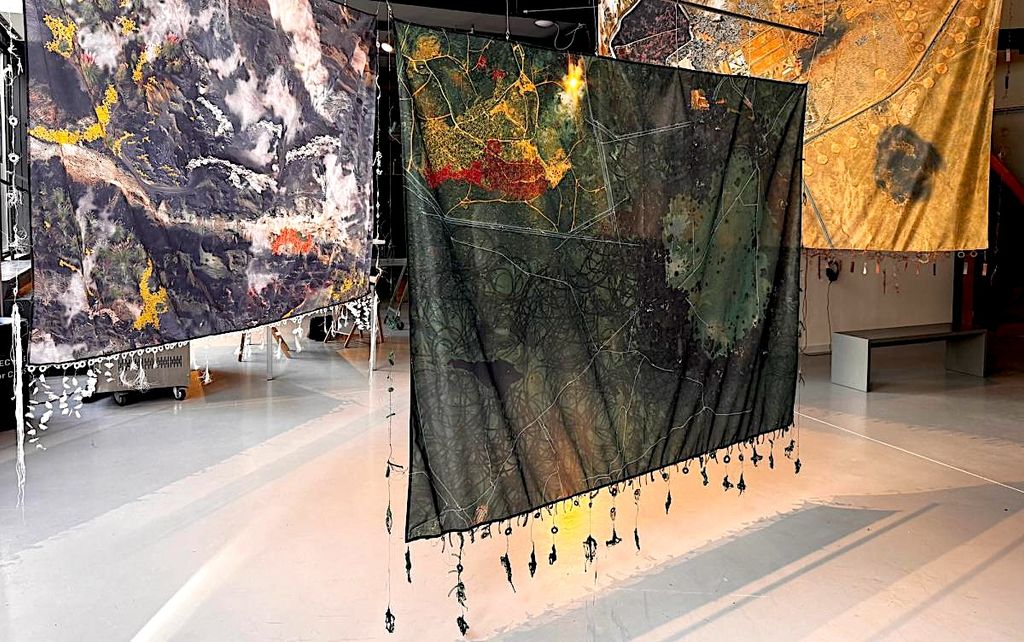
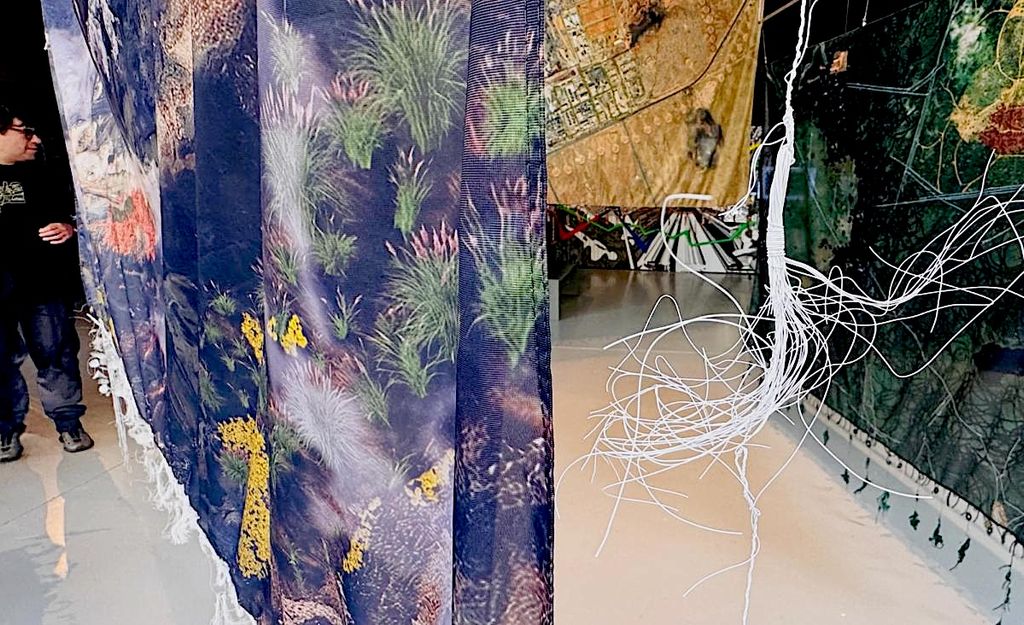
Sacrifice Zone: Phosphogypsum, Gafsa–Gabès, Tunisia Scenario: The local communities exploit the toxicity of waste landscapes in order to survive, while the die-hard humans attempt to appropriate their ecological potential for reclamation.
Here, in this hostile stretch of desert, we gather. We Desulfovibrio, Atriplex halimus, Salicornia europaea, and the PGPR–mycorrhizal consortium, are inhabiting this phosphogypsum waste dump near Gafsa. We are the polyextremophiles: acidophilic and radioresistant. As microorganisms, we appear trapped in an endless postcolonial cycle of human extraction and waste production unfolding on a macroscale. Here, enormous quantities of phosphogypsum accumulate in thousands of terraced gypsum stacks—the toxic by-product of phosphate production. Phosphate, in turn, is used primarily to manufacture fertilizers that make agricultural land around the globe fertile. And because the resources buried within this highly acidic, radioactive, and seemingly lifeless waste landscape are far from exhausted, reclamation is encouraged. Not for the Environment. Not for the people who live here.No—for the continuation of an economy driven by extraction and foreign currency revenues. Reclamation becomes little more than the sum of unrealized planning scenarios. The persistently unstable political situation repeatedly resets every process to zero. And the symptom is visible along the Route de Mdhilla, leading to the equally contaminated phosphate port of Gabès, where kilometres of unused freight wagons stand idle. We, Desulfovibrio bacteria, use the sulfate contained in phosphogypsum as an energy source. We precipitate heavy metals and immobilize radioactivity. We, Atriplex halimus (Mediterranean saltbush), stabilize the waste heaps while accumulating heavy metals in our leaves. We, Salicornia europaea (glasswort) occupy abandoned infrastructures and wastelands, settling there with unapologetic persistence. And we—the microbial PGPR–mycorrhizal consortium—intervene everywhere. Notice the terminology: humans call it "beneficial" bioremediation and reclamation. We simply call it survival.